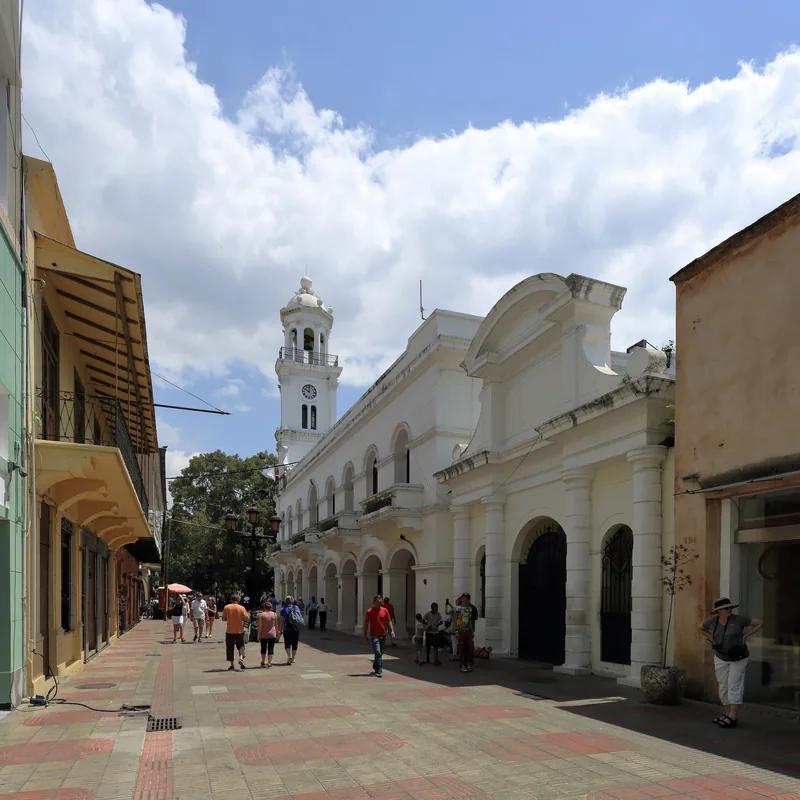
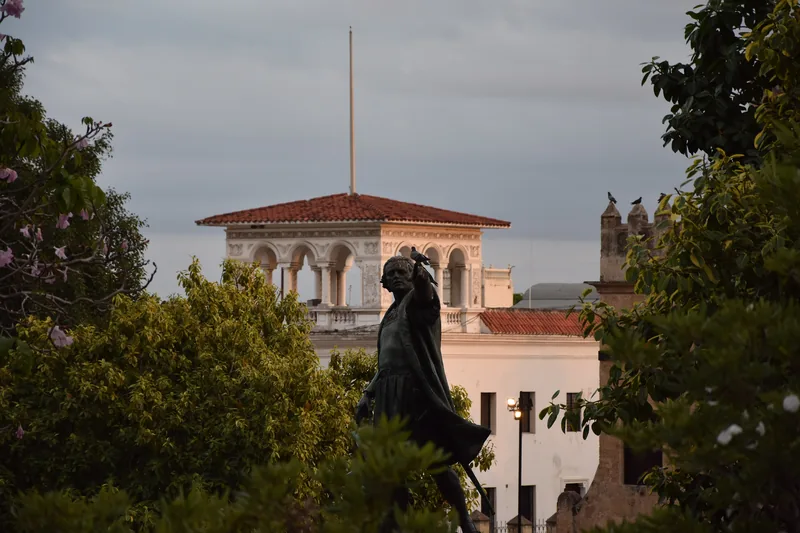
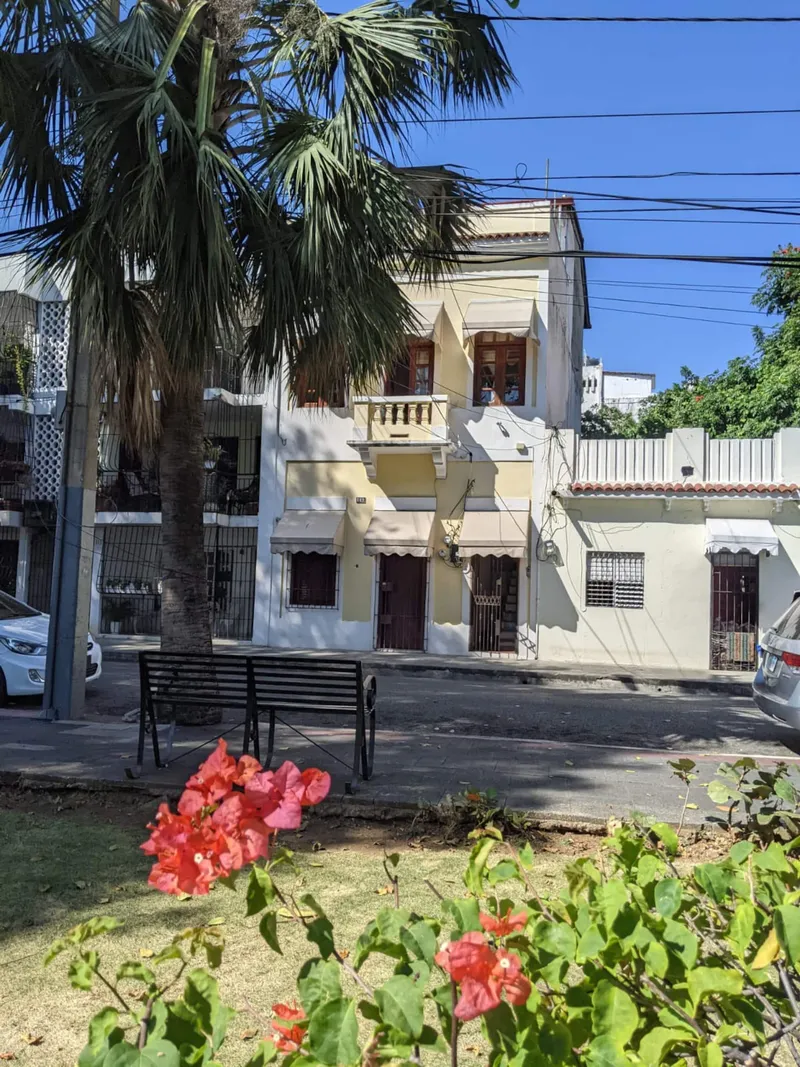
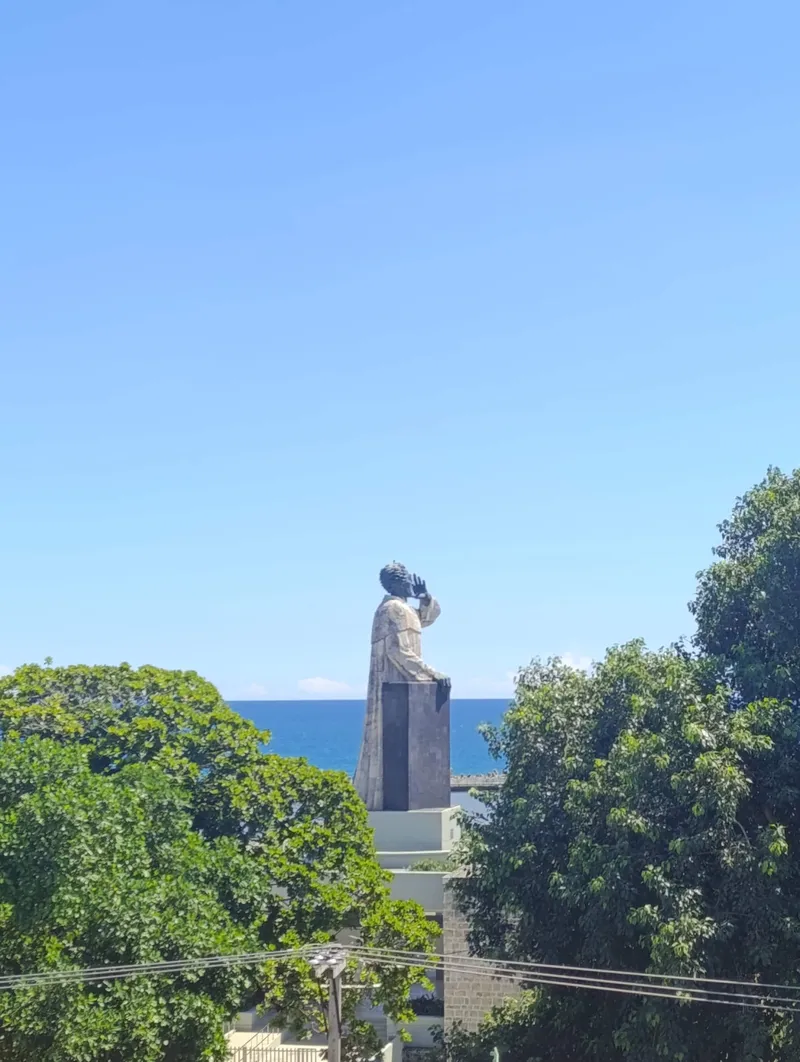
The Zona Colonial is small enough that a photographer can cover most of it in a long morning, and varied enough that you will still be finding new angles on day four. Coral-stone walls, roofless ruins, a fortress, a river, a sea wall, a pedestrian street and a ring of plazas all sit inside a few dozen blocks. What changes your pictures is less the place than the hour, the permit situation, and how you carry yourself around people who live here.
This guide is for travelers with a phone or a camera bag and for content creators planning reels, stills or a small commercial job. It goes spot by spot through the places photographers actually point their lenses, and for each one it gives what to shoot, when the light tends to work, how crowded it gets, and how far it is from the house.
Where an official page states a rule, its date is given. Where there is none, the page says so and tells you to ask at the gate. Check every hour and fee before you go.
How the Light Works Here
The old city sits on the west bank of the Río Ozama, so the river is to the east. The sea front faces south, onto the Caribbean. That gives you two simple rules.
First, anything you shoot toward the river, such as the view from the Fortaleza Ozama or from Plaza de España, is shot toward the morning sky. Early in the day the sun sits low in that direction, so the water can glare or silhouette what is in front of it. Later the same view has the sun behind you or off to the side.
Second, anything you shoot out to sea from the sea front looks south. Santo Domingo is at about 18.5 degrees north, so the midday sun is high all year and sits in the southern half of the sky for much of it. A wide shot of the water at midday is therefore usually against the light. A silhouette of the Montesinos monument is a fine picture; it is just something to plan for.
The sun still rises roughly east and sets roughly west, drifting north and south through the seasons. Where it drops on a given evening changes through the year, so no spot is promised here. Use a sun-position app on the day. A local photo studio's guide to the Colonial Zone gives the general tip: golden-hour light, either early morning or just before sunset, looks the most cinematic.
Midday is harsh and hot; use it for interiors, museums and shade.
Calle Las Damas
The tourism ministry's page calls Calle Las Damas the first paved street in the Americas, lined with 16th-century buildings that now hold museums, embassies and hotels, and says it leads straight to the Alcázar de Colón. Whether or not you accept the superlative, the street is narrow, old and photogenic. For the story, read Calle Las Damas.
What to shoot: the long view down the street with coral-stone walls closing in on both sides, carved portals, and the plaques beside each building. Get low and shoot along the paving.
Light and timing: narrow width means deep shade much of the day and bright strips where the sun gets in. An early start also gives you an empty frame. A tripod is possible early, but tour groups use the street, so keep your legs tucked in and never block a doorway. Crowds build from late morning.
From the house: the southern end is about 380 m in a straight line, about 10 minutes on foot.
Plaza de España
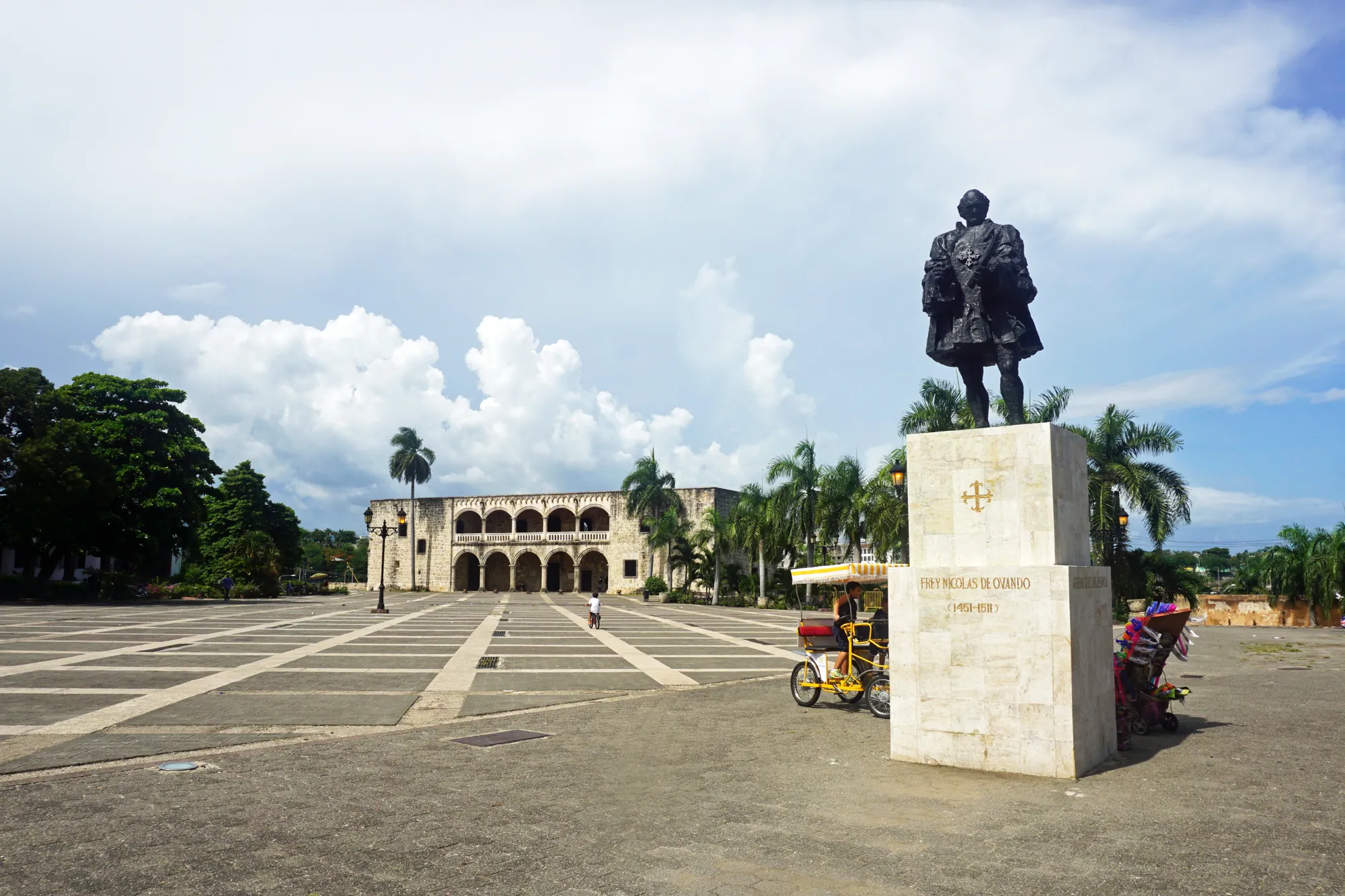
At the north end of Calle Las Damas the street opens onto Plaza de España, also called Plaza de la Hispanidad, on Calle La Atarazana. The tourism ministry's page describes it as one of the most romantic esplanades in the Colonial City, with the Alcázar de Colón on one end and outdoor bistro terraces on the other looking over the old city. A statue of Nicolás de Ovando, the governor behind much of the early city, stands in the middle. The history is at Plaza de España and La Atarazana.
What to shoot: the arcaded Alcázar with the Ovando statue in the foreground, the wide paving, the view toward the river and port, and the terraces with their lights after dark.
Light and timing: the river view is toward the east, so morning gives atmosphere and evening gives lit terraces. For clean light on the Alcázar's front, check the sun on the day, because the plaza's exact orientation is not documented here.
Events: the same page says concerts, cultural shows and festivals are held here, so you may arrive to find a stage in your frame. See carnival and festivals.
From the house: about 860 m in a straight line, about 15 minutes on foot.
Fortaleza Ozama
The tourism ministry's page says the fortress was built between 1502 and 1508 under Governor Fray Nicolás de Ovando, calls it the first permanent military structure in the Americas, and describes a central tower about 69 feet tall, a spiral staircase to a lookout over the river and port, original cannons facing the river, and tunnels and dungeons inside. The full story is in Fortaleza Ozama.
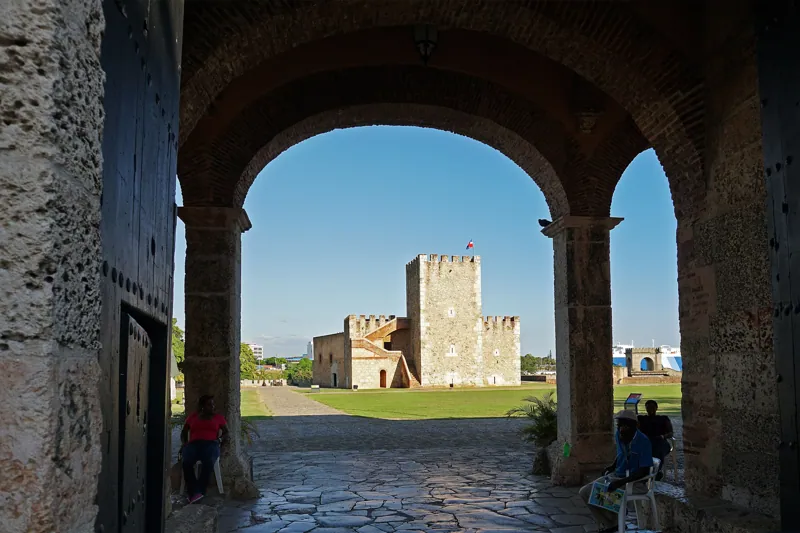
What to shoot: the tower from the courtyard, the coral-stone walls, the cannons aimed at the river, and from the top the view over the Ozama toward the port. The tunnels reward a camera that copes with shadows.
Light and timing: the cannons face the river, so that side catches the morning light. A view over water in early light can be flat or glaring, so bring a lens hood and think about when you want your sky.
Rules: no official page states current hours, entry fee or photography policy that this page can cite, and the travel listings disagree, so their figures are left out. Ask at the gate whether tripods, gimbals or commercial shoots are allowed. For anything beyond a phone and a handheld camera, ask before you travel.
Crowds: tour groups reach it, so arrive at opening or late in the day.
From the house: about 450 m in a straight line, about 10 minutes on foot.
Parque Colón and the Cathedral Side
Parque Colón is the main plaza of the old city. The Columbus monument stands in the middle and the Catedral Primada de América faces the park. A photo description notes that the pedestal depicts the Taíno cacique Anacaona, a good close-up. For the plaza see Parque Colón and Calle El Conde, and for the church, the Catedral Primada.
What to shoot: the cathedral front across the park, the monument against it, and people on the benches. This is one of the best places to photograph everyday life rather than monuments.
Light and timing: early morning gives an almost empty square. A photo studio guide recommends golden hour here too. Evening brings crowds and cafe lights, which suits you if you want people in the frame.
Inside the cathedral: No published photography or dress policy is cited here. Treat it as a working church. If a service is under way, do not photograph the congregation, skip the flash, and ask a staff member whether pictures are welcome.
From the house: about 430 m in a straight line, about 10 minutes on foot.
Calle El Conde
The tourism ministry's page calls Calle El Conde the first commercial street in the New World and the most popular pedestrian shopping area in the country. It runs about 10 blocks, begins at Parque Independencia, passes Parque Colón and the cathedral, and ends at Calle Las Damas. Restaurants, cafes, souvenir shops and grocery stores line it, with street artists selling paintings and vendors pushing ice cream carts.
What to shoot: the street as a long perspective, shop signs, hanging lights in the evening, the painted canvases, and street portraits if people agree. It is a people street. See Colonial Zone at night for the evening mood.
Light and timing: busy all day, so an empty frame means opening time. For atmosphere, come when the cafes light up.
Etiquette: this is where people work. Vendors and shopkeepers do not owe you a picture. Ask first and move on after a no.
From the house: the eastern end, by Calle Las Damas, is about 570 m in a straight line, about 10 minutes on foot.
Calle Isabel la Católica, Calle Hostos and the Painted Houses
Beyond the plazas, the quieter streets give you residential texture: shutters, wrought iron, doors that open straight onto the sidewalk, and houses painted in colors that read well in photographs. There is no list of "the" colorful houses here. No trustworthy source ranks them, and these are people's homes, so wandering street by street beats a fixed address list.
Calle Isabel la Católica is about 520 m in a straight line from the house at its Atarazana end, about 10 minutes on foot. The Casa de Duarte museum is on this street; see Juan Pablo Duarte. Calle Hostos climbs toward the ruins described below. For why the houses look as they do, read the colonial houses.
What to shoot: details rather than wide shots. A door, a balcony rail, a wall against the sky.
Light and timing: side streets are deep in shade, so the best light comes mid-morning when the sun reaches the street floor, or late afternoon when it rakes along a wall. Cloudy days are good for color because nothing is blown out. Streets in an old district also get repaved and restored, so you may meet scaffolding or barriers; shoot another street rather than fight a construction site.
Respect: people live behind these doors. Do not point a lens through a window or into a courtyard, do not set a tripod in a doorway, and do not photograph children without a parent's say.
The Ruins of the Monasterio de San Francisco
A roofless stone church with open arches gives you sky as a ceiling, which is why these ruins are so often photographed. One travel source says the Franciscans arrived in 1508, the monastery was completed in 1560, stone was removed during the Haitian period of 1822 to 1844, the San Zenón cyclone of 1930 destroyed almost all of it, and in the 1940s it was used as a place for the mentally ill. The longer account is in The Ruins of the Monasterio de San Francisco.
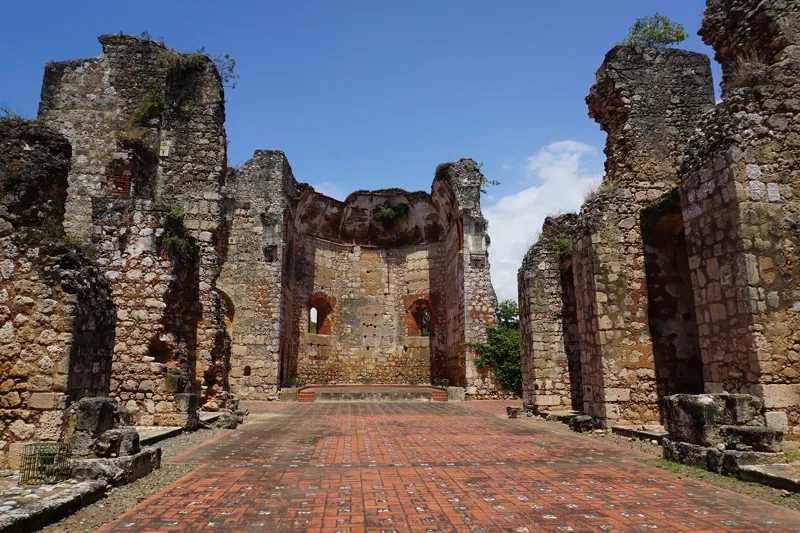
What to shoot: the arches against the sky, the nave from the entrance, the stone texture, and the plants growing where the floor used to be. Verticals work well, so bring something wide.
Light and timing: with no roof, nothing softens the sun. Midday puts hard shadows in the arches; morning and late afternoon give soft side light. A polarizer helps on overcast days. OpenStreetMap places the ruins on Calle Hostos, about 810 m in a straight line from the house, about 15 minutes on foot.
Rules: the sources give no hours, fee or photography rules. Ask at the gate, especially about tripods and commercial shoots. The place hosts cultural events from time to time, which can change your frame.
Crowds: groups arrive mid-morning. For an empty nave, go first thing.
Hospital San Nicolás de Bari
Further along the same street are the ruins of the Hospital San Nicolás de Bari. A 2019 article in El Día says work began in 1503 on the order of Governor Fray Nicolás de Ovando, a second stage followed in 1519 and a third around 1533 to 1552, and only ruins remain. Details survive, including capitals with carved winged angel heads and the ramps of the stair to the upper floor. Part of the site holds the church of Nuestra Señora de la Altagracia, built in the first half of the 20th century. The history is in Hospital San Nicolás de Bari.
What to shoot: the carved capitals, the stair ramps, and walls framing the sky. It suits close-ups more than wide angles. OpenStreetMap lists it at 356 Calle Hostos.
Light and timing: walls keep the sun off the floor for part of the day, so check the light on a first pass and return at the hour you prefer.
Rules: the article gives no hours, fees or access conditions, and it is not confirmed whether you can enter or only look in. Ask, and do not climb on the stonework. It is quieter than the Monasterio, so you may have the frame to yourself.
From the house: about 580 m in a straight line, about 10 minutes on foot.
The Sea Front, the Montesinos Monument and Playa Montesinos
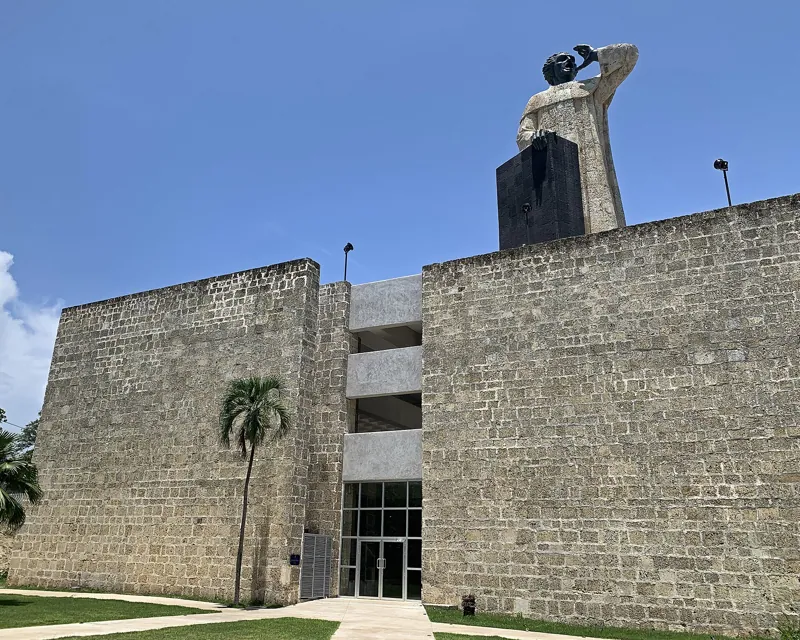
The sea front is where the old city opens to a long horizon. The Malecón is officially George Washington Avenue, and the tourism ministry's page says it comes alive in the afternoon at sunset and continues into the night, was renovated in 2017, and now has marked bike and rollerblade lanes, more esplanades and seating along the sea. Residents stroll, jog and bike there.
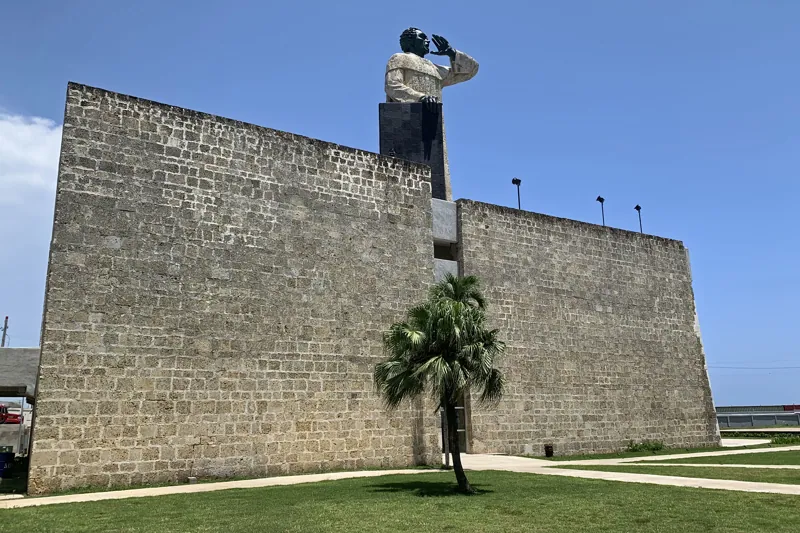
What to shoot: the monument against the sky, people on the esplanade, walkers at the water's edge, and the sea. On OpenStreetMap the monument is at 18.46875, -69.88479, with Playa Montesinos just below it. For the man and his 1511 sermon, read Fray Antón de Montesinos; for the walk, see the Malecón guide.
Light and timing: the sea is generally shot against the light, as explained above, so wait for the light you want rather than the time on the clock. Early morning is cooler and emptier. Crowds build in the late afternoon and evening.
Inside the monument: a 2019 Diario Libre article said it opened daily from 9 a.m. to 6 p.m. except Tuesdays, with an entry fee, and that it overlooks the Caribbean. That is several years old, so confirm hours and fee at the door. It also described exhibits, a documentary and events, so something may be in progress.
From the house: the monument is about 110 m in a straight line and Playa Montesinos about 180 m, both about 5 minutes on foot.
The Puerta del Conde
The Puerta del Conde is the gate at the western end of Calle El Conde and the main entrance to Parque Independencia. The tourism ministry's page says it is part of the old wall that protected the city, that Francisco del Rosario Sánchez raised the Dominican flag and proclaimed independence here on February 27, 1844, and that it is named for the Count of Peñalba, who defended Santo Domingo from a British invasion in 1655. The story is in Puerta del Conde and Independence in 1844.
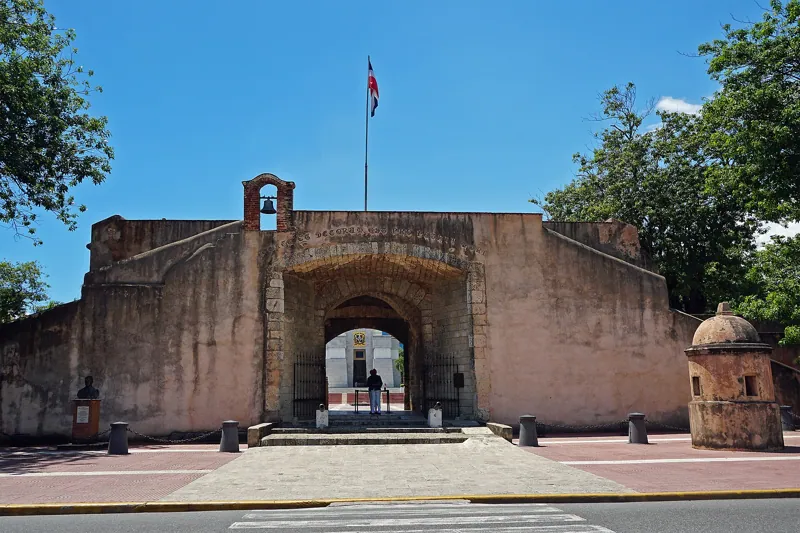
What to shoot: the arch from the end of Calle El Conde, the arch from inside the park, and the Latin inscription above it. The page says the president visits on Independence Day and other official holidays, so expect security, closures and crowds then.
Light and timing: this is the farthest spot from the river and the sea, so check the sun on the day, and go on a day without a ceremony for a quiet frame. The park holds the mausoleum of the founding fathers, so treat it with respect.
From the house: about 710 m in a straight line, about 15 minutes on foot.
Drones, Tripods and Permits
Rules here have consequences, so this section is careful.
Drones: the aviation authority, the Instituto Dominicano de Aviación Civil (IDAC), regulates them. Two Dominican news reports, from El Día in March 2023 and Acento in February 2024, say a permit is required for a drone heavier than 4.4 pounds (RAD-48, which also covers registration and labeling), that owners should register the drone, and that flying is banned over airports, the Palacio Nacional, the Ministry of Defense, military bases and a refinery, among other sites. El Día says RAD 107 describes how to request an exemption or special permit, that penalties sit in RAD-20, and gives IDAC's address for questions, [email protected].
What is not published: a page stating a drone rule for the Zona Colonial, or for a light drone over a World Heritage district. Do not assume a small drone is allowed over the old city, crowds, a church or a fort. Write to IDAC and to Cultural Heritage before you fly. Without a written answer, leave the drone in the bag.
Filming and commercial shoots: a Diario Libre explainer from September 2024 says monuments and historic sites need permission from the Ministry of Culture or the Dirección de Patrimonio Cultural, and that for the Zona Colonial a "no objection" is required from Patrimonio Cultural or from the traffic and urban mobility department of the Distrito Nacional city hall. It adds that parks and public spaces need the local city hall's permission and private buildings the owner's. An Acento article from August 2025 says directors must apply for a Permiso Único de Rodaje for films meant for theaters, festivals or streaming, and that the Dirección General de Cine issued 306 filming permits in 2024.
None of those pages says what a visitor with a phone or handheld camera needs, so no rule is invented here. The safest reading: pictures for yourself and your own feed in public streets are what every visitor does. A crew, a paid client, a model with a stylist, lights, a tripod blocking a sidewalk or a drone is a different category, so ask ahead.
Tripods and gimbals: no published rule covers streets and plazas. Inside the fortress, the ruins, the monument or a church, ask. On the street, use one only where the pavement is clear and fold it when people pass.
Respect for Residents and Churches
Most of what you photograph is in use: homes, shops, offices and churches with services. Do not shoot into windows or open doors. Ask before photographing a face and accept a no. Keep your voice down on residential streets early and late. Do not move chairs, plants or signs to improve a frame, and do not wait in a doorway for the crowd to clear.
In a church, step in quietly, take off your hat, turn off the flash and shutter sound, and do not point a camera at people praying. If a service is under way, photograph the building from outside.
Safety With Your Gear
The UK government's travel advice says crime in the Dominican Republic is high, including bag-snatching and pickpocketing, and that thieves on motorcycles snatch bags and valuables from pedestrians. It advises keeping smartphones and electronics out of sight and avoiding walking alone at night or in remote areas after dark. That page covers the whole country rather than the Zona Colonial alone, and the advice applies most to a photographer carrying expensive gear.
Practical habits: wear the strap across your body, put the phone away between shots (especially near a curb where a motorbike can pass), use a plain bag rather than a camera-brand one, carry one body and one or two lenses, and back up your cards each night. Do night shoots with a companion and take a taxi home rather than a long walk through dark side streets. Heat is a gear risk too: do not leave a camera in a hot car or in direct sun.
Getting there from the penthouse
Penthouse Pallazzo sits about 150 m north of Playa Montesinos, facing the Montesinos monument, at roughly 18.4697, -69.8851. Every figure below is a straight line between OpenStreetMap coordinates, multiplied by 1.3, walked at 80 meters a minute and rounded up to the next 5 minutes.
- Montesinos monument and Playa Montesinos: about 110 m and 180 m, about 5 minutes on foot.
- Calle Las Damas, southern end: about 380 m, about 10 minutes on foot.
- Parque Colón and the cathedral side: about 430 m, about 10 minutes on foot.
- Fortaleza Ozama: about 450 m, about 10 minutes on foot.
- Calle Isabel la Católica, Atarazana end: about 520 m, about 10 minutes on foot.
- Calle El Conde, eastern end: about 570 m, about 10 minutes on foot.
- Hospital San Nicolás de Bari: about 580 m, about 10 minutes on foot.
- Puerta del Conde: about 710 m, about 15 minutes on foot.
- Monasterio de San Francisco ruins: about 810 m, about 15 minutes on foot.
- Plaza de España: about 860 m, about 15 minutes on foot.
A taxi from any of these is short if you are carrying gear after dark. See the location page for the map and the complete Zona Colonial guide for the wider orientation.
Frequently asked questions
What is the best time of day to photograph the Zona Colonial?
Early morning and the hour before sunset. A local photo studio's guide gives golden hour, early morning or just before sunset, as the best light, and early morning also gives you empty streets. Spend midday indoors or in the shade.
Can I fly a drone in the Zona Colonial?
No rule written for the old city is cited here. The national rules say a permit is needed for a drone above 4.4 pounds, registration is expected, and flying is banned over airports, the Palacio Nacional, military sites and others. Ask IDAC and Cultural Heritage in writing first.
Do I need a permit for a photo shoot?
No published page says a visitor with a phone or camera needs one in public streets. For a commercial shoot, a crew, or filming at a monument or historic site, Dominican reporting says permission is needed from the Ministry of Culture or Patrimonio Cultural, plus a "no objection" for the Zona Colonial. Ask before you book a crew.
Is it safe to carry a camera in the old city?
Travel advice for the country warns about bag-snatching and motorbike thieves and advises keeping electronics out of sight and avoiding walking alone at night. Strap across the body, phone away between shots, taxi home after dark.
Sources
- https://eldia.com.do/idac-orienta-sobre-uso-de-drones-normas-de-operacion/
- https://acento.com.do/actualidad/idac-se-encarga-de-aprobar-los-permisos-para-el-uso-de-drones-9302883.html
- https://diariolibre.com/revista/cultura/2024/09/12/los-lugares-donde-necesitas-permisos-para-grabar-en-rd/2847765
- https://acento.com.do/cine/el-cine-toma-las-calles-dominicanas-con-306-permisos-de-rodaje-en-2024-9533153.html
- https://www.godominicanrepublic.com/things-to-do/fortaleza-ozama/
- https://www.godominicanrepublic.com/things-to-do/calle-las-damas/
- https://www.godominicanrepublic.com/things-to-do/plaza-de-espana/
- https://www.godominicanrepublic.com/things-to-do/calle-el-conde/
- https://www.godominicanrepublic.com/things-to-do/puerta-del-conde/
- https://www.godominicanrepublic.com/que-hacer/malecon-de-santo-domingo
- https://www.diariolibre.com/revista/cultura/que-hacer-en-el-monumento-a-montesinos-GO13845131
- https://eldia.com.do/san-nicolas-de-bari-fue-el-primer-hospital-de-america/
- https://en.absolutviajes.com/Dominican-Republic/the-ruins-of-the-monastery-of-san-francisco/
- https://www.gov.uk/foreign-travel-advice/dominican-republic/safety-and-security
- https://nominatim.openstreetmap.org/search?q=Monumento+a+Fray+Antonio+de+Montesinos+Santo+Domingo&format=json&limit=3
- https://nominatim.openstreetmap.org/search?q=Fortaleza+Ozama+Santo+Domingo&format=json&limit=2
- https://nominatim.openstreetmap.org/search?q=Plaza+de+Espa%C3%B1a+Santo+Domingo+Zona+Colonial&format=json&limit=2
- https://nominatim.openstreetmap.org/search?q=Hospital+San+Nicol%C3%A1s+de+Bari+Santo+Domingo&format=json&limit=2
- https://commons.wikimedia.org/w/api.php?action=query&list=search&srsearch=Ruinas+San+Francisco+Santo+Domingo&srnamespace=6&srlimit=15&format=json