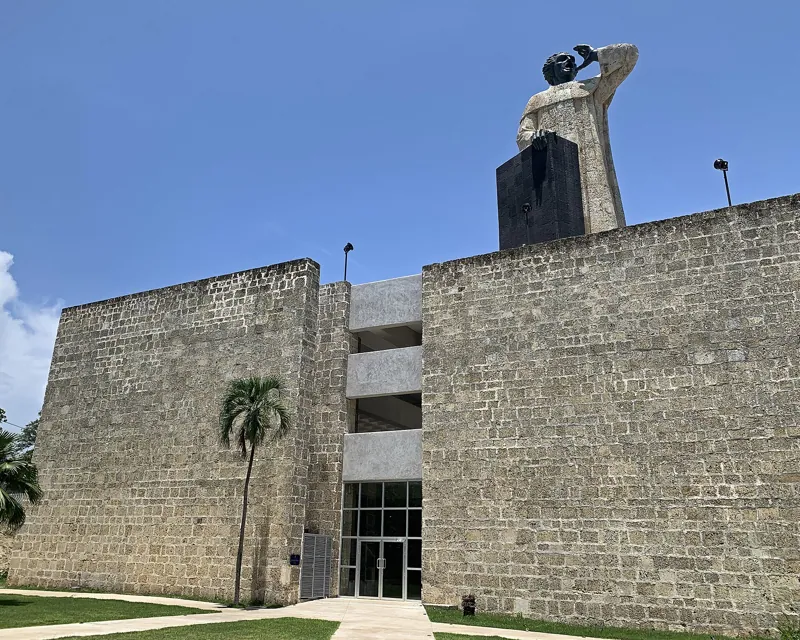
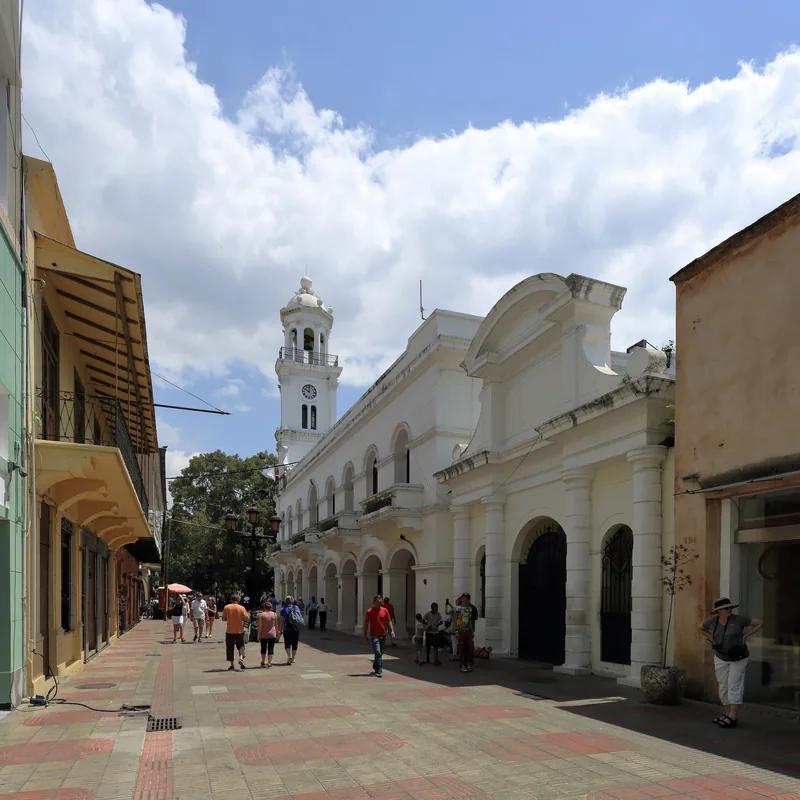
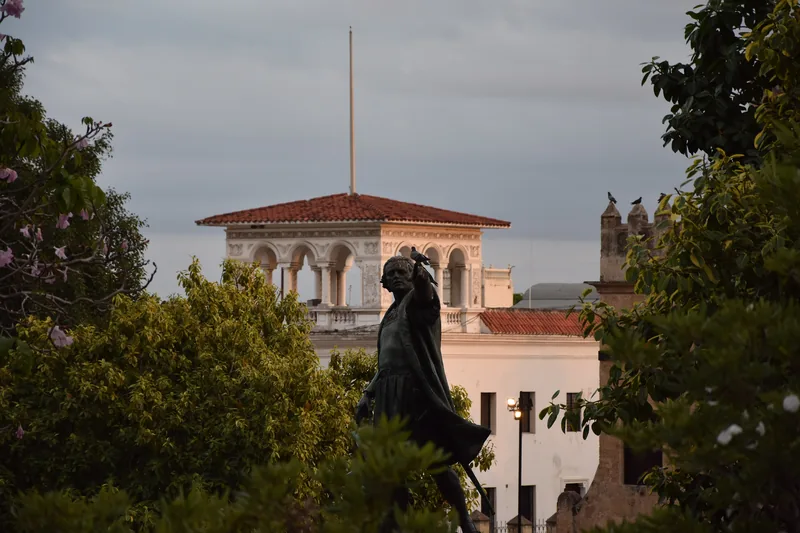
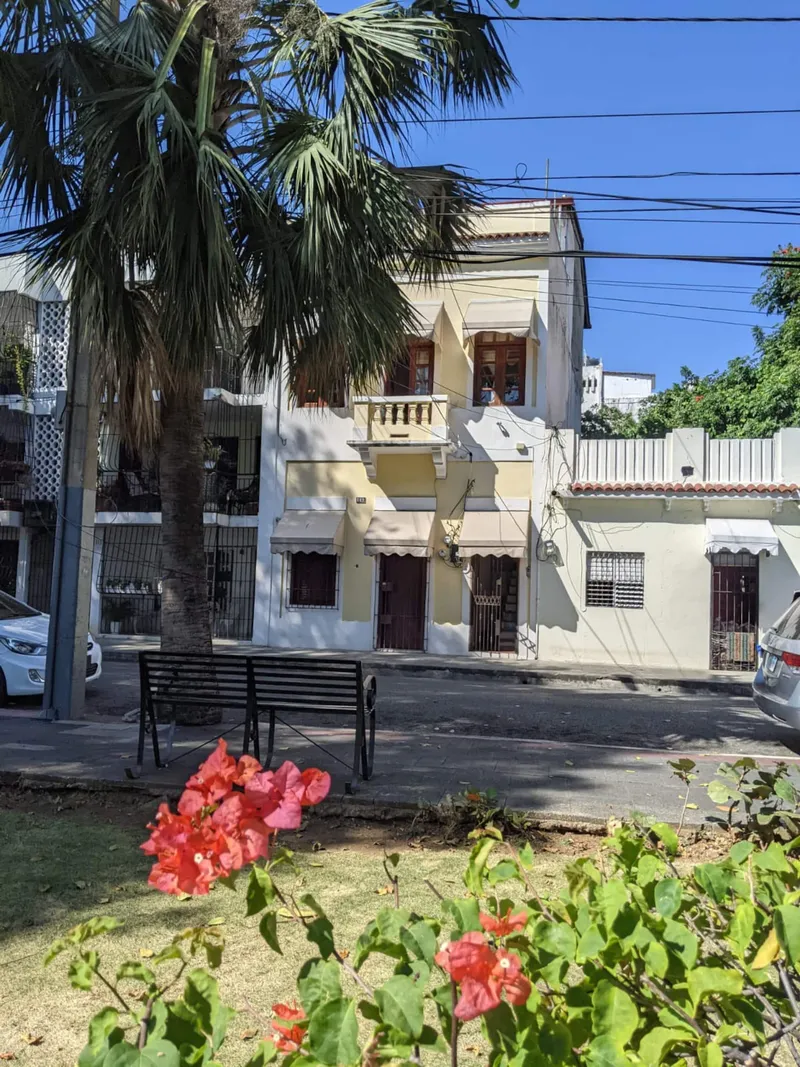
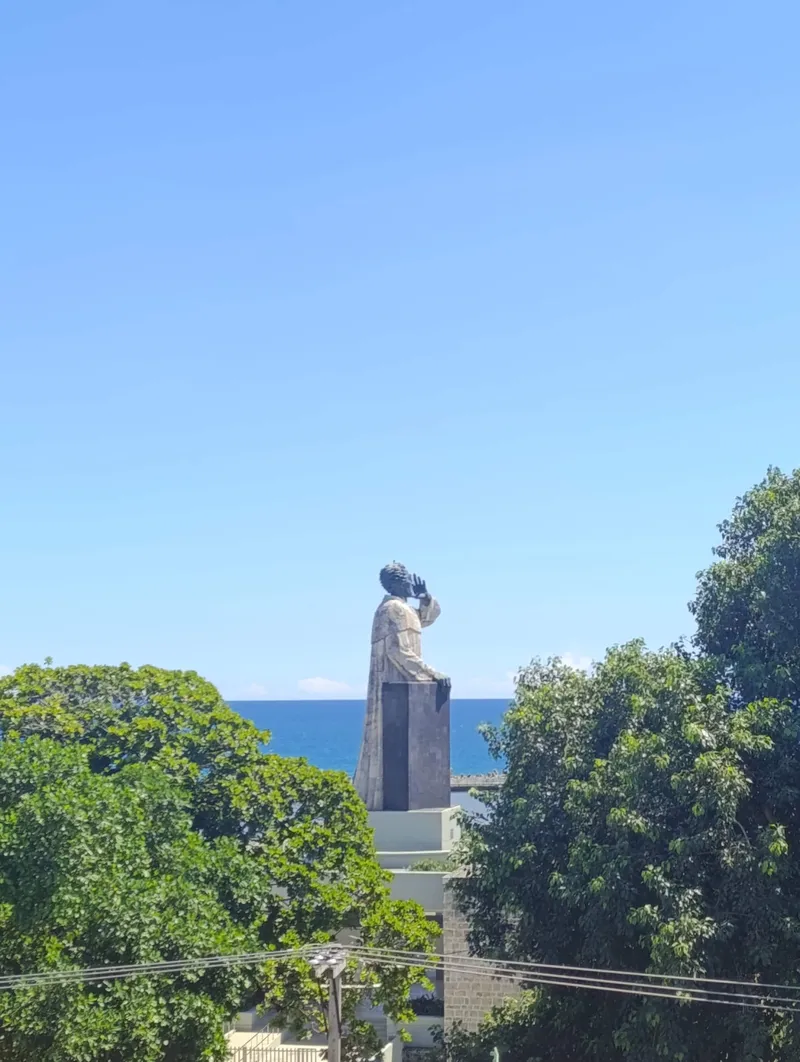
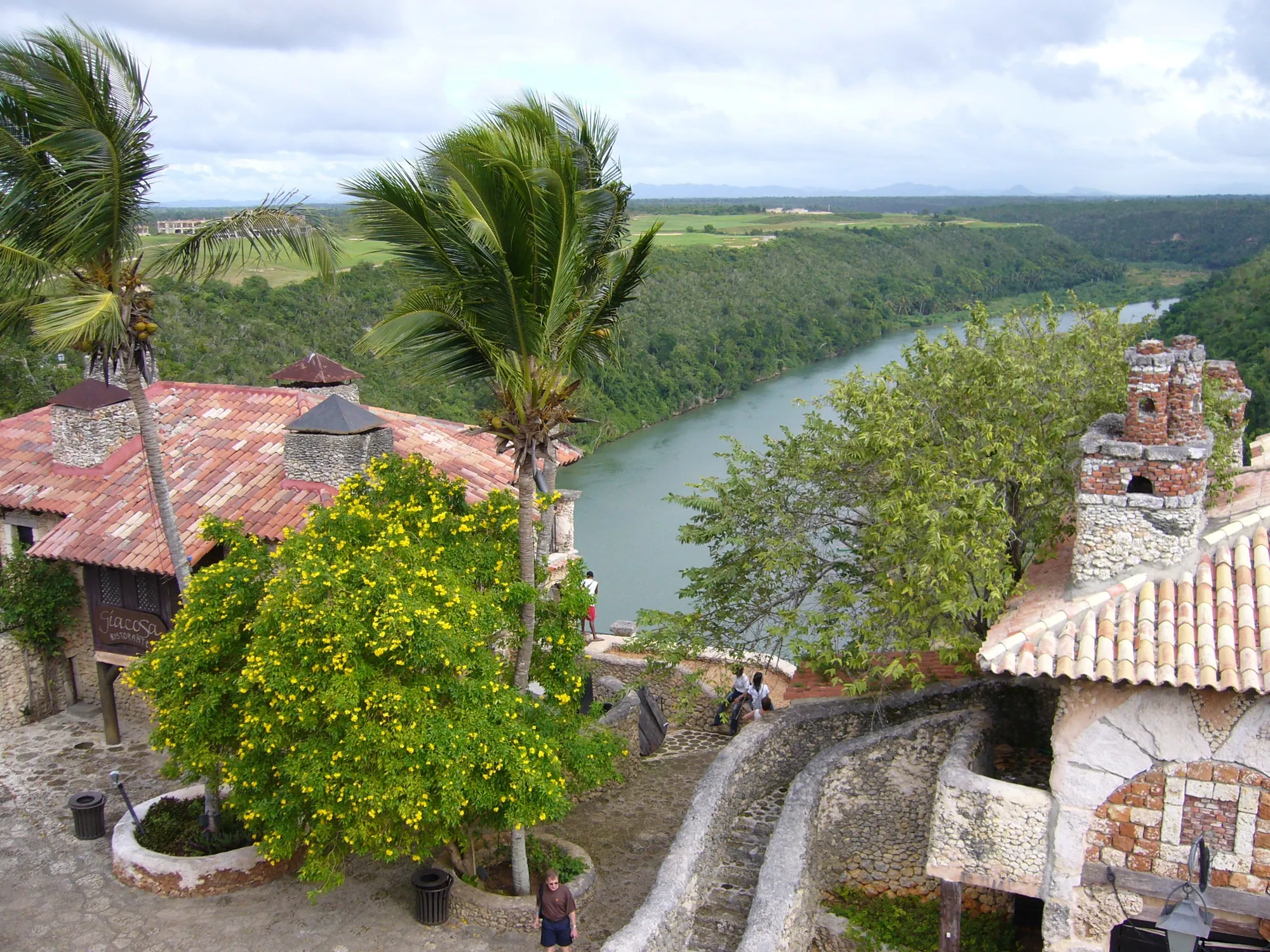
Altos de Chavón looks like a hill town from the Mediterranean, with cobbled lanes, a stone church on the main square, and a view down to a river. It was built in the 1970s and early 1980s. That fact is the first thing to know about it, because it changes how you should visit. This is not a surviving colonial town like the Zona Colonial you are staying in. It is a recreation of a 16th-century village, built on purpose by a company, with Dominican stonemasons and an Italian set designer, in the sugar country of La Romana province.
It is still a good day trip from Santo Domingo, and an unusual one, because the story of how it got built is as interesting as what is standing there. This guide covers who built it and when, what is inside, what to check before you go, how long the drive is, and the nearby option of a boat day to Isla Catalina. Where sources disagree about dates, the guide says so. It is not a substitute for the real old city, and the Zona Colonial complete guide and the landmarks guide cover that. Think of Altos de Chavón as a well-made companion piece.
Why a Village Appeared in Sugar Country
To understand the village you have to understand La Romana. The company that shaped the area is Central Romana, and its own history page gives the timeline. In 1912 the South Porto Rico Sugar Company was incorporated and bought about 20,000 acres north of La Romana to grow sugarcane, which was at first shipped to Puerto Rico for processing. The first harvest took place in 1917, in a mill that could process up to 2,000 tons of cane per day. In 1926 exports of cane to Puerto Rico stopped and all production moved to processing in the Dominican Republic.
The next change came from the United States. Gulf+Western, an American conglomerate, began buying shares in the company in 1964, became its largest shareholder by 1967, and acquired it outright that year, according to the company's history. In 1978 new management began diversifying, including into tourism. In 1984 Gulf+Western Americas sold the company to the Fanjul Group, led by Alfonso and J. Pepe Fanjul, with three top local executives also becoming shareholders.
The resort that grew out of this is Casa de Campo. Its own history says the property began as a 7,000-acre sugar plantation owned by Gulf+Western, which also owned Paramount Pictures. The Teeth of the Dog golf course was carved from coral landscape in 1970 and 1971 and opened in 1971, and the resort began in 1974 as an executive retreat for Gulf+Western. Altos de Chavón sits inside this resort, and its story belongs to the same company. By the late 1970s the owners wanted more than golf.
Who Built It and When
The people behind the village are named in several sources, and the sources agree on the broad outline. A Dominican Academy of History publication says the idea came in 1974 from Charles Bluhdorn, whom it describes as an Austrian industrialist and the founder and chairman of Gulf+Western. His goal, it says, was to promote and preserve Dominican art and culture. Diario Libre adds that Bluhdorn chose the place and wanted to attract visual artists, designers, writers and musicians.
The design work was shared. The academy publication says the Dominican architects José Antonio and Danilo Caro Ginebra created the design guidelines and the original plan. Diario Libre credits José Antonio Caro with the original plans. The man who turned the plan into a place was the Italian designer Roberto Coppa. The name appears as both Coppa and Copa in different sources. He was born in Rome, worked in stage and film set design, and from 1967 to 1989 worked in set design at Paramount, which Gulf+Western owned, according to the academy publication. It says he first came to the Dominican Republic for an interior design job and met Bluhdorn there. Diario Libre says Coppa directed the construction alongside Dominican craftspeople: masons, carpenters and blacksmiths.
The Dates, and Why They Differ
If you ask when Altos de Chavón was built, you get several answers, and all of them are reasonable.
- The academy publication says construction started in 1976 with a nearby highway and a bridge over the Chavón River, using stone from local quarries, and ran from 1976 to 1980. It says the detailed hand-sculpting of each staircase, alley and building took six years.
- The official tourism site of the Dominican Republic says the village was built over six years and opened in 1982.
- Diario Libre says construction took about ten years and that the project was completed in the mid-1980s.
- A Casa de Campo history says the amphitheater and village were designed around 1975, that the village's principal areas were complete by 1979, and that a nightclub opened on December 31, 1980.
The most careful way to put it: work began in 1976, the church and much of the main village stood by the end of the 1970s, the amphitheater opened in 1982, and finishing and additions continued after that. Dominican tourism material gives a visitor-friendly version, and the academy publication gives the build timeline. Nobody disputes the main point, which is that this is a 20th-century project.
What the Craftspeople Did
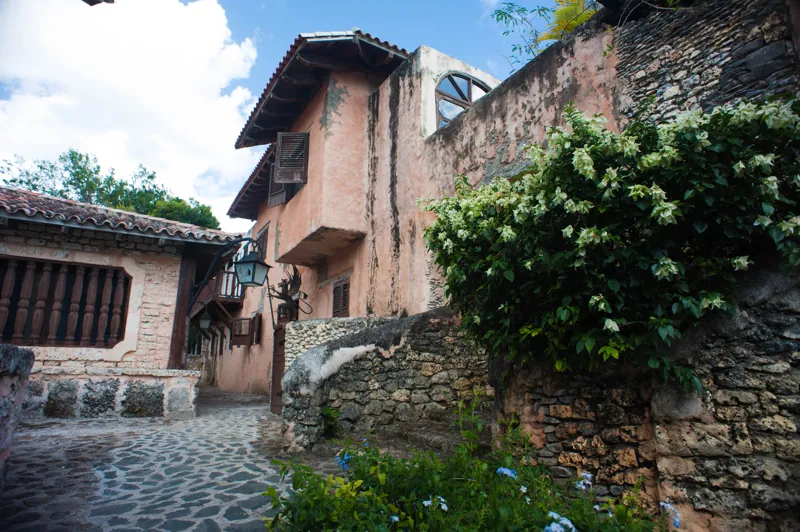
According to the academy publication, Dominican craftspeople worked in stone, wrought metal and wood. They produced the cobbled streets, the coral stone fountains and the terracotta buildings. Tourism material describes the result as a copy of a 16th-century European village, with cobbled streets and buildings of coral and terracotta stone. This is the same material family you see in the Zona Colonial, which is why the village photographs so well next to the real thing. For how real colonial houses were put together, see The Colonial Houses of Santo Domingo.
What You See in the Village
The village sits on a plateau. The name means "in the heights of Chavón," according to Diario Libre, and Dominican tourism material says the village stands above the Chavón River. Official tourism material for the United States market puts it about 300 feet above the river and says the Dye Fore golf course borders the village on its east side. Panoramic views of the river and the golf course are part of the visit, and the stone plazas and dining verandas are lit at night.
The village is a working cultural center, known by the nickname City of Artists. Dominican tourism material says it has artist studios, craft workshops and galleries, along with cigar, clothing and jewelry shops, restaurants and bars. The cobbled streets are short and the whole place is compact, so you can walk it end to end without a plan.
The Church of St. Stanislaus
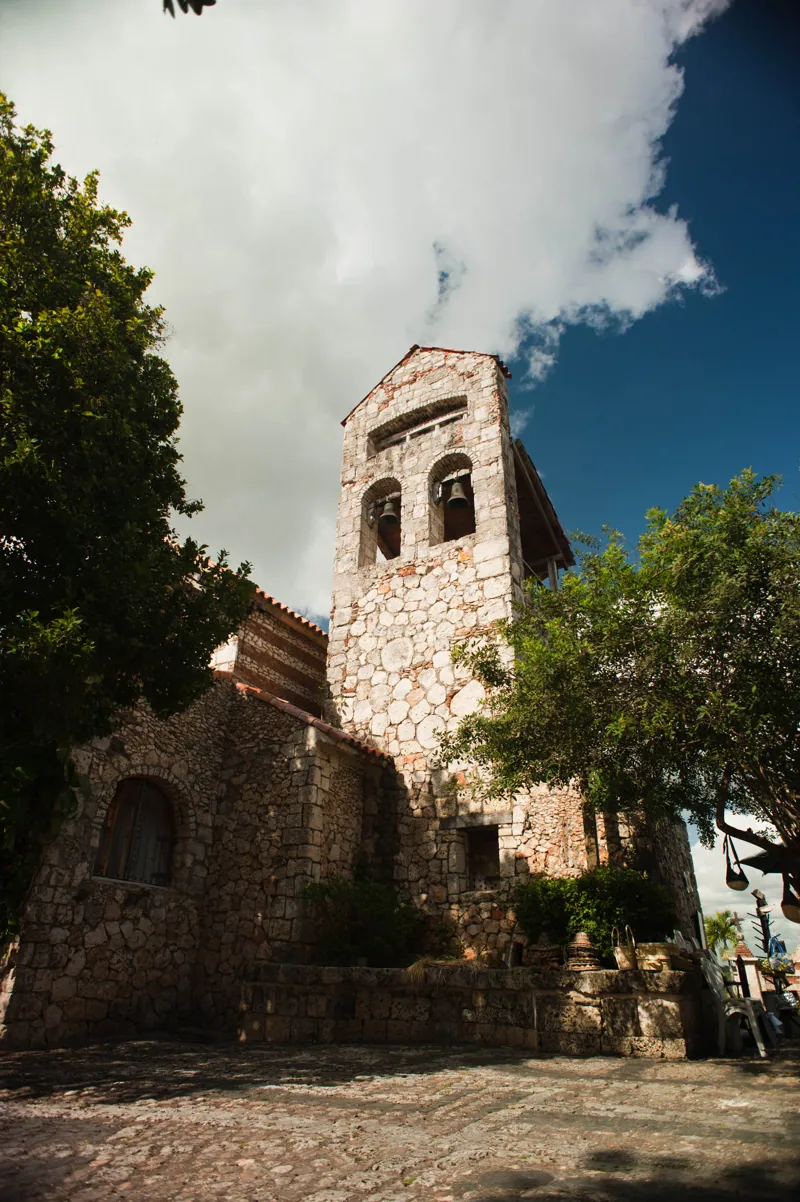
The church on the main square is the center of the village and one of its most photographed spots. It was built in 1979, according to Dominican tourism material, which also says it is a popular wedding venue, that its interior holds ashes of San Estanislao and a carved statue of Kraków, a gift from the Pope, and that Masses are held on Saturdays and Sundays at 5 p.m., with the door usually open for viewing. The church is a good place to stand for the view of the river. If you plan to go inside, dress as you would for any church.
The Archaeological Museum
Behind the church is the Museo Arqueológico Regional. A resort page says it documents the indigenous heritage of the island, with more than 3,000 pieces gathered in the region by Samuel Pión over 40 years. The displays run in chronological order from the pre-agricultural era to the Taíno culture that was dominant when the Spaniards arrived. The page also mentions temporary exhibitions, workshops for tour guides and a Discover Room where children try hands-on archaeology. It lists the museum as open every day from 9:00 a.m. to 8:30 p.m., with free admission. That page is undated, so confirm the hours before you plan around it. For the people whose objects it shows, see The Taíno of Hispaniola.
The Amphitheater
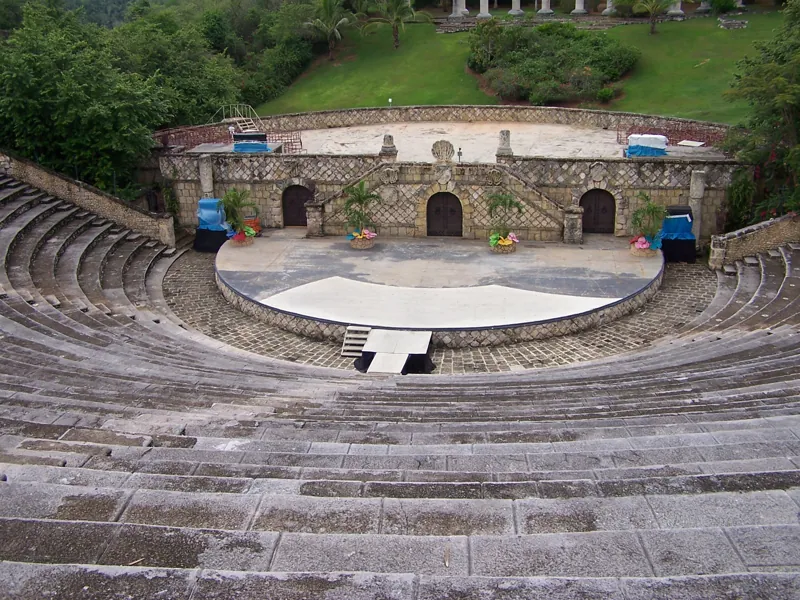
The amphitheater is the village's biggest draw. The tourism pages describe it as Greek in style and seating about 5,000, and Diario Libre says its design recalls Epidaurus in Greece. It opened on August 20, 1982, with a concert called the Concert for the Americas, which Diario Libre says was recorded and broadcast on US television, and which a Casa de Campo history says was an HBO production. After that opening it became a regular venue. A 2012 resort publication says the amphitheater had hosted about 171 concerts by then, and gives reported attendances of more than 5,000 for two concerts and more than 4,000 for another.
Other events have used the space. According to that same page, a jazz festival was first held on October 18, 1987, a ballet academy gave its first performance there on December 21, 1991, with proceeds going to a home for the elderly in La Romana, and a baseball hall of fame held induction ceremonies there in 2011 and 2012. To mark 40 years, Casa de Campo held a tribute concert and an art exhibition in October 2022, according to Diario Libre. Dominican tourism material says weekly performances take place there, especially in winter. Nothing here is guaranteed, so check the current schedule if you want an evening show. Remember that an evening show means a late drive back to Santo Domingo.
The School of Design
One of the less visible parts of the project is the design school. A Casa de Campo history says the Altos de Chavón School of Design opened in 1983 in affiliation with Parsons School of Design in New York. An architecture reference describes it as the first institution in the Dominican Republic dedicated to art and design education. Tourism material says an intensive study program teaches ceramics, fashion, design and other crafts, and that students finish their studies at Parsons in New York.
The school has since grown beyond the village. A 2016 project by the interior architects Moré y Wiese converted an old factory in the Ensanche Miraflores area of Santo Domingo into a school campus, reusing nearly 90 percent of the existing materials, according to the architecture site.
Is It Real History?
The buildings are real, and the craftsmanship is real, but the era they imitate is not local. Nothing in Altos de Chavón is from the 1500s, and the sources call it a recreation, a copy and a replica. What it offers is a walkable place with views, built from coral and terracotta stone, the same family of materials you see in colonial Santo Domingo.
The best way to use that is as a comparison. Spend a morning in the Zona Colonial first, perhaps with the first city history walk, and then see how a designer in the 20th century imagined the same era. You will notice what is missing: the weathering, the patched walls, the layers of repair and the people living in the houses. Those are the things a recreation cannot copy. For another day trip that is about nature and pre-Columbian art in caves, see Los Haitises National Park.
La Romana and the Coast
Altos de Chavón is on the edge of La Romana, a sugar town that has turned toward tourism. Central Romana's history lists the markers: an international airport at Casa de Campo opened in 2000, the first stage of the marina opened in 2001 with 184 docks, an international cruise dock opened in 2002, and a second marina stage added 166 docks and a shopping mall in 2005. The company's history says the 1982 sugar harvest at the mill was the largest of any single mill in the world, above 480,000 tons. The town is a working industrial and tourist place rather than a historic one, so treat the village as the reason to come.
Isla Catalina
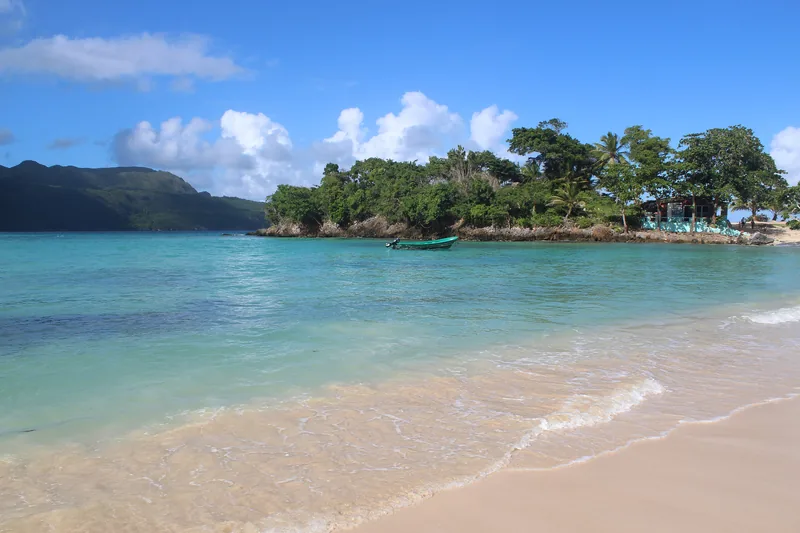
The common add-on is Isla Catalina, a small island off the coast. A Royal Caribbean guide describes it as about five miles from the La Romana cruise port and says cruise passengers reach it by a boat ride of roughly half an hour. The guide calls it an uninhabited island and marine reserve where nobody may stay overnight. A tour operator describes it as part of Cotubanamá National Park. The cruise guide describes two snorkeling areas: the Wall, on the east side, where a coral garden at 40 to 60 feet drops into a vertical wall reaching about 100 feet, and the Aquarium, on the west side, at 30 to 45 feet over a sandy bottom, which it calls a good spot for newer divers. It lists tropical fish, moray eels, parrotfish, stingrays and sea turtles among the wildlife and names December to April as the calmest and best period for snorkeling.
One tour-operator day trip from Santo Domingo runs 10 hours. Passengers meet at Parque Colón, ride about 1.5 hours by minibus or bus to the La Romana port, and take a catamaran to a coral reef snorkeling stop and then Catalina Island, where a buffet lunch is served on the beach. The tour includes snorkel gear and admission to the national park. That is a full day, and it is a different trip from Altos de Chavón. Pick one, or plan two separate days.
Getting There and Timing
The drive from Santo Domingo is a bit over an hour and a half. A route calculator gives 112 kilometers and about 1 hour 39 minutes. A travel article on day trips from the capital gives 120 kilometers and about 1 hour 30 minutes. One tour operator says its bus takes about 1.5 hours to the La Romana port. No current bus timetable is cited, so no bus operators or schedules are quoted. Ask your host or driver, or check at the bus terminal.
You can also join a guided day trip. One tour operator lists an Altos de Chavón day trip of 5 to 7 hours and a 9-hour trip that combines the village with Cueva de las Maravillas National Park. If you drive or hire a driver, leave early so the heat is not at its worst while you walk the cobbles. Tourism material notes that the stone plazas and dining verandas are lit at night, so a late stay has its own pleasures, but it means a late drive home.
Access and Hours
Entry rules matter here. Dominican tourism material lists opening hours as 9:00 a.m. to 6:00 p.m. and says access is subject to Casa de Campo's conditions for guests, residents, invited visitors and authorized visits. US-market tourism material says non-guests of Casa de Campo pay an entrance fee and that guided tours are available. Prices and procedures change, so call or ask your tour operator. The phone number on both tourism pages is 809 523 3333.
What to Bring
A travel article on day trips suggests combining the village with the botanical gardens at the neighboring resort, checking the amphitheater calendar and buying ceramics and leather crafts directly from makers. Wear shoes for cobbles and carry water. Bring a hat. The village has shops and restaurants, so you do not need to pack a meal.
Getting there from the penthouse
Penthouse Pallazzo is a townhouse built in the 1760s, about 150 meters north of Playa Montesinos, facing the Montesinos monument, at roughly 18.4697, -69.8851. The tours described above meet at Parque Colón. By the straight-line distance between map coordinates on OpenStreetMap, multiplied by 1.3 for real streets, at 80 meters a minute, rounded up to the next five minutes, that is about 10 minutes on foot.
From there, plan on roughly 1.5 to 1.75 hours of driving each way to La Romana, by the sources above. If you hire a driver instead of joining a tour, the driver can pick you up near the house, and a ride app or a taxi can take you to the meeting point if it is raining. The guided village tours one operator lists run 5 to 7 hours, which gives you a sense of how much of a day it takes.
Frequently asked questions
Is Altos de Chavón a real colonial town?
No. It is a 20th-century recreation of a 16th-century Mediterranean village. Work began in 1976, the church dates from 1979 and the amphitheater opened in 1982, though sources give different dates for completion.
Who built Altos de Chavón?
The idea came from Charles Bluhdorn, chairman of Gulf+Western, in 1974. Dominican architects José Antonio and Danilo Caro Ginebra drew the plan, and the Italian set designer Roberto Coppa, also spelled Copa, led the construction with Dominican masons, carpenters and blacksmiths.
How far is Altos de Chavón from Santo Domingo?
A route calculator gives 112 kilometers and about 1 hour 39 minutes of driving, and a travel article gives 120 kilometers and about 1 hour 30 minutes. Traffic leaving the capital can add time.
Can anyone visit, or only resort guests?
Dominican tourism material says access is subject to Casa de Campo's conditions for guests, residents, invited visitors and authorized visits. A US-market tourism page says non-guests pay an entrance fee and can join guided tours. Check before you go.
Can I do Isla Catalina and Altos de Chavón in one day?
They are separate trips in the available tours. A Catalina day trip from Santo Domingo is 10 hours, and a village day trip runs 5 to 7 hours. Doing both is a very long day, so choose one.
Is the archaeological museum worth the time?
It holds more than 3,000 pieces collected over 40 years and traces indigenous life up to the Taíno. The page that lists its hours is undated, so confirm it is open.
Sources
- https://www.visitdominicanrepublic.org/altos-de-chavon-la-romana
- https://www.godominicanrepublic.com/que-hacer/altos-de-chavon
- https://www.diariolibre.com/revista/musica/2022/10/18/el-40-aniversario-de-altos-de-chavon-se-lucira-con-tributo/2113827
- https://italianlegacyrden.academiadominicanahistoria.org.do/files/assets/basic-html/page-306.html
- https://casadecampoliving.com/museums-altos-de-chavon/
- https://casadecampoliving.com/today-the-altos-de-chavon-amphitheater-celebrates-its-30th-anniversary/
- http://www.casadecampo.com.do/about-us/history/
- https://centralromana.com.do/en/history/
- https://arquitexto.com/2017/01/chavon-la-escuela-diseno-santo-domingo/
- https://www.civitatis.com/en/santo-domingo/catalina-island-day-trip
- https://www.civitatis.com/en/santo-domingo/los-haitises-tour/
- https://royalcaribbean.com/guides/catalina-island-dominican-republic
- https://www.calcularruta.com/de-santo-domingo-a-la-romana.html
- https://unique-universe.blog/day-trips-from-santo-domingo/
- https://nominatim.openstreetmap.org/search?q=Parque+Col%C3%B3n+Santo+Domingo&format=json&limit=3