When Spanish ships first reached this coast, the island was already home to a large farming society with its own rulers, its own gods, a ball game and a taste for cassava bread. The Spanish called the island Hispaniola. The people who lived there called it Quisqueya, or Ayití, according to one heritage site, and today the Dominican Republic keeps the first name and Haiti the second. The people are usually called the Taíno, and nearly everything the Spanish later built in Santo Domingo was built on their land and, for a few decades, with their labor.
This article is about them. It covers where they came from, how their chiefdoms were organized, what daily life looked like, what happened after 1492, and what you can still see and eat and say today. It also covers a problem that runs through the whole subject. Almost everything written down about the Taíno was written by Europeans, and the numbers are argued over. Where historians disagree, this article says so.
The friar who spoke up for the Taíno in 1511 has his own article, Fray Antón de Montesinos and His 1511 Sermon. The city the Spanish built on the west bank of the Ozama is covered in A History of the Zona Colonial, and the other pieces in the series are on the history hub.
Before the Taíno
The Taíno were not the first people on the island. The Florida Museum's archaeology pages trace their ancestry to Arawak-speaking peoples of the Orinoco River in South America, known to archaeologists as the Saladoid culture. Around 1000 BC these people lived in large towns, grew manioc and corn, and made painted pottery. They reached eastern Hispaniola by about 250 BC. Around AD 600 a new tradition, the Ostionoid, emerged with larger populations in more varied settings. From about AD 1100 or 1200, villages grew larger and more formally arranged, farming intensified, and social ranks became more rigid. The Florida Museum describes the Taíno as among the most densely settled complex societies without a state in the Americas.
DNA has added detail. A 2021 study in Nature by Daniel Fernandes and colleagues looked at the genomes of 174 ancient individuals from the Caribbean and northern South America. It found that the older Archaic hunter-gatherer ancestry was more than 98 percent replaced by a genetically similar population of ceramic-using people related to Arawak speakers from northeastern South America, who reached the Greater Antilles at least 1,700 years ago. Four sites along about 50 kilometers of the southeast coast of the Dominican Republic, La Caleta, Andrés, Juan Dolio and El Soco, were occupied for about 1,400 years, and the ancestry of the people buried there stayed continuous even as their pottery styles changed. If you have read the Boca Chica and Juan Dolio guide, that is the same coast.
Names and Peoples
"Taíno" is the name most often used today, and it covers a family of communities, not a single political unit. Archaeologists divide them into Central or Classic, Western, Lucayan and Eastern groups, according to the Florida Museum. They lived alongside other peoples. A Dominican Acento article on the island's first inhabitants lists the Ciguayos, the Macoríes and the Ciboneyes, and says the Caribs, called Kalinagos, were rivals of the Arawak group. It also describes the Guanahatabeyes as nomadic and among the oldest.
One of the most useful things you can know is that the word "Taíno" and a tidy list of peoples both come to us from outsiders. When you read that the island had five kingdoms, or that one group was peaceful and another warlike, remember that the sources are Spanish chroniclers and later writers working from them. That does not make them useless. It does mean the same facts can be told with different emphasis.
The Five Cacicazgos
When Columbus arrived, the island was divided among five chiefdoms, called cacicazgos. Each had a head chief, the cacique, with lesser caciques over villages and districts. The Dominican sources name them like this:
- Marién, in the northwest, led by Guacanagarí, who was the first to receive Columbus.
- Maguá, in the northeast, led by Guarionex.
- Maguana, in the center, led by Caonabo.
- Jaragua, in the southwest, led by Bohechío and then by his sister Anacaona.
- Higüey, in the southeast, led by Cayacoa and then Cotubanamá. Sources differ on which name belongs to which period.
Below the caciques, society had three broad levels. An encyclopedia entry on the Taíno describes chieftains supported by councils of elders, with groups loosely linked in confederations. A heritage site lists the classes as the caciques, the nitaínos, who were noble, religious or medicinal leaders, and the naborías, who were workers. Chiefly rank was hereditary, and both men and women could hold it. The behique, a healer who led ceremonies, held a special place. Anacaona, who ruled Jaragua after her brother Bohechío, is the best-known woman leader.
Daily Life
Villages, called yucayeques, stood near rivers or the coast. The Acento article describes round houses, bohíos, with conical thatched roofs for ordinary families, and a larger rectangular house, the caney, for a cacique and his household. In the center was the batey, the plaza used for gatherings, and the Florida Museum notes that many towns had planned open plazas for ball courts or ritual use. A village could hold up to about 5,000 people.
Work was divided. The Acento article says men hunted, fished, cleared land and built, and women farmed the conucos, gathered fruit, wove and cooked. Children and elders gathered firewood. The conuco was the Taíno farm, a raised mound of earth, a technique the Florida Museum records for the Ostionoid period.
Yuca, also called cassava or manioc, was the staple. The root is poisonous raw, so it was grated and pressed to squeeze out the poison, and the flour was baked into casabe, a flat bread that keeps well, according to a Dominican heritage site. Other foods included corn, sweet potato, peanuts, peppers and pineapple, with protein from hutías, iguanas and birds. Tobacco was grown and smoked. People slept in hammocks, a word and an object that came into Spanish from the Taíno.
Casabe is the flat bread described above, and the word and the food both come from the Taíno. For where to eat in the old city, see the eat and drink guide.
Beliefs and Ceremonies
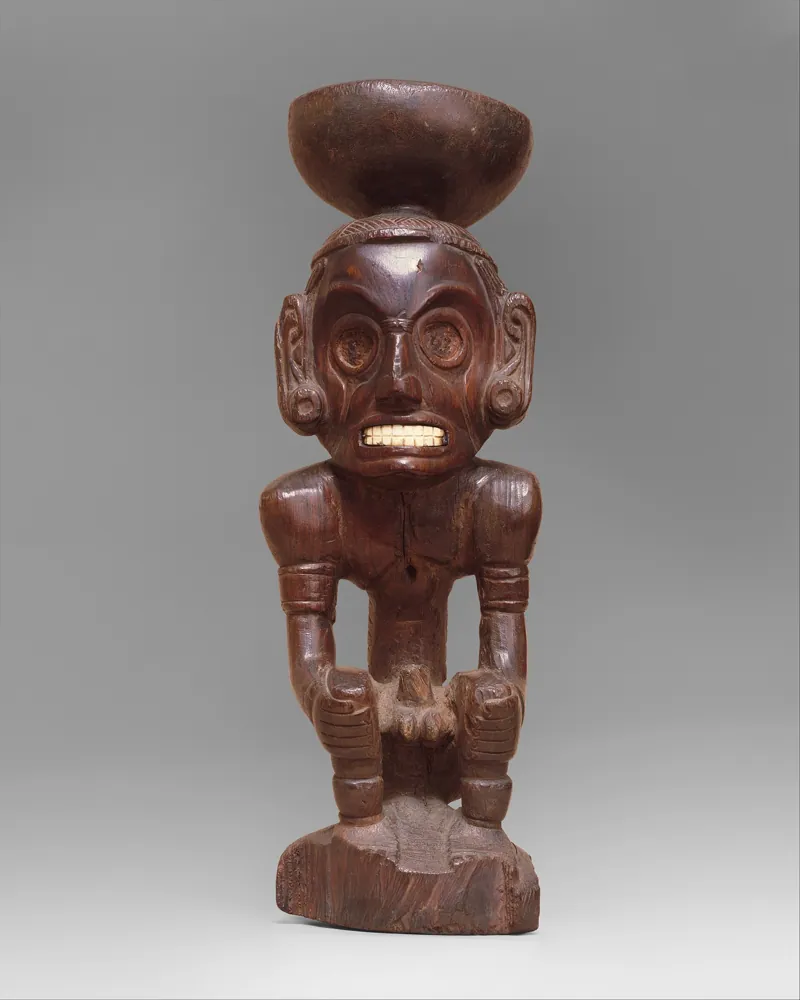
The Taíno believed that spirits and ancestors lived in nature. They carved images of spirits called cemíes, spelled zemí in many museum labels, and they used carved ceremonial seats called dúhos. A heritage site names two central figures, Atabey, the supreme goddess, and her son Yúcahu.
Two ceremonies come up in nearly every account. The areíto was a festival of song and dance that told the story of the community's ancestors. In the cohoba ritual, participants inhaled a hallucinogenic powder to communicate with the spirits. The Metropolitan Museum of Art's carved wooden zemí in the photograph above is labeled a cohoba stand, with the Dominican Republic given as the probable origin. The Acento article also describes the batuú, a ball game played without the hands or feet.
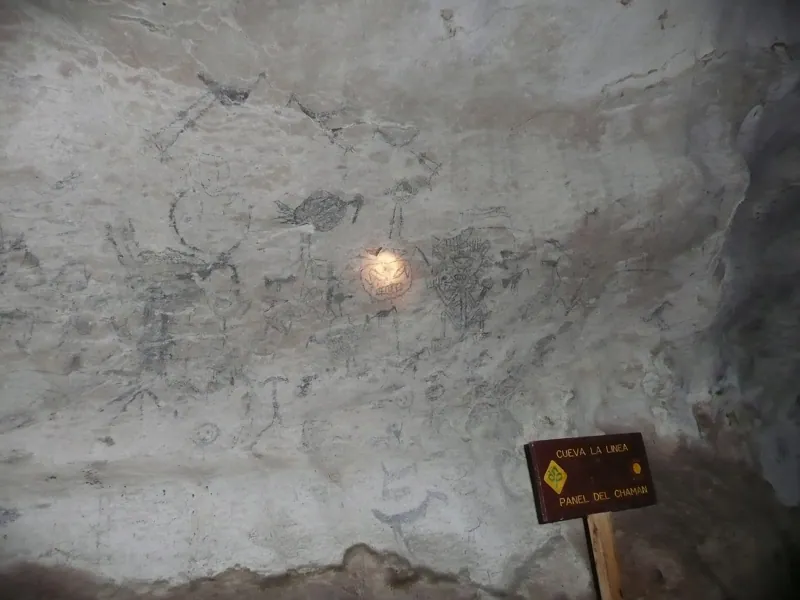
Taíno art survives in stone, shell, bone and wood, and in cave art. In Los Haitises National Park, northeast of Santo Domingo, the caves hold petroglyphs and pictographs, which the site's Los Haitises guide covers for visitors.
Meeting Columbus
Columbus arrived at Hispaniola in December 1492, according to an El Día article on Anacaona. On Christmas Eve his flagship, the Santa María, ran aground on a reef near En Bas Saline, on the north coast of what is now Haiti. The Florida Museum's excavation pages say people from the town of Guacanagarí helped the Spanish salvage the cargo and timbers. Columbus left 39 crew members at a fort, which became La Navidad.
When he came back nine months later he found the fort burned and the men dead. The Florida Museum says Guacanagarí told him some had died fighting among themselves and most had been killed when a rival chief attacked, and Columbus accepted this and founded a new settlement, La Isabela. The El Día article on Anacaona gives a different version. It says the chronicler Gonzalo Fernández de Oviedo wrote that the men were killed because they abused local women, and that Caonabo was blamed, with a historian, Luisa Navarro, doubting that account. Nobody who was there left a Taíno account, so the question stays open.
The Taíno had traded with the first Spanish. An encyclopedia entry says they exchanged small gold objects and cotton for broken mirrors, knives and copper bells, and that Columbus admired their agriculture, their peaceful nature and the richness of the land. A much larger expedition of 17 ships and about 1,500 men followed soon after.
The Collapse
What happened next is one of the fastest population collapses in recorded history, and it had several causes working together.
Tribute and forced labor. Within a few years the Spanish demanded gold and cotton as tribute. The Library of Congress country study says the Taíno rebelled in 1495 and were crushed. In 1503 the Crown introduced the encomienda, which made Indigenous people tenants of the Crown and gave settlers their labor in exchange for tribute and Christian instruction. Slave raids on nearby islands, especially the Bahamas, brought in more workers, and African slaves were being imported from 1503.
Violence. An El Día article gives the Jaragua episode in detail. Anacaona, who had become cacique of Jaragua in 1502, welcomed Governor Nicolás de Ovando in July 1503 with a traditional celebration. He arrived with about 70 horsemen and 200 foot soldiers. At a prearranged signal his men seized the caciques, bound them and burned them alive, while others attacked people outside. Anacaona survived the massacre, was taken to Santo Domingo and hanged. Las Casas, whom the article cites, praised her as a very notable woman and described the atrocities. Historians differ over the death toll, and over whether Ovando felt threatened or acted deliberately.
Disease. An epidemic around 1494 may have killed a third to a half of the population, and smallpox in 1518 killed most of the survivors. Social disruption added to it, including abandoned villages, destroyed crops and reports of falling birth rates.
The numbers. Nobody knows how many people lived on Hispaniola in 1492. The Florida Museum says estimates range from 100,000 to over a million, and that village surveys suggest the higher figures may be closer. The Fernandes team argues the other way. They estimate the effective population size, a genetic measure of how many people were breeding, at about 500 to 1,500 for ceramic-period sites, and at an upper bound of about 3,000 for Hispaniola and Puerto Rico combined. They argue that the actual head count is unlikely to be more than about ten times the effective size, and conclude that estimates of hundreds of thousands are probably too high. That is a genetic argument, and archaeologists may answer it, but it is a good reason to hold any single number loosely.
The later counts are more concrete, though still contested. One reference entry lists 60,000 in 1508, reported by Miguel de Pasamonte, then 33,523 in 1510 and 26,334 in 1514, both reported by Diego Colón, about 18,000 around 1518 to 1519, and about 2,000 in 1542. The Library of Congress study gives an even lower figure for 1548, roughly 500. Whichever you trust, the direction is the same. A Dominican heritage account says the Taíno had largely disappeared by the mid-sixteenth century.
The Dominicans' protest in 1511 is covered in the Montesinos article. It came in the middle of this decline, not at the start.
Enriquillo
The best-known act of resistance came late. Enriquillo, also written Enrique, was a cacique who led a rebellion in the Sierra de Bahoruco from 1519 to 1534. An Acento article says the immediate cause was abuse by the encomendero Andrés de Valenzuela, who harassed Enriquillo's wife, Mencía, and local officials who jailed Enriquillo when he sought justice. The same article notes the older grievances, the 1503 Jaragua massacre and the encomienda, and says the rebel bands numbered 15 to 20 fighters each.
Spain sent campaign after campaign. In February 1533 Captain Francisco de Barrionuevo arrived in Santo Domingo with about 180 men and met Enriquillo on an island in what is now Lake Enriquillo. After further negotiation Enriquillo submitted to the Crown, and his June 1534 letter to Charles I marks the end of the rebellion. He received land around the lake, farming tools and a degree of local autonomy, and in return agreed to help capture other rebels and runaways. He died in September 1535 and was buried in Azua. Whether to call it a peace or a surrender is a question the sources leave open.
What Survives Today
The Taíno did not vanish from the language. A Dominican heritage site lists the Taíno words still in use, among them hamaca, barbacoa, canoa, tabaco, huracán, yuca, batata, guayo and papaya. The Dominican Republic still identifies with the island's old name, Quisqueya, according to the same site.
They also survive in people. The Fernandes study estimates that pre-contact Indigenous ancestry makes up about 6 percent of the present-day Dominican Republic's ancestry, compared with about 4 percent in Cuba and 14 percent in Puerto Rico. Those are estimates from one modeling method, and the authors treat them as such, but they match what Dominican writers say. Many Dominicans carry a small, real share of Taíno descent, even though the Taíno as an organized society were gone within a few decades of contact.
Where to See Taíno Heritage in Santo Domingo
Centro Cultural Taíno Casa del Cordón
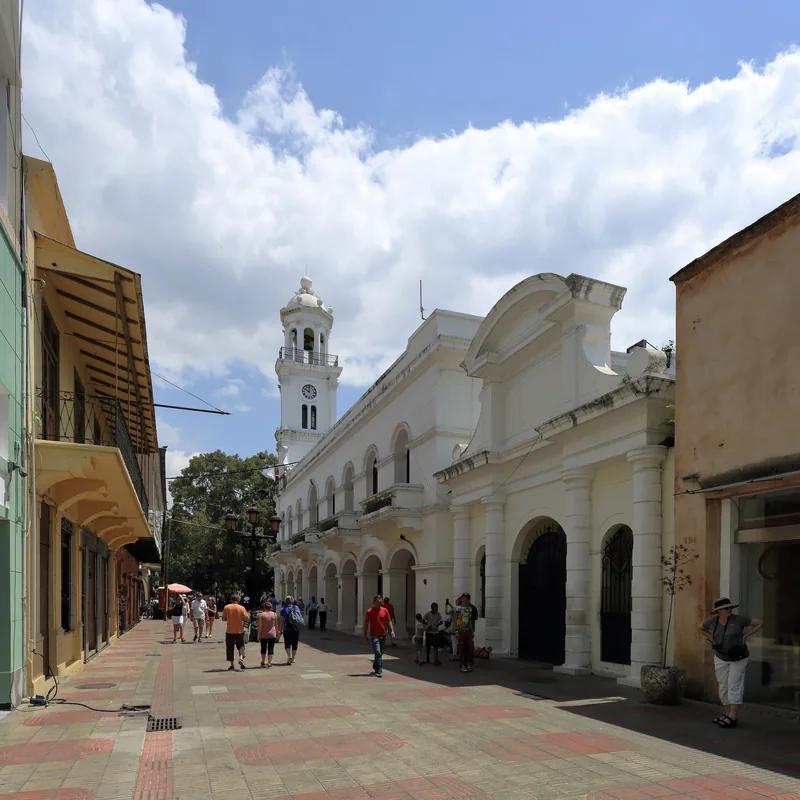
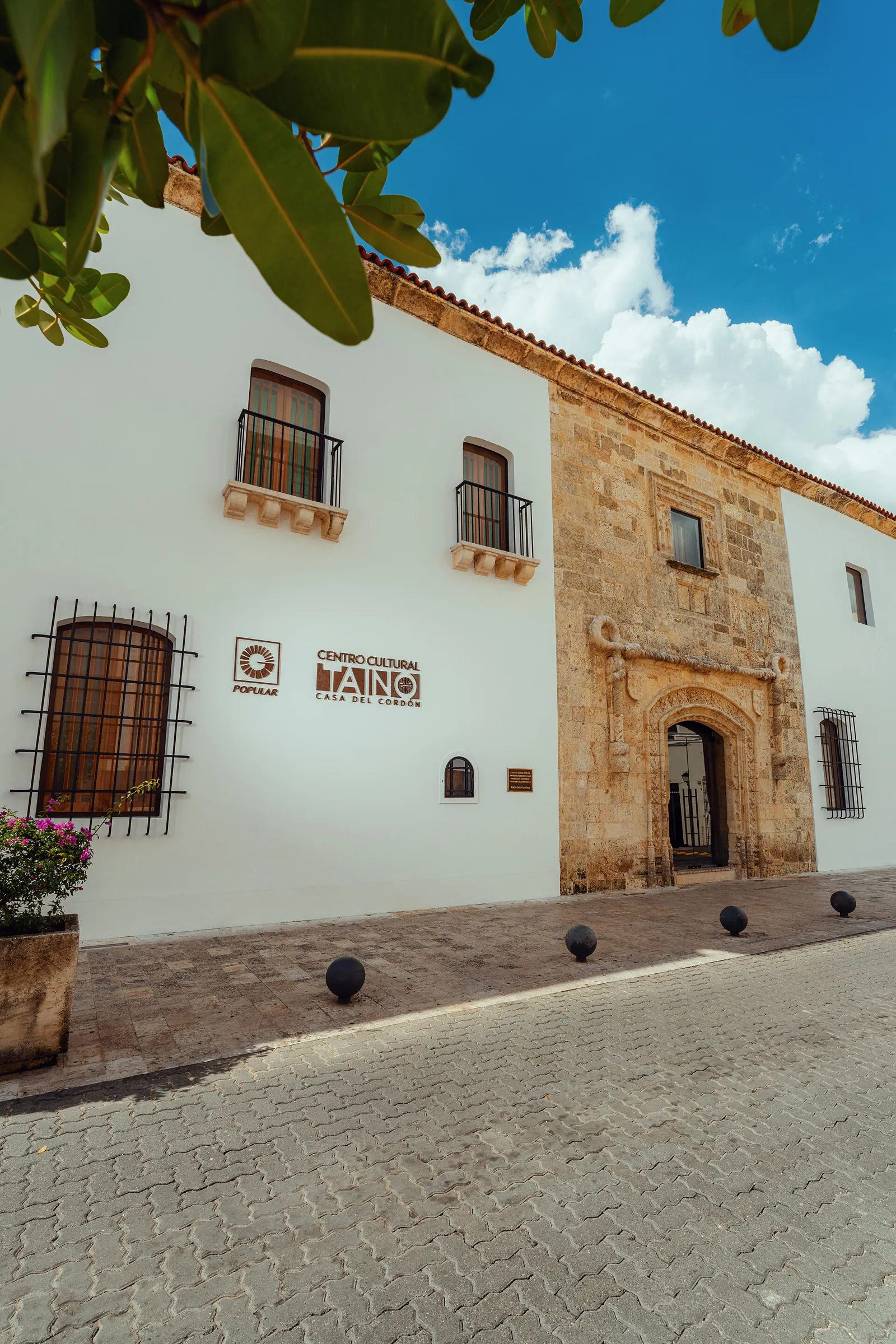
The newest and closest place is in the Zona Colonial. The Centro Cultural Taíno Casa del Cordón opened to the public on 21 November 2024, after President Luis Abinader inaugurated it on 19 November, according to Diario Libre. It occupies the Casa del Cordón, on Calle Isabel la Católica at the corner of Calle Emiliano Tejera, a historic house that Banco Popular Dominicano restored. Sources disagree on the house's date. Diario Libre says it was erected in 1503 and that some historians consider it the first two-story stone house in the New World. An article in the real estate magazine Inmobiliario dates it to 1507. Either way it is among the oldest buildings in the Americas.
The permanent exhibition is called Nuestros Primeros Pobladores. It combines more than 350 archaeological pieces, lent by the foundation of the historian Manuel García Arévalo, with audiovisual and digital displays, and it runs from the Archaic peoples to the Taíno. The center's own website lists featured pieces including a cohoba ceremony idol, a bat-shaped mortar, a frog-shaped vessel and a carved shell trumpet. The Swiss news service swissinfo, reporting on the opening, quoted the archaeologist Carlos León on the pieces, translated here:
We are looking at the most important collections of the Taíno world. Carlos León, archaeologist, quoted by swissinfo, December 2024
León also called the carved bone cohoba inhaler on display a unique piece that appears in many history books.
A 2025 Diario Libre sponsored article lists opening hours as Tuesday to Sunday, from 9:30 a.m. to 6:30 p.m. Admission was free through 31 January 2025, and the articles do not state the price after that, so check before you go. The center says guided visits can be booked through it.
Museo del Hombre Dominicano
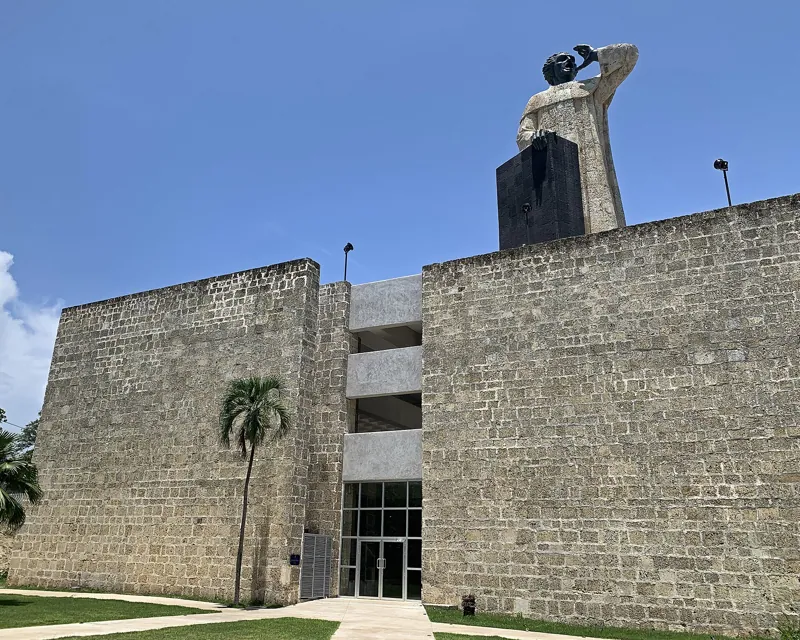
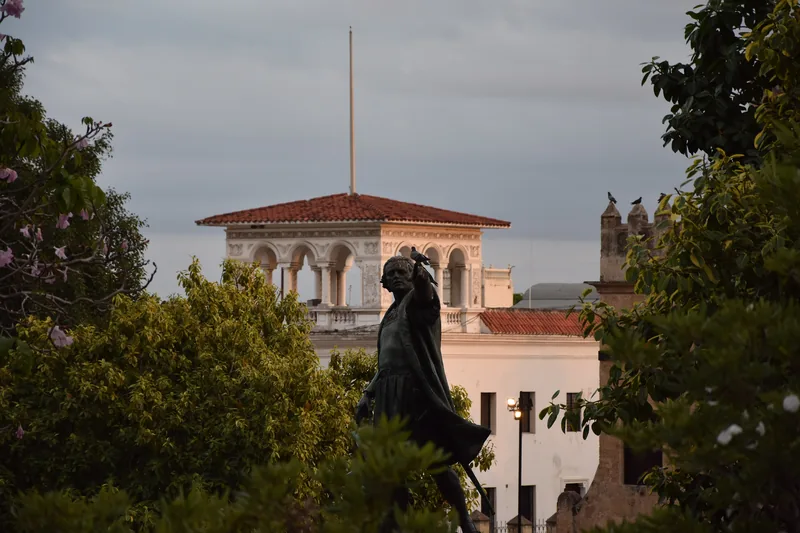
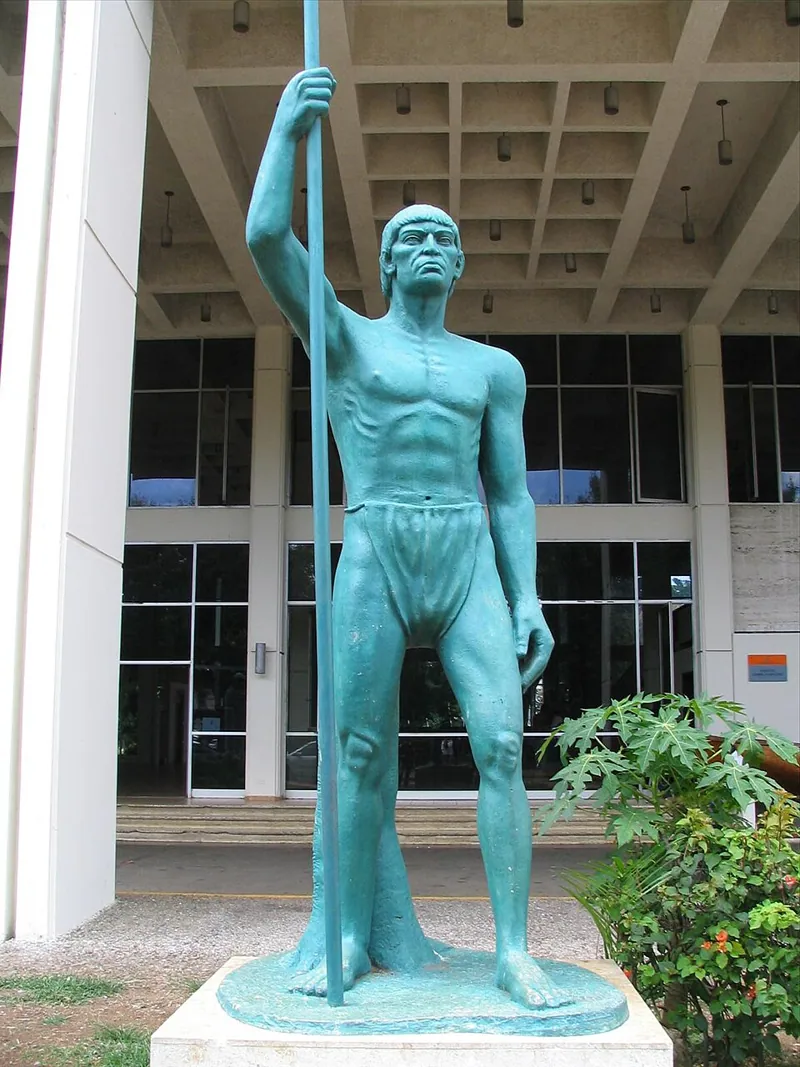
The Museo del Hombre Dominicano is the older and larger museum. It first opened on 12 October 1973 in the Plaza de la Cultura Juan Pablo Duarte, and it is also a research center for anthropological data on pre-Columbian peoples and Dominican traditions. After about four years of closure for repairs it reopened on 12 October 2022 with a Taíno exhibition called Cemíes, dúhos y rituales aborígenes, drawn from its own archaeological collection and scheduled at the time to run to the end of 2023. A statue of Enriquillo stands in the museum, as in the photograph above. Exhibits change, so check what is on before you go.
Los Haitises
For cave art, you leave the city. The Taíno petroglyphs and pictographs in Los Haitises National Park are among the best-known in the country, and the full trip is in the Los Haitises guide.
A Careful Way to Read This History
Three habits help with this subject. First, notice who is speaking. The Spanish chroniclers wrote for a Spanish audience, and Las Casas wrote to win a legal argument. Second, treat every number as a range. Third, keep the Taíno in the present tense where you can. They gave Spanish its words for hurricane and hammock and tobacco, and the bread and the root crop on your plate, and the people of the Dominican Republic are in part their descendants.
For the rest of the colonial story, the Zona Colonial complete guide and the landmarks guide show where the Spanish city stood in relation to all this.
Getting there from the penthouse
The Casa del Cordón is at roughly 18.4765, -69.8841 and Penthouse Pallazzo sits at roughly 18.4697, -69.8851. The straight-line distance is about 760 meters. Multiplied by 1.3 and divided by 80 meters a minute, the walk is about 15 minutes on foot, through the Zona Colonial. The Museo del Hombre Dominicano is at roughly 18.4723, -69.9081, about 2.4 kilometers away in a straight line, or about 40 minutes on foot, which makes a ride the practical choice for most people. The location page shows the house on a map.
Frequently asked questions
Who were the Taíno?
They were the Arawak-speaking farming people who lived on Hispaniola and the other Greater Antilles when Columbus arrived in 1492. On Hispaniola they were organized into five chiefdoms called cacicazgos. They grew cassava and corn, lived in villages of round thatched houses, and carved cemíes, the images of their spirits.
How many Taíno lived on Hispaniola in 1492?
Nobody knows. The Florida Museum says estimates range from 100,000 to over a million, with village surveys favoring the higher figures. A 2021 genetic study argues that hundreds of thousands is probably too high. Early counts by the Spanish were 60,000 in 1508 and about 26,000 by 1514.
What happened to the Taíno?
Forced labor under the encomienda, violence, slave raids and disease combined, and the population fell sharply within decades. An epidemic around 1494 may have killed a third to a half, and that smallpox in 1518 killed most of the survivors. A Dominican heritage account says they had largely disappeared by the mid-sixteenth century.
Is there Taíno ancestry in Dominicans today?
Yes, at a modest level. A 2021 Nature study estimates pre-contact Indigenous ancestry at about 6 percent in the present-day Dominican Republic. Words such as hamaca, canoa, huracán and yuca also came from Taíno.
Where can I learn about the Taíno in Santo Domingo?
The Centro Cultural Taíno Casa del Cordón, in the Zona Colonial, opened in November 2024 and holds more than 350 archaeological pieces. The Museo del Hombre Dominicano, in the Plaza de la Cultura, has an archaeological collection and has had Taíno exhibitions. Check both for current hours and exhibits.
Sources
- https://www.floridamuseum.ufl.edu/histarch/research/haiti/en-bas-saline/taino-culture/
- https://www.floridamuseum.ufl.edu/histarch/research/haiti/en-bas-saline/
- https://encyclopedia.com/international/encyclopedias-almanacs-transcripts-and-maps/taino-arawak-indians
- https://www.dominicanabroad.com/dr-heritage-tour-newsletter-1-pre-colonial-dominican-history-tainos/
- https://acento.com.do/cultura/primigenios-kiskeyanos-9676670.html
- https://pmc.ncbi.nlm.nih.gov/articles/7864882/
- https://eldia.com.do/anacaona-la-cacique-aborigen-que-desafio-a-cristobal-colon/
- https://acento.com.do/cultura/el-cacique-enriquillo-y-el-triunfo-de-la-rebelion-del-bahoruco-contra-los-conquistadores-espanoles-entre-1519-y-1534-9550114.html
- https://countrystudies.us/dominican-republic/3.htm
- https://www.diariolibre.com/revista/cultura/2024/11/19/inauguran-centro-cultural-taino-casa-del-cordon/2916503
- https://diariolibre.com/actualidad/contenido-patrocinado/2025/01/17/historia-y-arte-en-el-centro-cultural-taino-casa-del-cordon/2968189
- https://www.casadelcordon.com
- https://www.swissinfo.ch/spa/de-los-arcaicos-a-los-tainos,-nuevo-museo-recorre-en-santo-domingo-la-cultura-prehisp%C3%A1nica/88622363
- https://diariolibre.com/revista/cultura/2022/10/12/gobierno-reinaugura-el-museo-del-hombre-dominicano/2107787
- https://inmobiliario.do/en/530-years-later-santo-domingo-still-has-three-urban-layers/
- https://eldia.com.do/el-sermon-de-fray-anton-montesinos/
- https://commons.wikimedia.org/wiki/File:Deity_Figure_(Zem%C3%AD)_MET_DT1258.jpg
- https://commons.wikimedia.org/wiki/File:Enriquillo_Statue_Santo_Domingo.jpg
- https://commons.wikimedia.org/wiki/File:Centro_Cultural_Ta%C3%ADno_Casa_del_Cord%C3%B3n.jpg
- https://commons.wikimedia.org/wiki/File:Ta%C3%ADno_petroglyph_in_Los_Haitises_12_by_Line1.JPG
- https://nominatim.openstreetmap.org/search?q=Casa+del+Cord%C3%B3n+Santo+Domingo&format=json&limit=3
- https://nominatim.openstreetmap.org/search?q=Museo+del+Hombre+Dominicano&format=json&limit=3