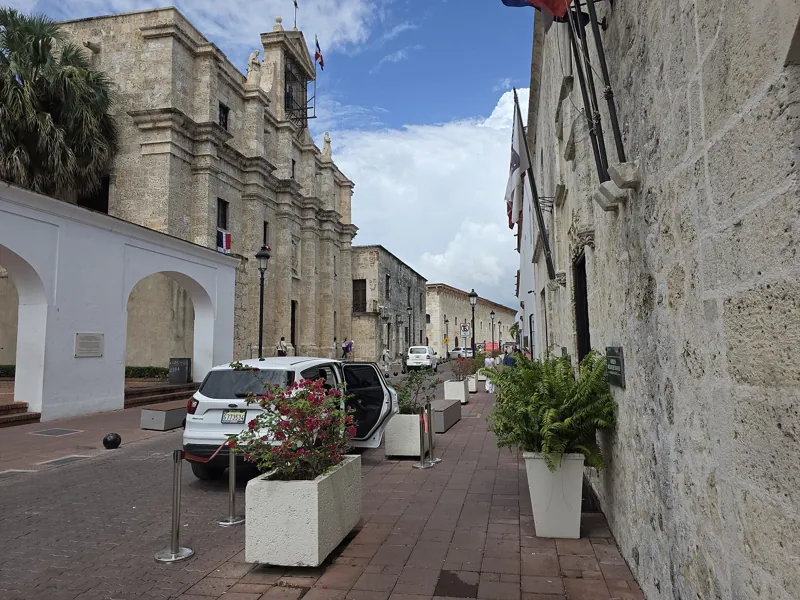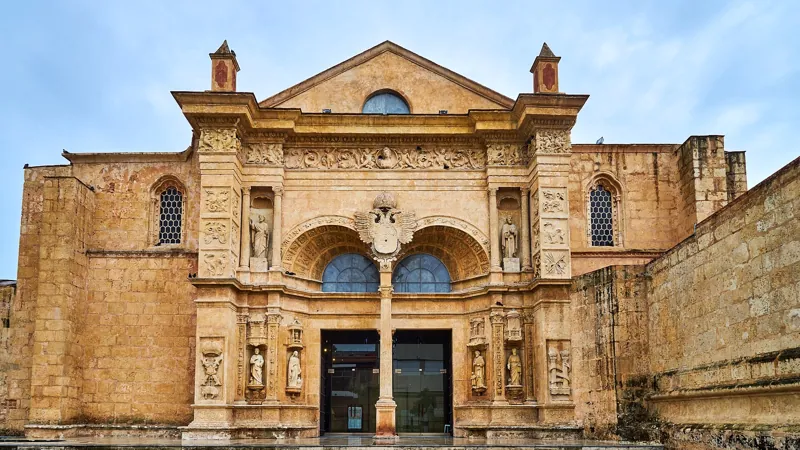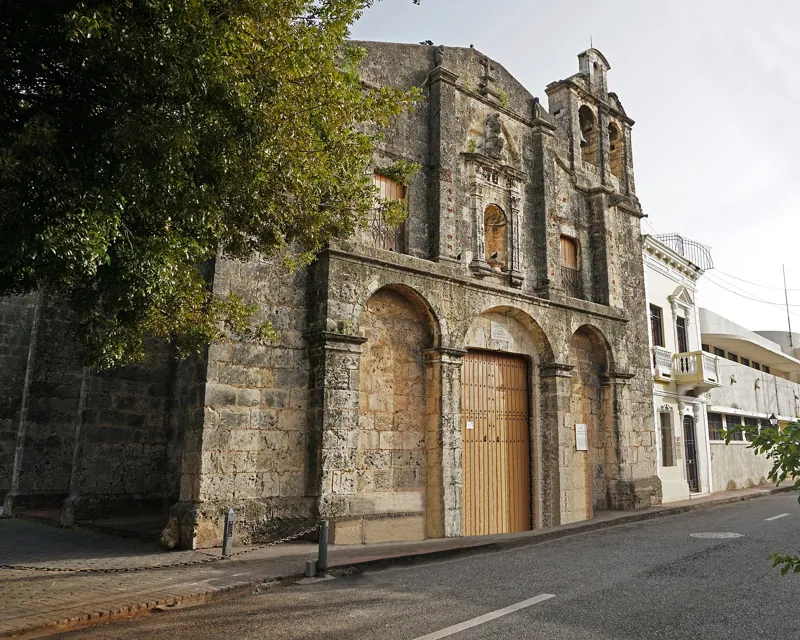
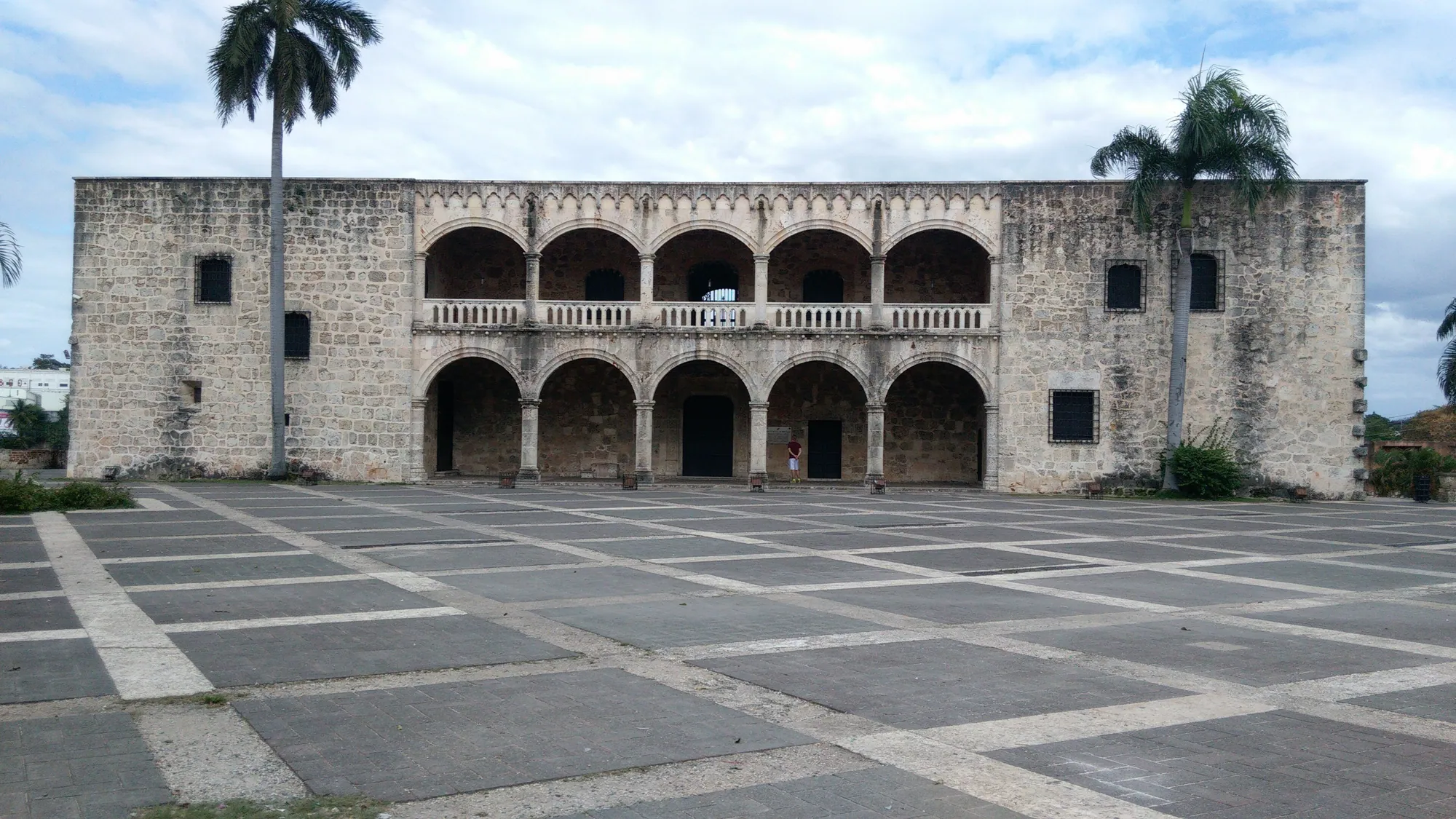
The Alcázar de Colón is a two-story palace of coral stone at the top of Calle Las Damas, where the street opens onto Plaza de España. Diego Colón, the eldest son of Christopher Columbus, had it built in the 1510s while he governed Hispaniola for the Spanish Crown. He lived there with his wife, María de Toledo, and their children were born under its roof. For a few decades it was the nearest thing the Americas had to a royal court.
The building has been lost and found more than once. It was abandoned for generations, rebuilt in the 1950s, and then closed again in 2023 for the biggest restoration since. It reopened at the end of September 2026 with new rooms, a new story to tell, and a courtyard that looks over the river. This page follows the palace from the first stone to the current museum, says where the sources disagree, and ends with what you can see inside and how to get there from the penthouse.
Diego Colón Comes to Hispaniola
Diego Colón was the son of the admiral who made the first Spanish voyages across the Atlantic, and he spent years fighting to have his father's agreements honored. In the Dominican press, his story is usually told this way: as a young man he served at court as a page to Prince Juan, traveled with the army in Italy under the Spanish commander Gonzalo Fernández de Córdoba, and then married María Álvarez de Toledo y Rojas with the approval of the Spanish monarchs. María came from the highest circle of Castile. El Día, in a 2024 profile, calls her a niece of the Duke of Alba and of King Ferdinand of Aragon.
He arrived on Hispaniola in 1509 as governor, replacing Nicolás de Ovando, who had run the colony since 1502 and was called home to Spain. Ovando is the man who moved the settlement to the west bank of the Ozama River after the hurricane of 1502, so Diego inherited a town that was already laid out in a grid and already had a fortress at the river mouth. What it did not have was a residence fit for a viceroy. The land for one was granted by King Ferdinand, on a rise beside the river.
María crossed the ocean in 1509 too, in a caravel, with other ships carrying the household staff meant to serve the new governor and his wife. El Día reports that she did not move into the palace at first. The house was not ready, so the couple lived in the fortress and then in a house that tradition connects to Francisco de Garay, today known as the Casa del Cordón, at the corner of Calle Isabel la Católica and Calle Emiliano Tejera. That detail matters because it shows how raw the colony still was in 1509: the governor and his wife borrowed lodgings for two years while their own palace was built.
Building the Palace, 1510 to 1514
Sources disagree on the dates by a year or two, and it is better to say so than to pick one. Dominican tourism material gives 1510 to 1514. A 2026 guide says construction began around 1511 and lists 1511 to 1514 elsewhere on the same page. Everyone agrees on the end of the range. The palace was a work of about four years, finished by 1514.
Nobody knows who designed it. Tourism material says Spanish builders did the work with about 1,500 Indigenous laborers, and that number deserves to be read slowly. Taíno workers had already been drawn into forced labor across the island by this time, and the palace of the colony's most important family was raised on that labor. The museum's new exhibition now says so directly, and later in this page you will see how.
The style is a mix, and the sources use different words for it. Tourism material describes Spanish and Italian Renaissance, Gothic and Mudéjar. Mudéjar means the Spanish building tradition shaped by Muslim craftsmen, which you see in the arches and the proportions. The 2026 guide describes mainly Gothic and Mudéjar character with Renaissance and Isabelline touches. It lists the main features: walls of coral stone, two floors, galleries of round and shallow arches, and an inner courtyard. An El Día columnist went further and called it one of the first palaces in the Renaissance manner anywhere, but the same piece gives no source for that, so treat it as an opinion.
The numbers you will see most often are about 55 rooms and 72 doors and windows. That is the original palace as described by tourism material. What stands today is smaller, and later in the story you will see how much was lost. The palace is often called the first fortified palace or the first viceregal residence in the Americas. Those are the claims of Dominican tourism material, and they are fair to say as theirs. The plain facts are enough: it is a stone residence built for a governor in 1510s Santo Domingo, and it is still standing.
María de Toledo and the Viceregal Court
The palace was the seat of government for the first years after the Spanish settled on the island, and it is hard to separate the building from the woman who ran it. According to El Día, María moved into the palace in 1511. She gave birth to seven children, and the article lists them as Luis, Felipa, Cristóbal, María, Juana, Isabel and Diego.
Diego left for Spain in 1515 and stayed until 1520 to press his father's claims before the Crown. During those five years El Día reports that María governed in his absence with the powers of the office. He died in Spain in 1526 and left his children still minors. His will asked that his remains and his father's be moved to Santo Domingo. María went to Spain with the children to keep the lawsuit alive and, returning, found her property ruined by neglect and theft. She asked the Crown, through Queen Isabel of Portugal, to carry out Diego's will. The question of where Columbus himself is buried has a long and tangled history of its own, which belongs to the cathedral's story. You can read it on the page about the Catedral Primada de América.
María died in the Alcázar on 11 May 1549. In 1536 the Council of the Indies took away privileges from the heirs, including the tithes of the Americas and the viceroy's title, and compensated them with the Duchy of Veragua. The family kept the palace, and three generations of Columbus de Toledo descendants lived there. Tourism material says possibly until about 1577.
Calle Las Damas gets its name from her. The tradition, which the street's own story covers, is that the ladies of her court walked it in the evenings. The street has its own page, Calle Las Damas, and the name story is told there with its caveats.
One more thing about María is worth knowing. The El Día profile points out that the old museum had no portrait of her. It names the omission as a flaw in how the rooms were arranged. The newly reopened museum says in its press material that it covers both Diego and María. How the new galleries handle her is not yet documented, and a press release is not enough to guess from. This is one of the first things to look for when you go.
Conquest Plans, and a Claim to Check
Tourism material makes a strong claim: that conquerors such as Hernán Cortés, Diego Velázquez and Vasco Núñez de Balboa met in the palace to plan the colonization of Mexico, Cuba, Peru and other places. Santo Domingo was the base for the first Spanish expeditions to the mainland, and it is certain that the colony's governor approved or organized many of them. The claim about meetings in this particular building is the sort of detail that spreads easily because it sounds right. It rests on a single tourism source, so it is better to say that the palace was the center of the colony's government while expeditions were being launched from the port below, and leave it at that.
What is well documented is the structure of power. The palace was the administrative center of the Columbus family's claims, at a time when Diego was fighting the royal treasury over which rights from his father's contract still held. In 1511, the same year the palace was being started, the Crown also set up the Real Audiencia, the court with authority over the new colonies, and ordered the houses to hold it. That second story is the one told on the page for the Museo de las Casas Reales. Between the two buildings, a few steps apart, you have both halves of early colonial authority: the family that held the title and the Crown that watched them.
The Palace in the Years of Decline
By the end of the 1500s the palace had lost its original role. The Columbus de Toledo family had moved on, and the center of the colony's government shifted to the Real Audiencia and the governors. In 1586 the English privateer Francis Drake took Santo Domingo and held it for about a month. The 2026 guide says valuables may have been taken from the palace during the occupation, and presents that as a possibility. Tourism material puts it more firmly, saying he reportedly took treasures. The raid has its own page on this site, Francis Drake's Raid on Santo Domingo in 1586, and the palace is a small part of that story.
After that the record is thin. The building aged. A Dominican newspaper feature in the Hoy supplement, which is written as an imagined interview with the restorer, notes that the palace was paid for by Diego himself rather than the state, which is one reason so little paperwork survives. The one known plan, held in the Archivo General de Indias in Seville, was drawn for a royal jail that was never built. That is the sort of fact that explains the ruin. By the eighteenth century, when other parts of the old city were being repaired or rebuilt, this building was not a priority. In 1870 it was declared a National Monument, which is the date of its legal protection.
Some travel material says the Alcázar fell as far as a dump or a warehouse. Those claims are not backed by a document, so they are left out here.
The Restoration of 1955 to 1957
The palace you saw on a visit before 2023 was largely the work of the Spanish architect Javier Barroso, who restored it between 1955 and 1957. The museum opened on 12 October 1957, according to a 2026 guide. This was the era of the Trujillo dictatorship, when the government was restoring colonial buildings to promote tourism and to project an image of continuity with the Spanish past.
The Barroso work is not universally admired. Tourism material calls the 1955 restoration important and highly controversial. It says the work did not respect the original appearance, that two cube-shaped volumes were added at the sides and galleries on both facades, and that the foundations of old viceregal rooms found in front of the palace were buried again on purpose. The Hoy feature, although written as a fictional interview, makes a similar point in Barroso's own imagined voice: because so little documentation existed, parts of the facade were reconstructed by educated inference. The engravings of the building were not reliable. The balustrades were gone. The crown of the walls had to be solved by a formula common in Spain at the time.
The furniture is the other part of the story. A 2026 guide says the museum showed about 900 historical pieces for decades and adds that not all of them belonged to the people who lived there. This is the correct way to look at an old palace museum. The objects are of the period and tell you how a house like this looked, but they are not the Columbus family's own belongings.
By 2026, Tourism Minister David Collado said the palace had not been restored since 1955. In his words, "Desde el año 1955 no había sido restaurado este Palacio Virreinal Diego Colón," which translates as "since 1955 this Viceregal Palace had not been restored."
The 2023 to 2026 Renovation
Work began in mid-2023 and ran about three years. Diario Libre reports that the Ministry of Tourism put in 100 million Dominican pesos and the Inter-American Development Bank added 3.15 million dollars, which was used across the museum redesign. Other reports give slightly different figures for the museum project, and one calls it more than 188 million pesos, so the exact total depends on what you count.
The scope was wide. The interior spaces on both floors were restored. The roof was waterproofed and recovered. The courtyard was renewed and the four facades conserved. Floors were replaced, plaster and structural problems corrected, and doors and windows restored. New carved doors went in, along with a stair down to the courtyard and a ramp for visitors with disabilities. Behind the scenes there is a new drainage system, electrical work, lighting, air conditioning, a backup generator, fire protection and security cameras.
The national director of monumental heritage, the architect Juan Mubarak, described the work in the Atardecer report as including sanitation, archaeological research, new technology and the correction of earlier interventions. That last phrase is worth noting. It is an official admission that some of what had been done in the 1950s needed undoing.
The reopening was led by President Luis Abinader and Minister Collado on 28 September 2026. Reports differ slightly on the calendar: Diario Libre says the museum opened to the public from 29 September, and entry was free for the first month. The president said he hoped the museum would become a historical school for tourists, students and Dominicans.
The renovation belongs to a wider program in the Ciudad Colonial. Infobae's report lists more than 100 homes recovered and more than 130 facades being painted, and says some works are due to finish in December. Collado also listed the Fortaleza Ozama museum, which opened in March 2024, and the cathedral museum, June 2024, among earlier projects.
What You Can See Today
The museum now has 17 rooms, four galleries and a courtyard with views toward the Ozama River. Compare this with the 22 rooms that visitors were offered before. Those older figures come from tourism material, which also notes that the palace once had around 55 rooms, so even now you are seeing part of the original plan.
The new narrative is the biggest change. The Ministry of Tourism says the museum covers Diego Colón and María de Toledo, and also the histories of Indigenous peoples, enslaved people and everyday life in colonial Santo Domingo. That is a notable shift from the 1957 museum, which was built around furniture and the idea of a noble household. Expect to see recreated rooms, including a viceregal bedchamber, a room of sacred art and liturgical objects, a room of historic clothing and Renaissance costume, and the upper arcaded gallery. Those rooms are described in the photographs that went with Diario Libre's report.
The piece the press keeps singling out is a sixteenth-century woven wall hanging of the Crucifixion. The Ministry of Tourism and Centro León sponsored the restoration of a set of sixteenth-century hangings of this kind, which are on display. If you like textiles, spend longer here than you think you need.
The building is worth studying as much as the objects. Walk the upper gallery and look at the arches. Look at the coral stone the walls are made of, and at how thick they are. Step into the courtyard and find the river view. The renovation added a heritage lighting scheme for the building and the patio, with a light projection that faces Plaza de España. If you come back after dark, you may see it from the plaza, though the schedule is not confirmed.
Visiting the Alcázar
The practical facts here are the kind that change, so check before you go. A 2026 guide lists the museum as open Tuesday to Sunday from 10 a.m. to 6 p.m., closed Monday. Another 2026 guide lists Tuesday to Sunday from 9 a.m. to 5 p.m. The two do not match, and neither is the museum's own notice, so assume neither is final and confirm.
On price, entry was free from 29 September to 29 October 2026. After that the guide lists 200 pesos a person and advises confirming the current fare with the Dirección General de Museos. The second guide gives a figure of about 100 pesos and mentions a combined Pasaporte Cultural ticket that covers the Alcázar and four other Colonial Zone museums. Both are secondhand, so the same advice holds.
A few small things help. The museum is on Plaza de España, and the courtyard is on the river side. Give yourself 60 to 90 minutes for a careful visit, longer if you read everything. Morning is the quietest time on the plaza outside.
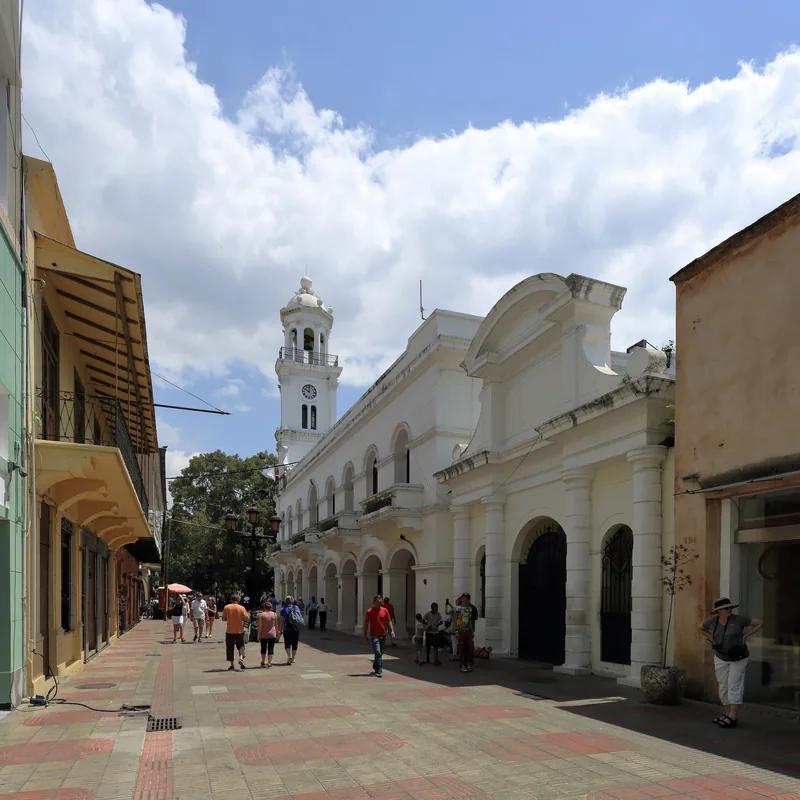
You can build a good half day around it. The Museo de las Casas Reales is a few minutes away on foot, and the old Atarazanas warehouses are just north across the square. The Plaza de España and La Atarazana page covers the square itself. For a walk that connects everything, see the Zona Colonial complete guide and the landmarks guide.
Why It Still Matters
The Alcázar is a useful corrective to the usual story of the Zona Colonial. Most of the old city's buildings were built for churches, forts and administration. This one was built for a family, and the family was caught in the middle of the empire's first great argument about who owned what in the New World. It is also the building where the argument about who the New World's builders were has become visible in the way the museum tells the story. By the museum's own description, the 2026 version looks beyond the household to the Indigenous workers, enslaved people and ordinary residents of the colony.
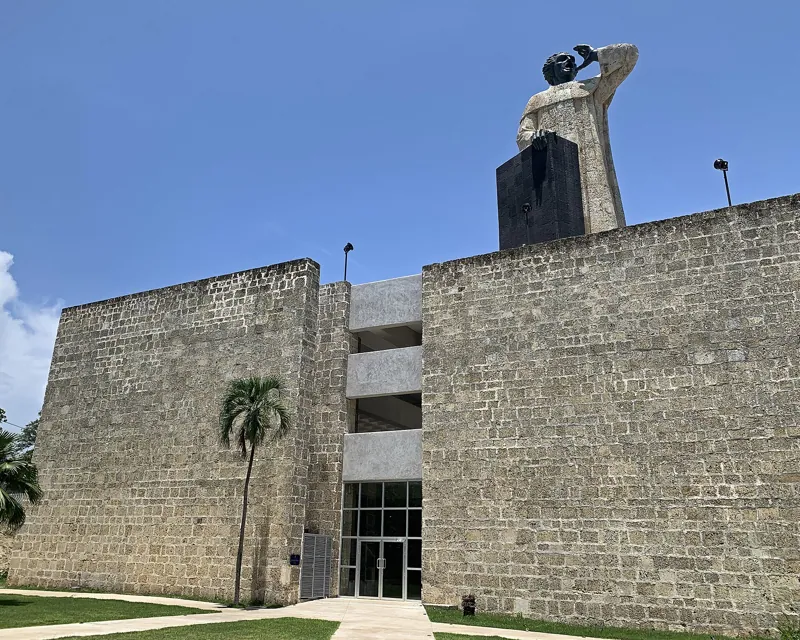
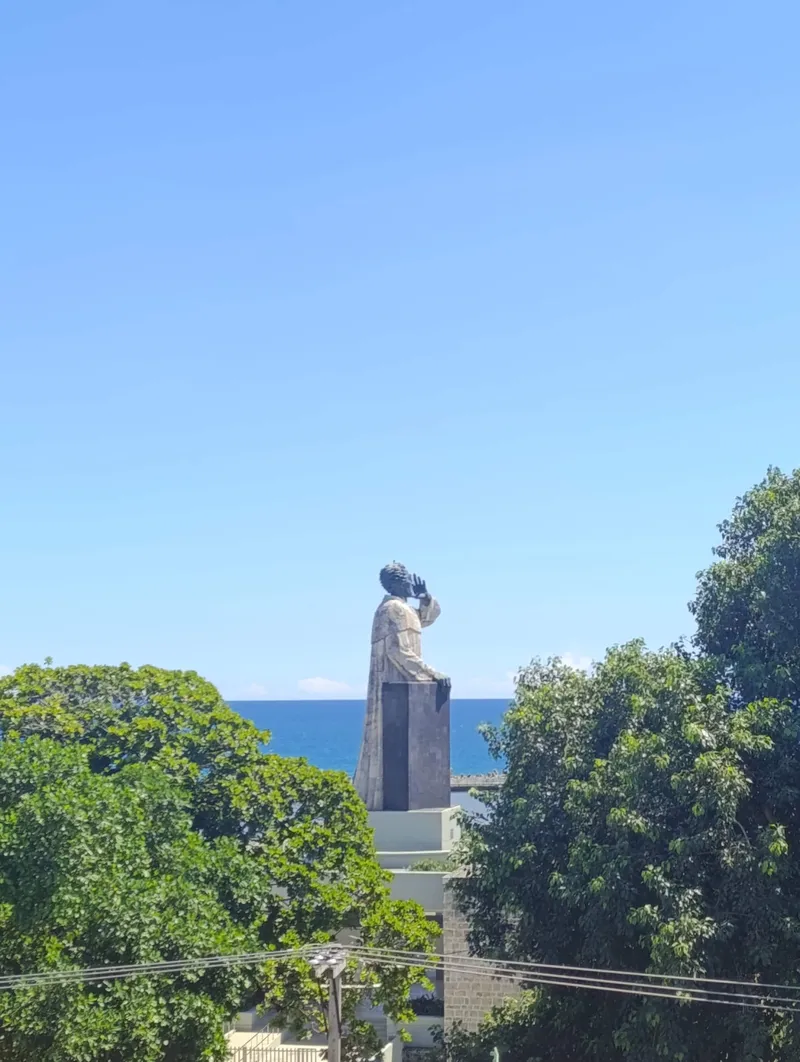
The same year the palace was begun, a Dominican friar stood in a church in this city and challenged the colonists on how they treated the Indigenous people. That sermon is told on the page for Fray Antón de Montesinos, and the monument to him faces the sea a short walk south of here. Standing in the Alcázar's courtyard and thinking about both is a good way to hold the first years of the colony in one picture.
Getting there from the penthouse
Penthouse Pallazzo sits about 150 meters north of Playa Montesinos, facing the Montesinos monument, and the Alcázar is northeast of it along the waterfront side of the old city. The straight-line distance is roughly 900 meters, and with the turns of the streets it is about 15 minutes on foot. Head toward the river and join Calle Las Damas near the Fortaleza Ozama, then follow the street north until it opens onto Plaza de España. The palace is the long stone building at the top of the plaza.
Go early if you can. The stone holds heat by midday, and the plaza has little shade before the afternoon. If you would rather ride, a short taxi or ride-hailing trip to the plaza takes only a few minutes, but the walk along Las Damas is part of the visit. Allow about 15 minutes each way, and add time if you stop at the sundial and the Casas Reales on the way.
Frequently asked questions
Who built the Alcázar de Colón?
Diego Colón, the eldest son of Christopher Columbus and governor of Hispaniola, had it built for himself and his wife María de Toledo. The architect is not known. Spanish builders did the work with about 1,500 Indigenous laborers, according to the Dominican tourism ministry's site.
When was it built?
Between about 1510 or 1511 and 1514. The sources start the work in different years and agree that it was finished by 1514.
Is the Alcázar open after the 2026 renovation?
Yes. It reopened at the end of September 2026 after about three years of work, with 17 rooms, four galleries and a courtyard overlooking the Ozama River. Hours and prices vary between sources, so check with the Dirección General de Museos before you go.
Did the Columbus family live there?
Diego and María lived there with their children. María died in the palace on 11 May 1549. Descendants stayed for about three generations, possibly until around 1577, according to tourism material.
Is the furniture original to the house?
Mostly not. The museum that opened in 1957 was furnished with period pieces, and a 2026 guide says not all of them belonged to the people who lived there. The new museum shows restored sixteenth-century wall hangings and a new exhibition, and the furniture serves to show how a household of that class lived.
Was Francis Drake in the Alcázar?
He held Santo Domingo for about a month in 1586, and the sources say valuables may have been taken from the palace. The details are thin, and the raid itself is better documented than what happened in this building.
Sources
- https://www.visitdominicanrepublic.org/alcazar-de-colon-santo-domingo
- https://www.diariolibre.com/actualidad/nacional/2026/09/28/abren-alcazar-de-colon-tras-renovacion-de-tres-anos/3672527
- https://noticias.mitur.gob.do/ministro-noticias/inauguran-remozamiento-museo-diego-colon-palacio-virreinal/
- https://atardecer.com.do/reabre-el-alcazar-de-colon-tras-proceso-de-restauracion-y-nueva-museografia/
- https://diariosocialrd.com/el-alcazar-de-colon-reabre-sus-puertas-con-una-nueva-mirada-a-la-historia-colonial/
- https://eldia.com.do/la-dama-ausente-en-su-palacio-de-santo-domingo/
- https://culturadominicana.org/alcazar-de-colon/
- https://hoy.com.do/alcazar-de-colon-entrevista-imaginaria-a-javier-barroso-restaurador/
- https://www.infobae.com/republica-dominicana/2026/09/29/la-ciudad-colonial-se-renueva-restauracion-historica-y-movilidad-sostenible-para-santo-domingo/
- https://drrevealed.com/explore/south-coast/alcazar-de-colon
- https://www.colonialzone-dr.com/nicolas-ovando/
- https://www.godominicanrepublic.com/things-to-do/calle-las-damas
- https://nominatim.openstreetmap.org/search?q=Alc%C3%A1zar+de+Col%C3%B3n+Santo+Domingo&format=json&limit=3