





Most visitors reach Santo Domingo by air, a smaller number come by cruise ship, and a few arrive by road from Punta Cana, Santiago, or the north coast. Each route ends in the same place, the old city on the west side of the Ozama River, and each has a few details that are worth knowing before you leave home. The biggest of them is a form: the Dominican government's electronic eTicket, which every traveler on a commercial flight must complete.
This guide follows the trip in order. It starts with the paperwork, moves to the airport and the ride into town, covers driving and buses, and then takes in the alternatives: the airport in Santiago, the airports on the east side of the island, and the cruise terminals at the river mouth. It ends with how to get around once you are here. Entry rules, fares, and schedules change, so the guide points to the official page for anything that matters and says "check before you go" where it should.
The eTicket Comes First
The eTicket is the electronic form that replaced the paper entry and exit cards. The Dominican tourism ministry's traveler portal states that every passenger entering or leaving the country must complete it, Dominican or foreign, and that paper forms stopped being accepted on April 1, 2021. The form is free. The official address is eticket.migracion.gob.do, and the tourism board's own travel pages list it as mandatory for entering and exiting the country. If a website asks you to pay for the form, it is not the government's.
Some details that matter in practice:
- You can fill it out as soon as you have your flight details, and it must be done before you reach the airline check-in counter, because the airline will ask for it.
- One user can enter the data for up to seven people on a single form, which is useful for families. Children complete the immigration and public-health sections but not customs.
- You need two forms for a round trip, one for entering and one for leaving, and each one produces a QR code. Save the QR code to your phone and screenshot it, in case the signal fails at the airport.
- The form asks for your passport number, so enter it carefully. If a detail is wrong, the portal has an option to consult an issued eTicket using the application code and change it.
- Private flights, cruises, and ferries are exempt. Passengers on those use a physical form instead.
The tourism ministry says the form can be filled in from one week before arrival, while the tourism board says as soon as you have your flight details. Either way, do it at home a few days ahead rather than at the check-in line, when you are tired and the connection is slow.
Passport, Visa, and Length of Stay
The tourism board's entry page lists the requirements for tourists, and it advises checking the official sources before you travel because requirements can change. As of that page:
- Your passport should be valid for at least six months. For nationals of the EU, UK, Canada, the US, Brazil, Chile, Argentina, Colombia, and Ecuador, there is an exception from December 1, 2024, to December 31, 2026, under which the passport must stay valid through your stay and departure.
- Many nationalities do not need a visa, including those from the US, Canada, the UK, the EU, and Mexico. Legal residents of the Dominican Republic and holders of a valid US, Canada, UK, or Schengen visa are also exempt. Everyone else applies through the Ministry of Foreign Affairs.
- Foreign passengers need a round-trip air ticket, which airlines verify before boarding. You also need an address in the country, such as a hotel or rental, and enough money to cover your stay.
- Stays longer than 30 days carry an extension fee that you pay when you leave, and it rises with the length of the stay. You can pay online before departure or at the immigration section of the airport, after check-in and security.
- The US$20 departure tax is already included in your airline ticket.
Guests who plan a month or longer should read the extension note before booking flights, and should check the official page for the current amounts.
Las Américas International Airport
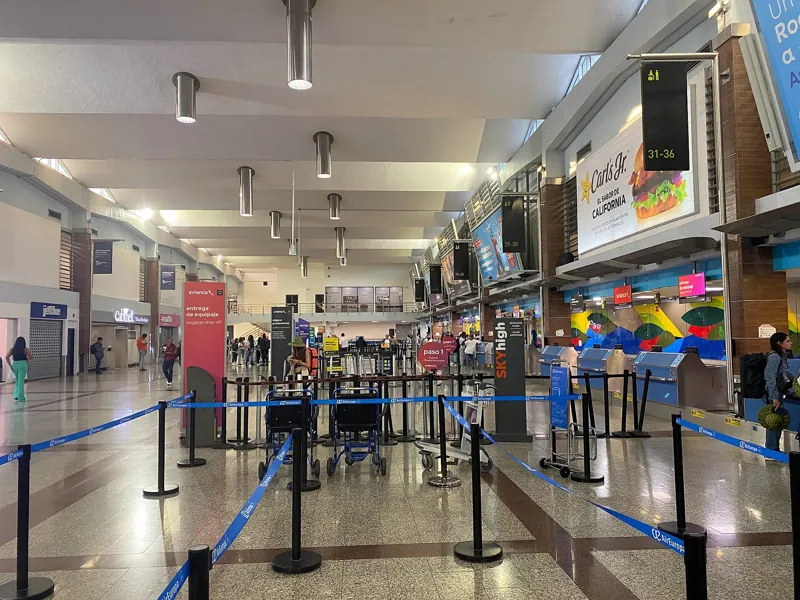
Las Américas International Airport, officially named for José Francisco Peña Gómez and known by its code SDQ, is the main entry point for international flights into the capital. The tourism board's air and sea travel page puts it about 30 minutes from Santo Domingo in normal traffic, and about six miles from Boca Chica and Juan Dolio, the beach towns to the east. The road from the airport into the city is the Autopista Las Américas.
Thirty minutes is the figure for a quiet road. Rush hour, rain, and a long weekend stretch it, and so does a late-night arrival when you are tired and the driver is slower than you hoped. Build an hour into any plan that has a fixed deadline, such as a dinner reservation on the day you land.
A good first move after you clear immigration is to get your bearings and a connection. SIM cards from Claro and Altice are sold in malls and supermarkets, and a passport is required, so decide before you leave whether to use an eSIM or your home plan. The neighborhood guide covers phone service in more detail.
Taxis
Taxis wait outside the terminal. Taxis in the country are not metered, so you agree on the price before the trip starts. City taxi rates are set by the taxi association, and in the larger cities the tourism board recommends calling a 24-hour company, with Apolo Taxi and Aero Taxi named as popular ones in Santo Domingo.
The routine that protects you is simple. Have the address written down, ask for the price before you put a bag in the trunk, confirm that it is the total, and decide whether it is in dollars or pesos. If the number sounds high, walk to the next car or order a ride on an app. Ignore anyone who offers to carry your bags to a car, and go to the taxi area outside instead. A pre-booked private transfer is another option, with a fixed price and a driver waiting at arrivals. Prices for these vary from company to company, so compare two or three, and ask whether tolls are included.
Ride Apps
Uber works from the airport. Its airport page says you can request a ride in the app, immediately or scheduled, and that all listed airlines use the Main Terminal. It also says the airport is very busy and suggests requesting early or scheduling a ride for later. Uber Reserve lets you book up to 90 days ahead, and cancellations are free up to one hour before the trip or before a driver accepts. The page's safety advice is worth following: accept only rides requested through the app, and check the driver and the vehicle before you get in.
Uber operates in Santo Domingo, Santiago, and Puerto Plata, and Cabify operates in Santo Domingo only. Apps spare you the phone call in Spanish and the destination conversation, and the cars are usually in better condition. Fares can be lower than a taxi when traffic is light, and they rise when demand does. Two habits help: have the pickup point pinned before you leave the terminal, and confirm the name on the screen with the driver.
Driving In
The tourism board's getting-around page lists the key highways. The Autopista Las Américas runs from the airport to Santo Domingo and Boca Chica. The Autopista Duarte, Route 1, runs from Santo Domingo to Santiago in about two hours. The Autopista del Coral, named for Óscar de la Renta, runs from Santo Domingo to Punta Cana in under three hours and to La Romana in under one. Route 7 runs to Samaná. Tolls run RD$60 to RD$100 per booth, and the guide advises carrying small pesos because change is given in local currency, even if you pay in dollars.
Renting a car is possible. Rental companies operate at the international airports and in the cities, you must be at least 25 and hold a valid license from your home country, and the tourism board recommends full insurance. Car rental is expensive and that you stay liable for damage up to a stated amount even with collision cover, so photograph every scratch before you leave the lot. It also notes that you drive on the right, that buses and trucks often pass in the opposite lane, that slow vehicles, motorbikes, and pedestrians are common near towns, and that roadside police stops are common.
My own advice, as someone who lives in the old city, is to skip the rental car if your stay is mostly in the Zona Colonial. The streets are narrow, many are pedestrian, and everything the old city offers is within walking distance. A car becomes a parking problem the moment you arrive. If you want to leave town for a day, a ride, a bus, or an organized tour covers every trip in our guides. The one case where a car makes sense is a long road trip across the island, and that is a different kind of holiday from the one in this guide.
Other Airports and the Cibao Option
Las Américas is the closest airport, but it is not the only one.
- La Isabela, JBQ. Also called Dr. Joaquín Balaguer International Airport or Higüero, it lies north of Santo Domingo and handles flights to Haiti, Cuba, and select Caribbean islands. Most visitors do not use it.
- La Romana, LRM. The tourism board puts it under two hours from Santo Domingo, and about 20 minutes from Bayahibe. The Altos de Chavón guide covers that side of the coast.
- Punta Cana, PUJ. The resort airport on the east coast. The drive to Santo Domingo is under three hours on the Autopista del Coral. The Punta Cana beaches guide covers the other half of that choice.
- Cibao International, STI. The airport serves the city of Santiago, in the north. One source puts the distance from Santo Domingo's airport to Santiago at 191 km, and the drive on the Autopista Duarte at about two hours. Flying into Cibao makes sense when your flight is cheaper or more convenient than the one into the capital, when you want to see Santiago and the interior first, or when you are combining the capital with the north.
If you land at Cibao, the next step is a transfer or a bus. Caribe Tours and Metro both run buses between Santiago and Santo Domingo, with departures about every one to two hours in the daytime, per a traveler's guide that gives roughly three hours for the ride. Private transfers cost more and take about two and a half hours. Check the bus schedule at the operator's own website, since timetables change.
By Bus From Elsewhere in the Country
The tourism board describes Caribe Tours as serving Santo Domingo, Santiago, Puerto Plata, and Sosúa with the most frequent departures, and Metro Tours as serving Santo Domingo, Santiago, Puerto Plata, Sosúa, and La Romana. Expreso Bávaro is the major daily service between Santo Domingo and Bávaro, which is useful if you land at Punta Cana. Arrive at least an hour early, bring a jacket because the air conditioning is cold, and choose the "Expreso" vans if you take a guagua, because they skip the roadside pickups. Fares are low, tickets are usually bought on the day of travel, and they generally cannot be refunded or changed.
Arriving by Cruise
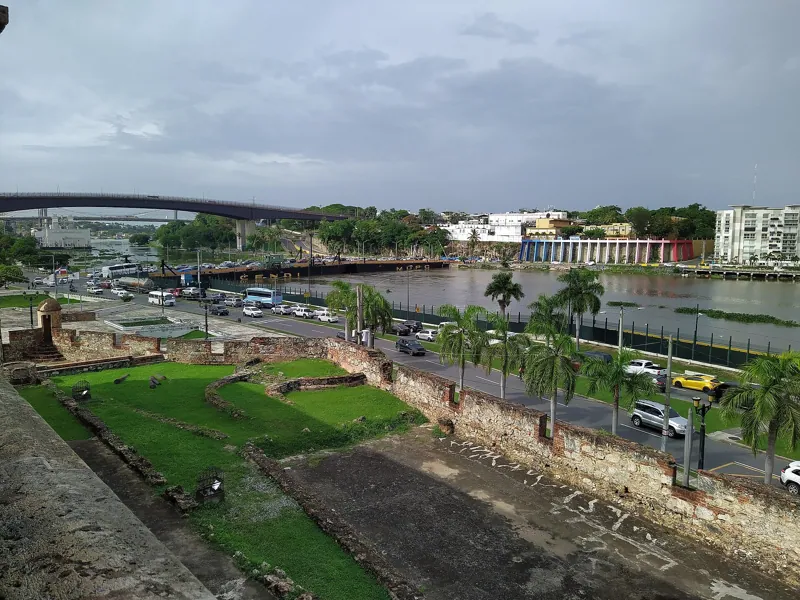
The Port of Santo Domingo sits at the mouth of the Ozama River, at the entrance to the city's colonial settlement. The tourism board says it has two modern terminals, Don Diego and Sansoucí, and a marina, Bartolomé Colón, which is part of the Sansoucí port and has views of the Colonial City. The marina has parking for up to 29 boats, 33 moorings, on-site immigration and customs, and showers.
Cruise passengers are exempt from the eTicket and use a physical form instead. From the pier, the old city is a short taxi ride, and for most people the ride is the sensible answer in the heat. The port's story is told in the Río Ozama and the old port article, and the complete guide to the Zona Colonial will help you plan a short call in port.
Getting Around Once You Are Here
Walk. The Zona Colonial is compact, many streets are closed to cars, and from almost any door you can reach the Catedral Primada, Calle Las Damas, and the Malecón on foot. Walking is the point of staying here. For the rest of the city you have three practical choices.
- Ride apps. Uber and Cabify work in the city. For short rides around town they are the easiest option.
- Taxis. Agree the price first, as above. A private taxi starts at about RD$150, though that figure is a floor and the real fare depends on distance.
- The Metro. The Santo Domingo Metro has two lines, and the tourism board says it is mainly used by commuters but is useful near some sights. Line 1 stops at Casandra Damirón for the Plaza de la Cultura. It runs roughly 6 a.m. to 10:30 p.m. daily, so check the hours before relying on it at night.
Motoconchos, the motorbike taxis, are cheap and fast and are also described in the tourism board's guide and in print guidebooks as risky, with helmets required by law but not always provided. If you try one, ask for a helmet. Guaguas and públicos, the shared vans and cars, are for travelers with Spanish and patience, and the guides advise asking locals the usual fare before you board.
For day trips by road, the Boca Chica and Juan Dolio guide and the Samaná Peninsula guide say how long each trip takes and how to go. If you have not decided when to travel, the best time to visit article covers weather and crowds.
How the Penthouse Fits
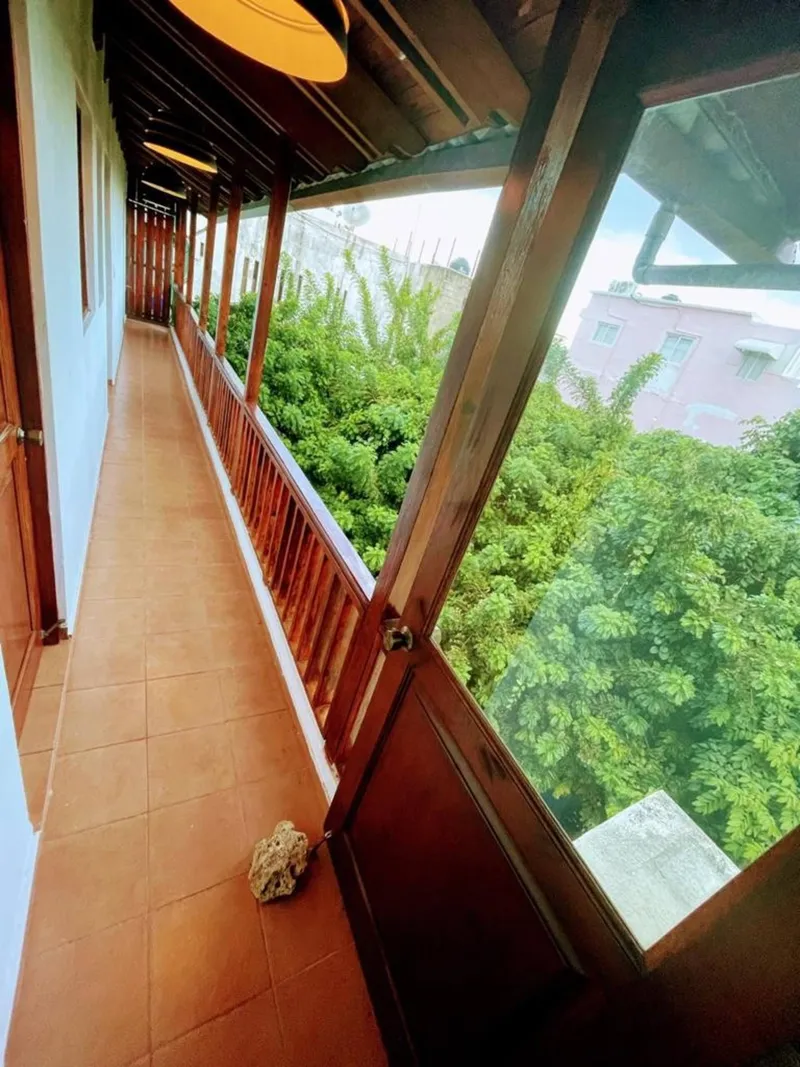
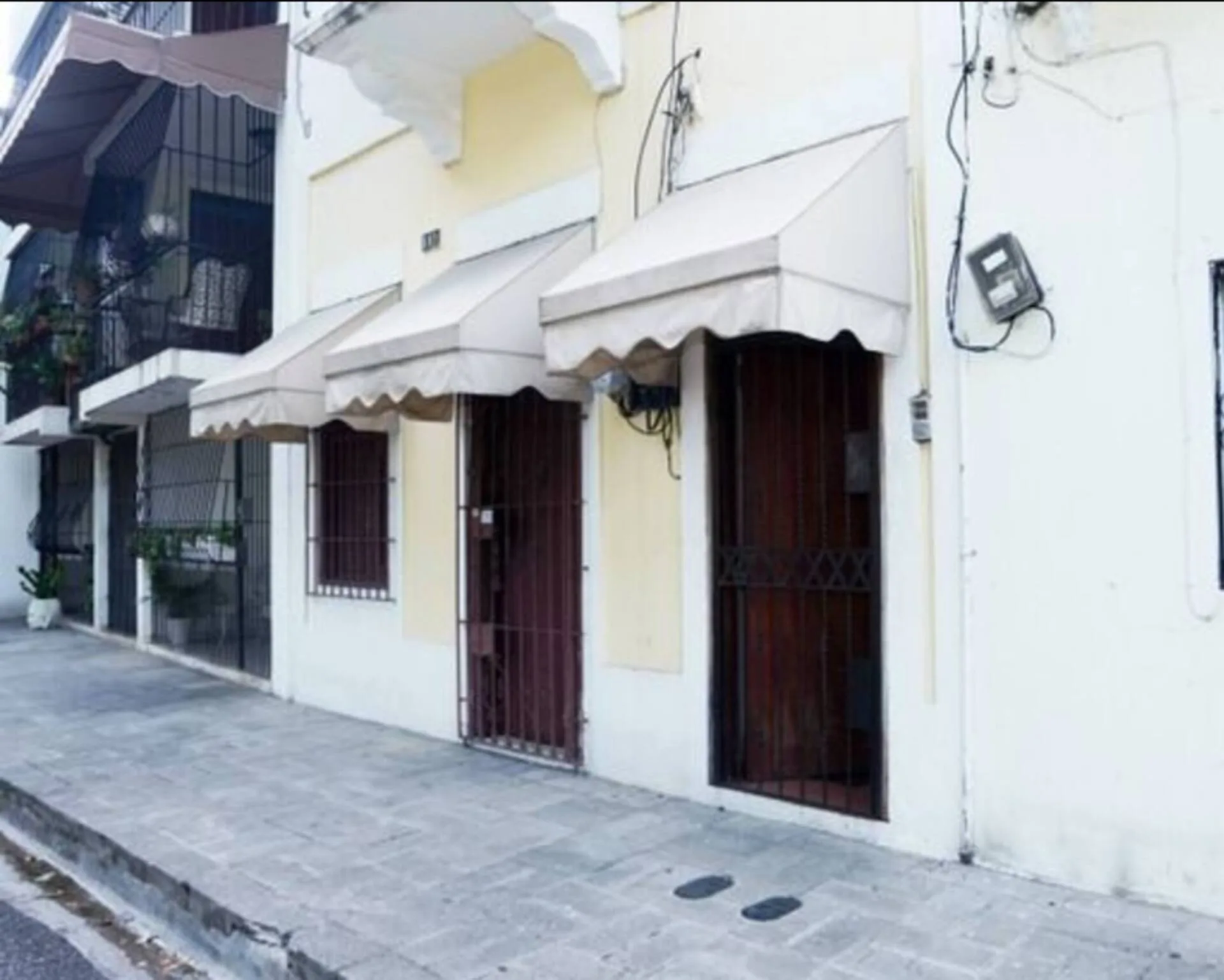
The penthouse is on the third floor of a townhouse and has no elevator, so check your luggage before you leave home and expect to carry it up the stairs. Stays of 28 nights or more are allowed, which matters for the 30-day tourist stay noted above, and pets are allowed.
Frequently asked questions
Do I need a visa for Santo Domingo?
Many nationalities do not, including those from the US, Canada, the UK, the EU, and Mexico, and a stay of up to 30 days needs no extension fee. Check the tourism board's entry page and the Ministry of Foreign Affairs before you travel, because rules change.
Is the eTicket free?
Yes. The official form at eticket.migracion.gob.do costs nothing. You need one for entering and one for leaving, and you must complete it before you reach the airline counter.
How long is the drive from the airport to the Zona Colonial?
About 30 minutes in normal traffic. Allow more during rush hour or in heavy rain.
Should I rent a car?
Not for a stay in the old city. The area is walkable, parking is scarce, and rides, buses, and tours cover the day trips. A car makes more sense for a road trip across the island.
Can I take a bus from Punta Cana or Santiago?
Yes. Expreso Bávaro runs the main daily service between Bávaro and Santo Domingo, and Caribe Tours and Metro run between Santiago and the capital. Check each company's schedule before you go.
Sources
- https://viajerodigital.mitur.gob.do/english/
- https://www.godominicanrepublic.com/travel/entry-requirements
- https://www.godominicanrepublic.com/travel/air-and-sea-travel
- https://www.godominicanrepublic.com/travel/getting-around
- https://www.godominicanrepublic.com/travel/travel-tips
- https://www.godominicanrepublic.com/travel/
- https://www.uber.com/global/es/r/airports/sdq
- https://www.roughguides.com/dominican-republic/getting-around/
- https://www.gamintraveler.com/2024/03/20/santo-domingo-airport-to-santiago-de-los-caballeros/