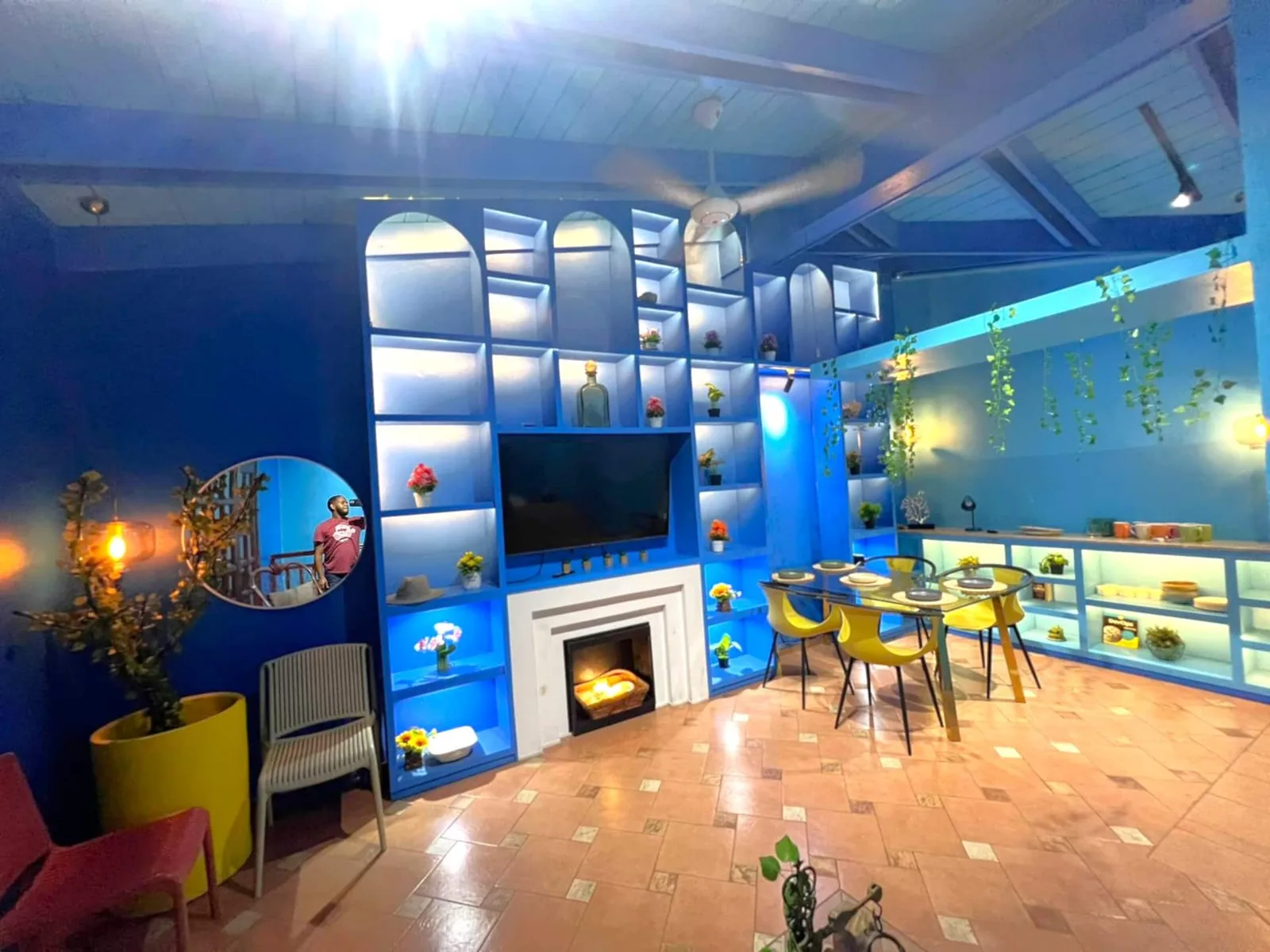
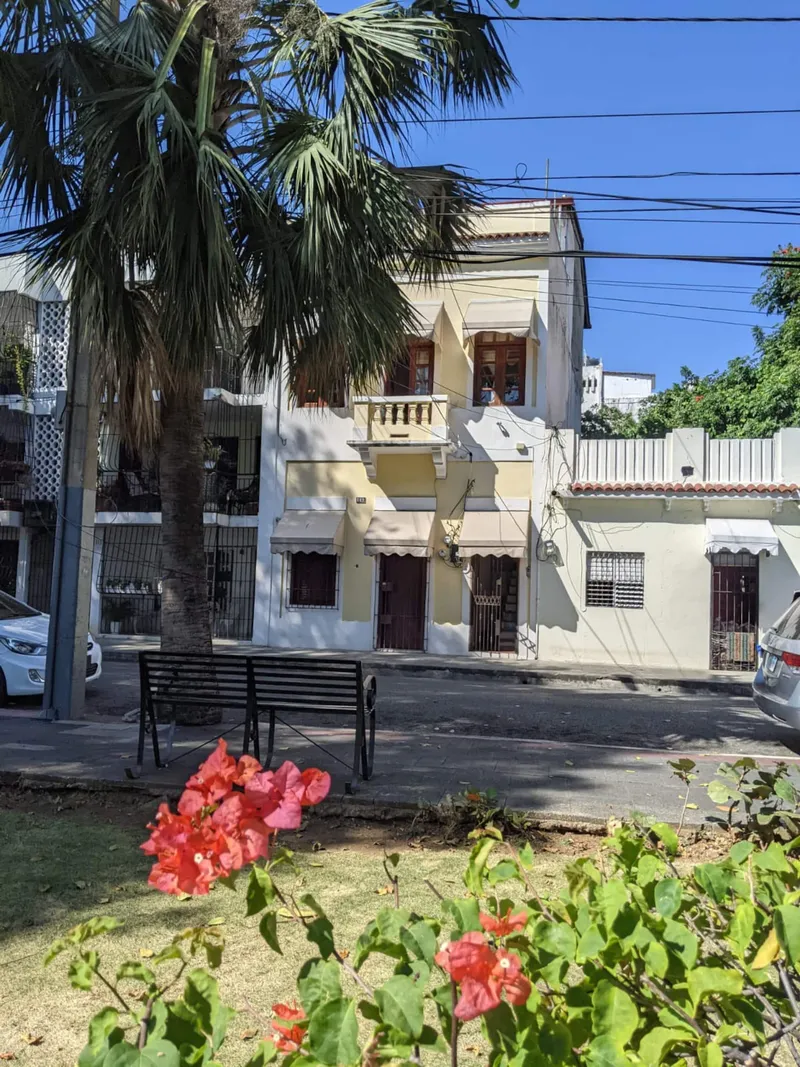
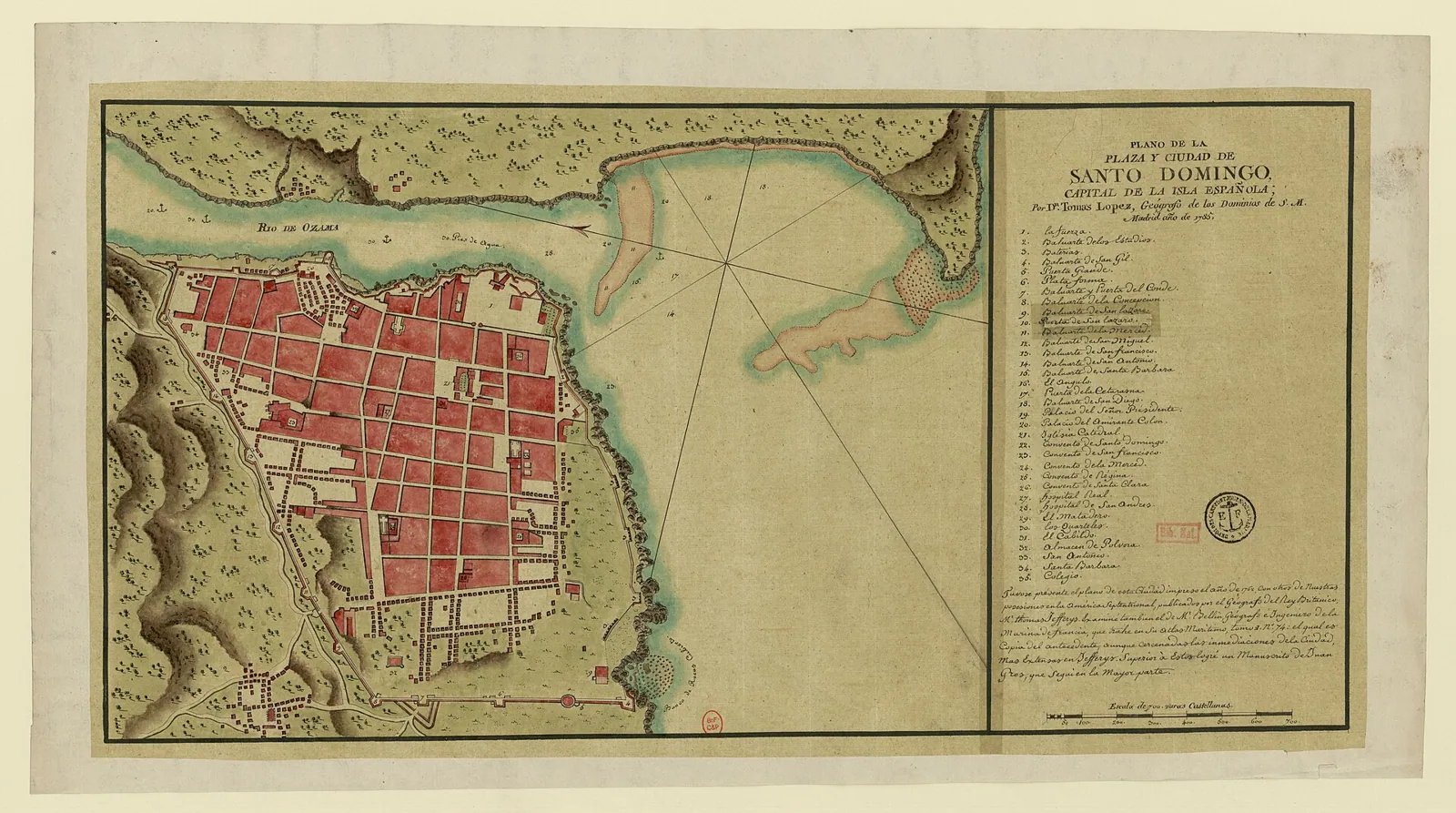
The Zona Colonial's best-known buildings were mostly built in the 1500s, and its best-known story ends in 1586 with Francis Drake. The 1700s are the century in between and after, when the city was small, short of money and a long way from the center of the Spanish empire, and it is the century in which the townhouse that holds Penthouse Pallazzo was built, in the 1760s. It is a quieter period than the sixteenth, and an important one, because the people who lived through it were the ones who began to call themselves by a name that later spread across the island.
This article covers the city in that century: what the Spanish Crown tried to do about the colony, the families it sent, what people lived on, who they were, which buildings from the period you can still see, and how the century ended with a treaty, named for Basel, that handed Santo Domingo to France. The sixteenth-century city is in A History of the Zona Colonial. The other pieces in the series are on the history hub.
The Colony in 1700
By 1700 the island had been split. The Treaty of Ryswick in 1697 gave the western third to France, according to the Library of Congress country study, and that French colony, Saint-Domingue, became very rich while Santo Domingo stayed poor. The seventeenth century had been brutal. An Acento column by the historian Manuel Núñez Asencio lists the Osorio devastations of 1605 and 1606, smallpox epidemics in 1666 and 1669 that killed more than 3,000 people, earthquakes and hurricanes, and a 1681 census that counted 6,312 people in the whole colony. It says the economy had shrunk to subsistence farming, with ginger and cacao as the main crops, and that the colony was kept alive by the situado, a royal subsidy that came first from Panama and later from New Spain.
In 1700 the Bourbons replaced the Habsburgs on the Spanish throne, and the Library of Congress study says their trade reforms began to revive the colony. A Dominican Academy of History article by Virginia Flores Sasso and Esteban Prieto Vicioso gives the context. The old Habsburg system had left the north and west of the island almost empty, and smuggling with French, English and Dutch traders had grown there. The new dynasty wanted to win the colonies' trade back and to populate the empty territory before a rival power did.
The Reforms and the Port
The Bourbon reforms reached their greatest intensity between 1762 and 1787, according to the same article, but the first steps came much earlier, and Santo Domingo's port was part of them from the start. In November 1700 an order from Madrid proposed that ships sailing from several Caribbean ports should be allowed to register at Santo Domingo, and that ships from Spain heading to the Windward Islands, Venezuela and nearby ports should call at the capital on the way out or back. The stated reasons were to secure the island's defense and to bring the largest possible number of ships to the port.
The article lists the changes that followed. A board to restore trade in 1705, one for finance and trade in 1713, a plan for galleons and fleets in 1720, a 1765 decree allowing traffic between several Spanish ports and the Windward Islands, the Reglamento of Free Trade in 1778, and in 1789 an extension that exempted smaller ports, Santo Domingo among them, from tariffs on trade with the major ports of the Indies. In 1757 a Barcelona trading company set up in Santo Domingo, with the aim of controlling trade between Spain and the colony, but the authors say it did not supply enough or work hard enough and did not solve the problem.
None of this made Santo Domingo rich. The Library of Congress study says it was a small Spanish colony with little effect on Spain's economy, and its landowners never reached the wealth of those in Saint-Domingue. But the port was the reason the city stayed alive.
The Canary Families
The most visible human effect of the reforms was migration. A Spanish rule of 6 December 1718, described in the Dominican Academy article, tied the export of Canary Islands produce to the shipment of settler families. It limited the American ports that could receive that trade to eight, Santo Domingo among them, and fixed the number at 50 families a year, of five people each, one family for each ton exported, with the ship owners paying to carry them and set them up.
The numbers that survive are modest. In November 1736 the governor reported the arrival of 46 families, 230 people, sent from the Canaries to settle the island, though he added that some of the women were alone and some of the husbands were in the galleys or in exile. Citing the churchman Cipriano de Utrera, the article says that between 1720 and 1764 forty ships arrived in Santo Domingo with a total of 483 families, and that 225 of them were taken by two ships from the capital to the port of Montecristi. The Crown paid. The article says the sick Canarians were treated at the Hospital de San Nicolás in Santo Domingo at the king's expense, and that spending for the new town came out of the Mexican subsidy.
The Crown also founded new towns. A royal order of 18 May 1749 told the governor to found a town in the bay of Manzanillo, and work began in 1751 under the interim governor, José Sunyer de Basteros. By the article's count Montecristi had about 600 inhabitants in 1772, mostly of Canary origin and almost all raising cattle. The same Dominican Academy article says the intention was to depend less on the situado, which shows how much the colony still relied on money from Mexico.
The city itself is hard to count. The sources for this article give figures for the colony and for individual towns, but none for the capital in these decades. What they do show is a city that was the seat of the governor, the Audiencia and the archbishop, and a port, in a colony that was thinly peopled.
What People Lived On
Ranching was the dominant business. An Acento column on race and creole identity in the 1700s describes a society run by the hateros, the cattle ranchers, whose outlook was set against the neighboring French colony's plantations, which were tied to the world market and worked by many more enslaved people. The Library of Congress study says Spanish law let an enslaved person buy freedom for a relatively small sum, that Santo Domingo's landowners imported far fewer slaves than Saint-Domingue's, and that by the turn of the century freedmen made up the majority of the population. The poet and chronicler Luis Joseph Peguero finished a history of the conquest in 1772 or 1773, written from the ranchers' point of view, and the Acento column says that money circulated very little.
The Spanish Crown wanted more. In the mid-1760s, a scholarly article by Ana Hontanilla says, the colony's administrators and landowners sent a list of petitions to the Council of the Indies in Madrid. They asked for a system to control the lower classes, for tax advantages and for royal remittances. They said that for lack of slaves, and because of free Black and mixed populations they called vagrant, the colony was in ruins, and they could not copy the profitable model of Saint-Domingue. On 29 October 1769 the king answered with a decree telling the governor to form a committee to improve indigo, cacao, cotton, tobacco and hides. It met in 1772, asked again for enslaved workers, and called for resettling the monteros, fugitive slaves living in remote areas, under white farmers' supervision.
That sequence matters for how you read the 1760s. The Crown and the local elite were both trying to change the colony, and both of them proposed to do it by increasing slavery and controlling free people of color. It does not make for pleasant reading, and it belongs in any picture of the city. The townhouses of the period were built in that world.
Who Lived Here
The people of the city had a name for themselves. The Acento column notes that Santo Domingo was the colony's most important city, that Peguero called it "mi ciudad de Santo Domingo," and that people born there were called dominicanos, a word that later spread to the whole island.
Society was mixed. The Acento column says racial mixing became the norm after the hardships of the seventeenth century, and that Antonio Sánchez Valverde, a priest and lawyer, described frequent relationships between white masters and enslaved Black women, often built on promises of freedom. According to Hontanilla's article, Sánchez Valverde lived from 1729 to 1790, was of African descent, and wrote a work in 1785 called Idea del valor de la isla Española, an analysis of why the colony had fallen behind and a plan to improve it. He argued, in keeping with the prevailing view of the late eighteenth century, for more African slavery and for limits on the laws that allowed owners to free enslaved people. At the same time his idea of who counted as an inhabitant challenged the way the Audiencia treated skin color as a crime. The article describes him as occupying an ambiguous position, tied to the colonial elite by his education and career but marked by his ancestry and a court record that included arrests.
In 1783 the Council in Madrid ordered the Audiencia to draft rules for the economic, political and moral government of Black people, and the result was the Código negro carolino, a slave code written by the judge Agustín Emparán y Orbe. Hontanilla notes that the Council acknowledged receipt of Sánchez Valverde's manuscript a day before that order was issued.
Buildings From the Century
Several buildings you can see in the Zona Colonial belong to this century, and the Dominican Foreign Ministry's 2024 visitor guide, which gives opening hours, is one of the sources for the list.
The Jesuit Church, Now the Panteón
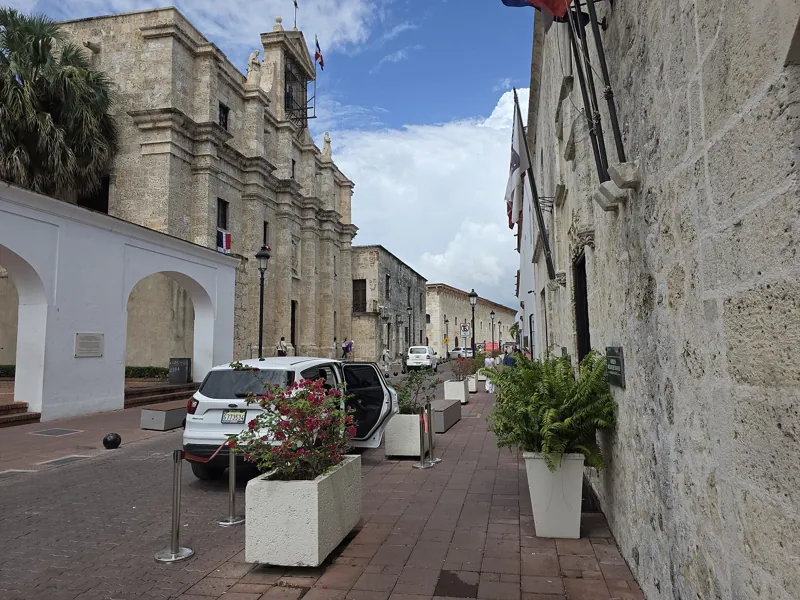
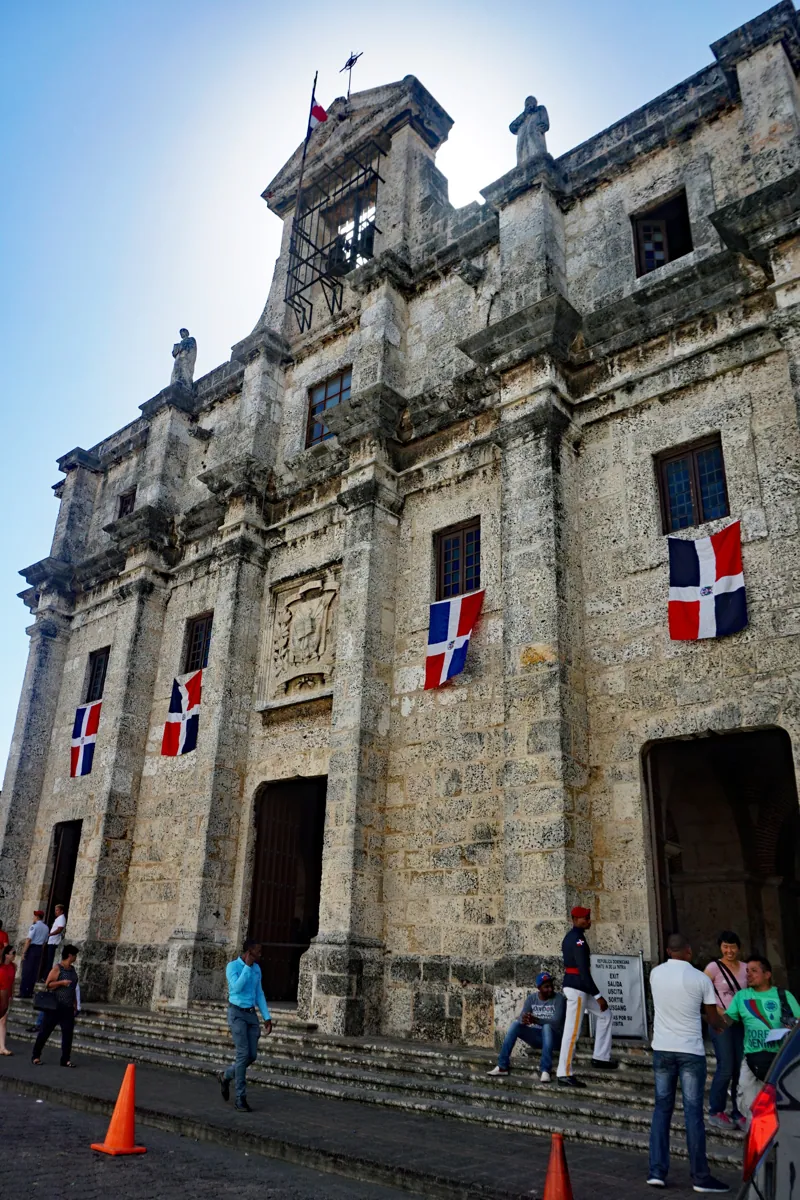
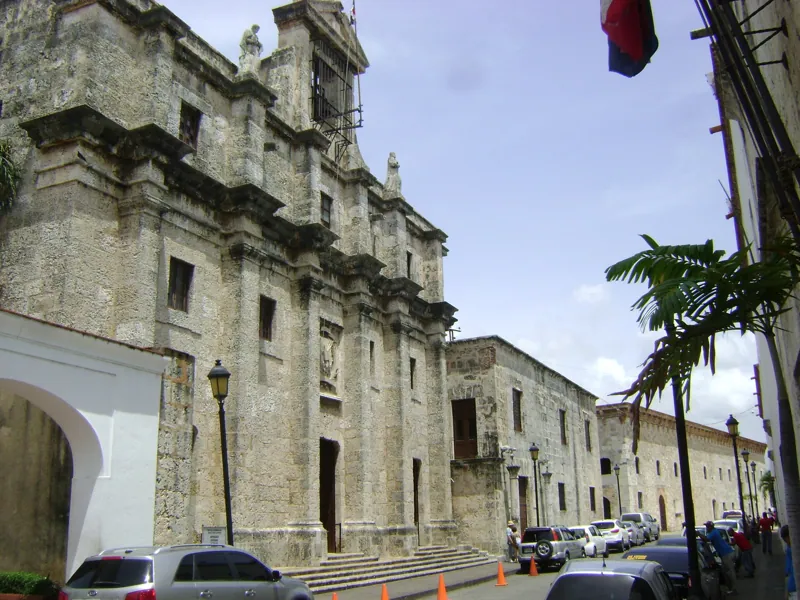
The largest is the building on Calle Las Damas that is now the Panteón de la Patria. An Acento article says the Jesuits built it between 1714 and 1745 as part of their convent, and GCatholic describes it as the church of the Royal and Pontifical University of Santiago de la Paz, a Jesuit church until 1767. The Foreign Ministry's guide dates it to 1746 and credits Gerónimo Quezada y Garcon. Whichever year you choose, it is a building of the 1740s. When the Jesuits were expelled in 1767, Acento says, the building deteriorated and was used as a depot, a market, a theater and a government office. GCatholic adds that from 1792 to 1798 it served as the chapel of the Royal and Conciliar Seminary of San Fernando. Law 4463 of 2 June 1956 made it the Panteón de la Patria. Its modern role is in Panteón de la Patria.
The Sundial and the Casas Reales
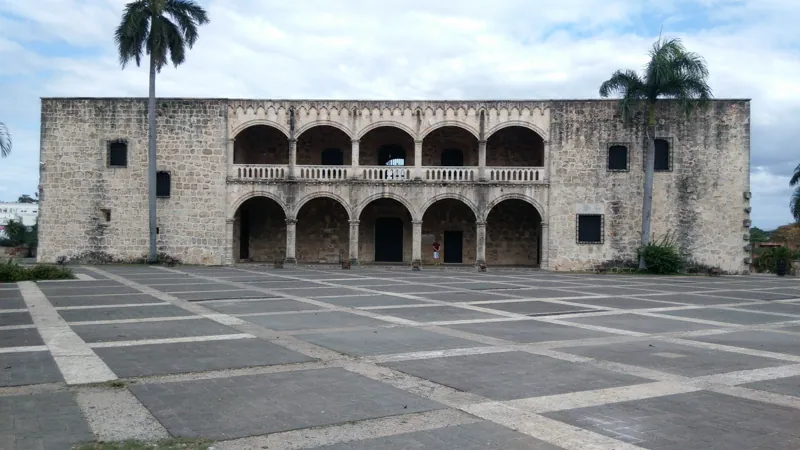
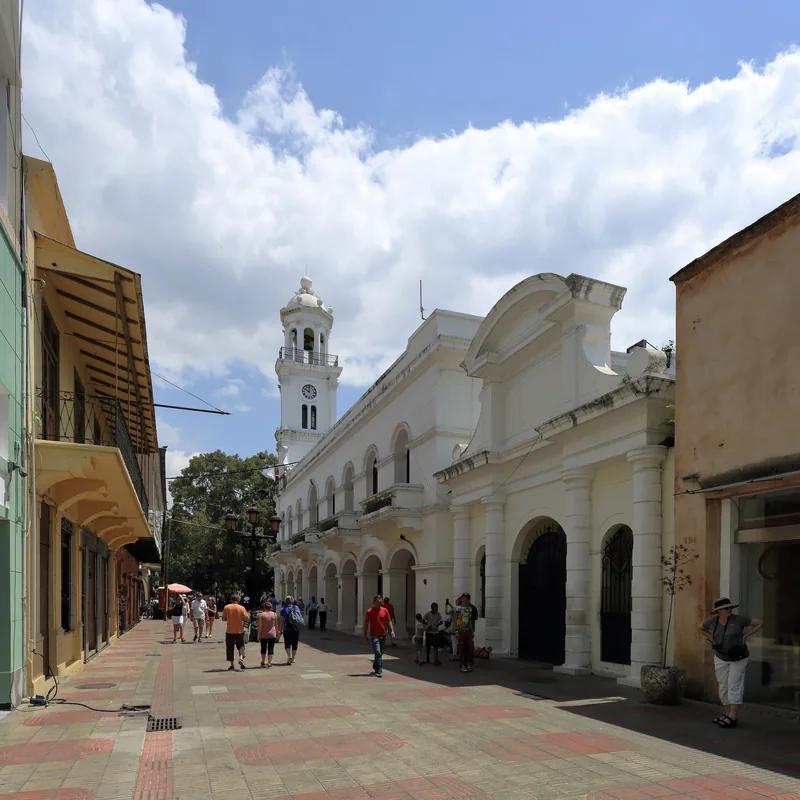
Across from the Casas Reales stands the Reloj de Sol, a sundial. An Acento column says it was built on the order of Francisco de Rubio y Peñaranda, governor of Santo Domingo, and installed in 1753 in the plaza in front of the building that housed the Real Audiencia. The column says it still works. The Casas Reales building, which served the Audiencia and the governors, also held the captains general, the Foreign Ministry's guide says, and it is covered in Museo de las Casas Reales.
A Hospital, a Church and a House
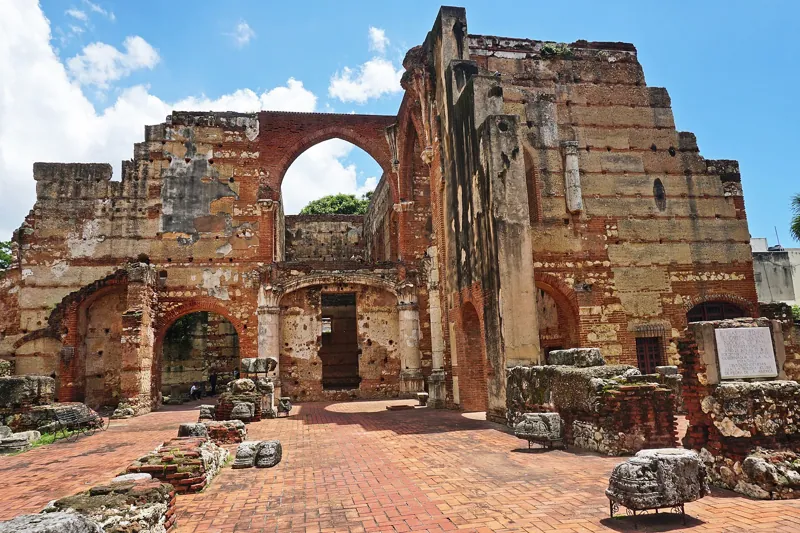
The Hospital San Nicolás de Bari, begun in 1503, is a ruin today, but the Foreign Ministry's guide says that in the eighteenth century the building served as a Royal and Military Hospital, and the Dominican Academy article records that the Canary families were treated there at the Crown's expense. It is covered in Hospital San Nicolás de Bari. The guide also lists the small church of Nuestra Señora del Carmen, dated to 1615, as enlarged in 1729 while keeping its original design, and the Casa de Bastidas, where it says the structure shows a mixture of styles from the sixteenth to the eighteenth century. The Museo Mundo del Ámbar occupies an eighteenth-century colonial building that was restored for the museum, the guide says, and the ruins of the Monasterio de San Francisco, which the guide says were modified in the eighteenth century, have their own story in The Ruins of the Monasterio de San Francisco.
The ministry's guide lists these opening hours, which it published in 2024. Panteón, Tuesday to Sunday, 9 a.m. to 3 p.m. Casas Reales, Tuesday to Sunday, 9 a.m. to 4 p.m. Nuestra Señora del Carmen, open until noon. The hospital ruins are listed as open around the clock, since they are viewed from the street. Hours change, so check before you go.
The Century Ends With a Treaty
France and Spain signed the Treaty of Basel on 22 July 1795, according to an El Día article. Spain, beaten in the War of the Roussillon of 1793 to 1795, gave up Santo Domingo in return for the return of Spanish territory that French troops had occupied. An academic article by Antonio J. Pinto says that in mid-October 1795 the clause providing for Spain's departure took effect. The transfer was supposed to follow soon, and El Día says it did not, because of the slave uprising in Saint-Domingue that began in 1791, the cost of fighting it, and France's other wars.
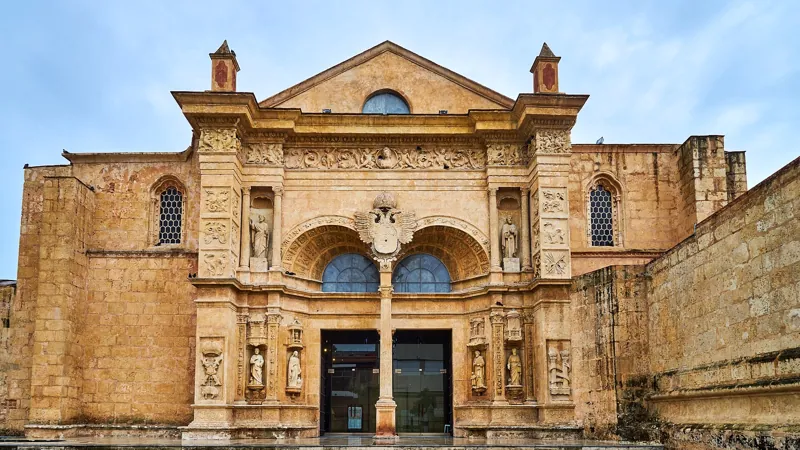
A story told about the move is that the remains attributed to Christopher Columbus left the cathedral then. An article on Columbus's tomb says that in 1795 France took over the whole island and Spain removed the remains to Havana, that workers renovating the cathedral found a lead box in 1877, and that both Seville and the Dominican Republic claim the real remains today. The cathedral and that question are covered in Catedral Primada de América.
What 1795 Meant
Historians disagree about how people in the city took the news. Pinto describes two schools of thought. Frank Moya Pons has stressed the drama with which the treaty was received, and the fear in the city of the slave revolution next door. Roberto Cassá and Emilio Cordero see Basel as the birth of Dominican identity, since the abandonment convinced people that Spain could not help them and that they must defend their own interests. Pinto himself argues that people in the colony were hurt by the abandonment but never stopped thinking of themselves as Spaniards, as the uprising of 1808 against the French, made in Spain's name, showed. The colony's captain general in these years was Joaquín García.
What happened next was a rapid succession of rulers. Pinto says Toussaint Louverture governed in Santo Domingo from 1801 to 1802, and an Acento article describes the regime of his brother Paul as a military one that abolished slavery and replaced it with forced agricultural labor. Napoleon's expedition followed, and El Día says François Kerverseau took the city in 1803 and Jean-Louis Ferrand took power there on 1 January 1804, the day Dessalines proclaimed Haiti's independence. Pinto notes in a footnote that England blockaded Santo Domingo after French power was restored in 1802, and that much of the cattle and mahogany trade had been with England.
In early 1805 the Haitian army under Dessalines and Christophe besieged the capital for nearly three months, according to El Día, and left when a French squadron arrived with supplies. Then in 1808, with Napoleon's invasion of Spain, Juan Sánchez Ramírez led Dominican forces that defeated Ferrand at Palo Hincado on 7 November, and Ferrand took his own life. The French retreated into Santo Domingo, and the siege of the city lasted just over eight months. An Acento article says trade collapsed, warehouses emptied, and soldiers reportedly ate rats and made broth from boiled cattle hides. The French surrendered the city to the British in July 1809, the sources giving the day as the 7th or the 11th, and the Spanish flag went up again. El Día says this began the period historians call the España Boba, which ran from 1809 to 1821.
So the century that began with a Bourbon plan to revive the colony ended with the city starved, blockaded and passed from hand to hand. It is a good reason to treat the quiet eighteenth-century buildings as survivors.
Getting there from the penthouse
The Panteón is at roughly 18.4751, -69.8831 on Calle Las Damas, with the Casas Reales and the sundial beside it, and Penthouse Pallazzo sits at roughly 18.4697, -69.8851. The straight-line distance is about 635 meters. Multiplied by 1.3 and divided by 80 meters a minute, the walk is about 15 minutes on foot. Calle Las Damas is the best street for this period, and the site's Zona Colonial complete guide and landmarks guide cover it. The location page shows the house on a map.
Frequently asked questions
Was Santo Domingo rich in the 1700s?
No. The Library of Congress country study calls it a small Spanish colony with little effect on Spain's economy, whose landowners never reached the wealth of those in the French colony next door. A 1681 census counted only 6,312 people in the whole colony, and the capital lived on its role as port and seat of government, with help from a royal subsidy.
What did people in Santo Domingo live on?
Mostly cattle, hides and subsistence farming, with some tobacco, indigo, cacao and cotton, and trade with the neighboring French colony. The colony also depended on the situado, a royal subsidy from Mexico, according to the Dominican Academy of History article and the Acento column.
Who were the Canary Islanders?
Settler families sent from the Canary Islands under a Spanish rule of 1718. Between 1720 and 1764, according to Cipriano de Utrera as cited in a Dominican Academy article, forty ships brought 483 families to Santo Domingo. Many were sent on to found towns such as Montecristi.
What 1700s buildings can you see in the Zona Colonial?
The Panteón, a Jesuit church built between 1714 and 1745 or 1746, and the Reloj de Sol of 1753 are the clearest. The small church of Nuestra Señora del Carmen was enlarged in 1729, and the Hospital San Nicolás de Bari served as a Royal and Military Hospital. Hours are in the Foreign Ministry's guide, so check before you go.
What was the Treaty of Basel?
A peace treaty signed on 22 July 1795 between France and Spain. Spain gave up the Spanish part of the island, Santo Domingo, to France. The transfer took years to take effect on the ground, and French rule ended in 1809 when Spain regained the colony.
Sources
- https://catalogo.academiadominicanahistoria.org.do/opac-tmpl/files/ppcodice/CLIO-2018-196-055-076.pdf
- https://reunido.uniovi.es/index.php/CESXVIII/article/download/18780/15743/59845
- https://revistas.ucm.es/index.php/CHCO/article/download/50991/47328/91934
- https://countrystudies.us/dominican-republic/3.htm
- https://countrystudies.us/dominican-republic/4.htm
- https://acento.com.do/opinion/el-siglo-xvii-siglo-de-la-miseria-y-de-la-pobreza-9605605.html
- https://acento.com.do/opinion/bosch-raza-y-criollismo-en-el-siglo-xviii-8877148.html
- https://acento.com.do/especiales/ley-del-panteon-de-la-patria-a-los-setenta-anos-de-su-promulgacion-9690513.html
- https://acento.com.do/cultura/santo-domingo-ciudad-sin-relojes-publicos-ni-fuentes-8895121.html
- https://acento.com.do/opinion/la-era-de-francia-en-santo-domingo-1802-1809-9647607.html
- https://gcatholic.org/churches/caribbean/58123
- https://eldia.com.do/la-era-de-francia-en-santo-domingo-1803-1809-1-de-2/
- https://eldia.com.do/el-fin-de-la-era-de-francia-y-la-reconquista-de-santo-domingo-parte-2/
- https://www.uncommoncaribbean.com/?p=18565
- https://mirex.gob.do/wp-content/uploads/2024/01/Un-Paseo-por-la-Ciudad-Colonial.pdf
- https://commons.wikimedia.org/wiki/File:Plano_de_la_plaza_y_ciudad_de_Santo_Domingo,_capital_de_la_isla_Espa%C3%B1ola_-_por_Don_Tomas_Lopez..._-_btv1b59728088.jpg
- https://commons.wikimedia.org/wiki/File:National_Pantheon_CCSD_RD_02_2017_1972.jpg
- https://commons.wikimedia.org/wiki/File:Calle_Las_Damas_063.jpg
- https://commons.wikimedia.org/wiki/File:Fachada_Ruinas_Hospital_San_Nicolas_de_Bari_CCSD_09_2018_1419.jpg
- https://nominatim.openstreetmap.org/search?q=Panteón+Nacional+Santo+Domingo&format=json&limit=3