Most guides to the Zona Colonial list the landmarks and stop there. This one is about the other side of a stay: where you buy water, how you pay for it, what to do when you need a pharmacy, how a phone works, who to call, and what the neighborhood sounds like at six in the morning and at midnight. The landmarks are covered in the complete guide to the Zona Colonial and the landmarks guide. This guide covers everything around them.
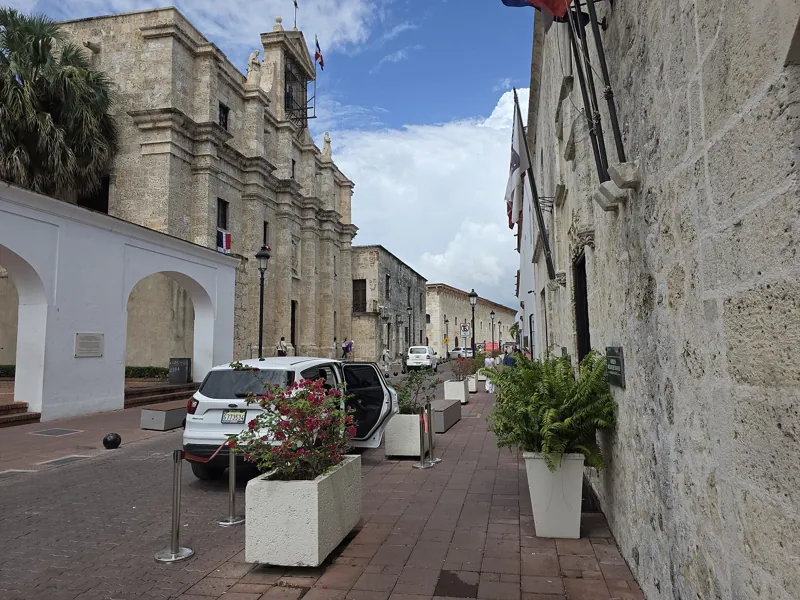
The old city is small, and it is lived in. Residents, shopkeepers, office workers, and schoolchildren share the same few dozen blocks with visitors, and the daily machinery of the place runs in the background: corner stores, delivery motorbikes, small banks, pharmacies, and church bells. If you stay for a week or a month, this is the part you will use most.
A Working Neighborhood
Plan your day around the heat. Mornings are the best time for walking, for errands, and for any visit that involves standing in the sun. By noon the stone streets hold the heat, and the sensible move is lunch, then indoors for a while. Evenings bring the sea breeze back, and the plazas and the sea front fill with people. That rhythm is the same one residents follow, and it makes more sense once you stop fighting it.
The Dominican tourism board notes that Dominicans eat their heaviest meal at lunch, and you will see the effect in the neighborhood: a busy noon, a quieter mid-afternoon, and a second wave of activity after dark. The food guide explains what to order.
Groceries and the Colmado
The corner store of the Dominican Republic is the colmado, and it is the first place most residents look when they run out of something. Acento describes it as the community's operations center. It sells groceries, drinks, cooking staples, and household items, both retail and on credit, and customers can call in an order and have it delivered within minutes. It is also a social hub: older residents meet there in the mornings to chat and read the newspaper, and young people gather at night. Larger versions, called colmadones, sell more and often play loud bachata.
For a visitor, a colmado is where you buy cold water, soft drinks, beer, ice, eggs, bread, rice, and the small things you forgot. Prices are marked or quoted at the counter, and the transaction is quick. A few habits help:
- Greet the person behind the counter before you ask for anything. A "buenas" goes a long way.
- Point and ask the price, then pay in pesos.
- If you want something delivered, ask. Delivery by motorbike is part of how the colmado works.
For a bigger shop, you will need a larger supermarket, which means a short ride rather than a walk, since the old city is mostly small stores. Plan the heavy items, such as bottled water in bulk, as a single trip, and remember that the house is a third-floor walk-up, so a rolling cart is not the answer. The tourism board notes that ITBIS, the sales tax, is 18% and applies to most purchases, so check whether a shelf price includes it.
Water and Ice
Tap water in the Dominican Republic is not safe to drink. The tourism board's FAQs say it is not purified, and its travel tips advise buying bottled water, which is available at stores, supermarkets, and resorts. Use bottled water for drinking and for brushing your teeth. The travel tips also say to avoid swallowing shower water, which is simple to do once you are used to it. Buy large bottles for the kitchen and small ones for the day, and carry a bottle when you go out in the morning, because you will drink more than you expect.
Pharmacies and Health
Pharmacies, called farmacias, are common in the city, and you will pass several within a few blocks of any address in the old city. For anything minor, such as sunscreen, bug spray, rehydration salts, or pain relievers, a farmacia is the place to ask,. For anything more serious, call 911, which is the national emergency number.
Bring your own prescription medicines in their original packaging, in the quantity you need, and carry a list of their generic names, since brand names differ between countries. Sunscreen, insect repellent, and a basic first-aid kit are worth packing, because the sun in the old city is strong even on a cloudy day. For longer stays, find the nearest pharmacy and clinic on the first day, so you know where to go when you need one.
Money, ATMs, and Cards
The local currency is the Dominican peso, written RD$. The tourism board gives a rough guide of RD$100 to about US$2, with the rate changing daily. Prices in the old city are mostly in pesos, and small shops may accept dollars or euros if you agree on the rate first, although the rate is usually less favorable than a bank's.
The tourism board's FAQs call an ATM usually the best option for local currency, and its travel tips advise choosing an indoor machine, withdrawing during the day, and carrying only the cash you need for the day. The Spanish word for ATM is cajero. Banco Popular, Banco BHD León, Banco Progreso, and Scotiabank ATMs accept North American bank cards and offer English or Spanish menus. Exchanging cash at the airport is convenient only for initial expenses such as a taxi.
Banks close at 5 p.m. on weekdays, and bank branches inside malls often stay open until about 7 or 8 p.m. Bring a credit card for emergencies and larger bills. Keep small bills for colmados, street food, and tips, since many small vendors cannot change a large note.
Phone and Internet
Claro and Altice sell SIM cards, usually in malls and supermarkets, for under US$5, and the price typically includes some local calling time. You need an unlocked phone and your passport. Credit can be added at phone stores or at the small betting-and-top-up booths called bancas. If you prefer to arrive connected, check whether your phone supports an eSIM and whether your home carrier has a roaming plan that suits a longer stay.
Internet at home is a separate matter from your phone. The penthouse has Wi-Fi, ethernet, and a dedicated workspace.
Laundry
For a longer stay, a laundry service is a practical help. A lavandería is a laundry, and drop-off service, where you leave a bag and collect it washed and folded, is the usual arrangement for visitors. Ask what the price is per bag or per pound, when it will be ready, and whether they iron. Mark your items and take a photograph of the bag before you hand it over.
Safety and the Tourist Police
The tourism board's FAQs say the country continues to be one of the countries with the lowest crime rates in the region, and advise keeping phones and cameras out of sight, leaving jewelry at home, and avoiding isolated streets during the day or night. The travel tips page adds advice to carry a photocopy or a small ID, and to leave your passport and valuables in a safe place. It also advises against walking alone at night and driving at night, and recommends a taxi that your accommodation suggests. Local guidance of this kind is common sense, and the old city is easy to be sensible in.
The Zona Colonial has its own dedicated police presence. POLITUR is the Central Directorate of the Tourist Police, under the National Police, and it works to keep incident levels low in the country's main tourist areas. On June 3, 2023, the National Police reinforced security in the Colonial Zone with 64 new agents, three cars, two vans, a truck, and eight motorcycles all equipped with body cameras and portable radios, the police announced. POLITUR marked its 50th anniversary on June 17, 2025, with a thanksgiving Mass at the Catedral Primada and a floral offering at the Altar de la Patria. The tourism board also names CESTUR, the Specialized Tourist Security Corps, as the body that assists visitors and helps with crime reports.
Opinion about safety in the old city varies. Some residents and visitors consider security in the historic center poor, and others consider it good, and nobody can promise you a trouble-free trip. The sensible habits are the ordinary city ones: keep your phone in your pocket in crowds, do not flash jewelry, use a ride app or a taxi your accommodation trusts at night, and carry a copy of your passport rather than the original. For emergencies, dial 911.
Noise
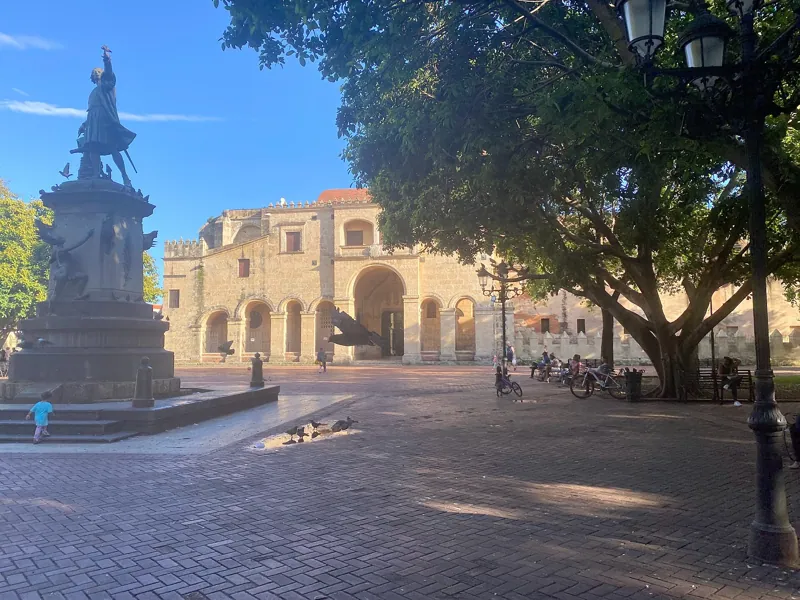
The old city is not silent. Expect church bells, motorcycle engines, music from open windows and from colmados, delivery bikes at odd hours, and neighbors who talk across balconies. Colmadones in particular play loud bachata, and the sound carries on a still night. The busiest nightlife streets are the ones around the plazas and the pedestrian streets, and the quieter blocks are the ones farther from the bars.
If you are a light sleeper, choose your block with that in mind and pack earplugs, which cost little and weigh nothing. If you like the sound of a living city, the noise is part of what you came for. The Zona Colonial at night article describes the evening side of the old city.
The Streets Near the Sea Front
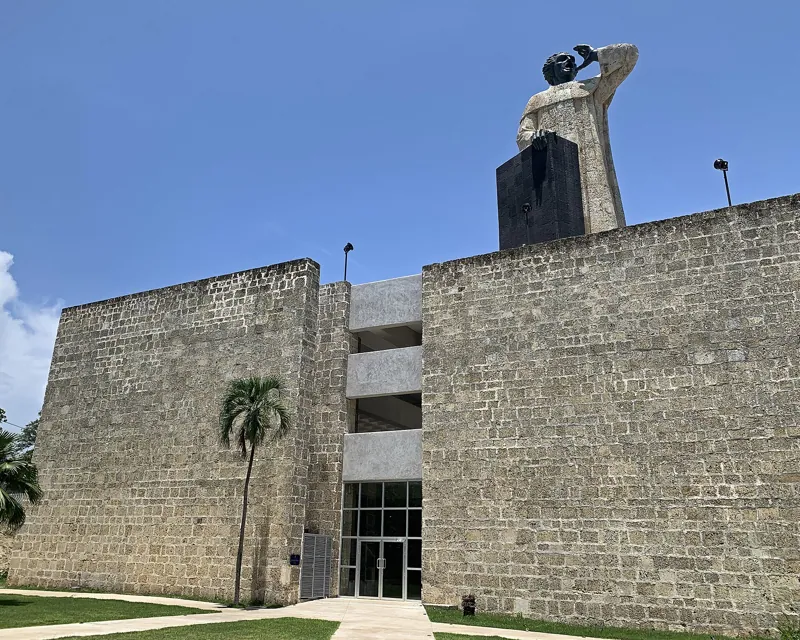
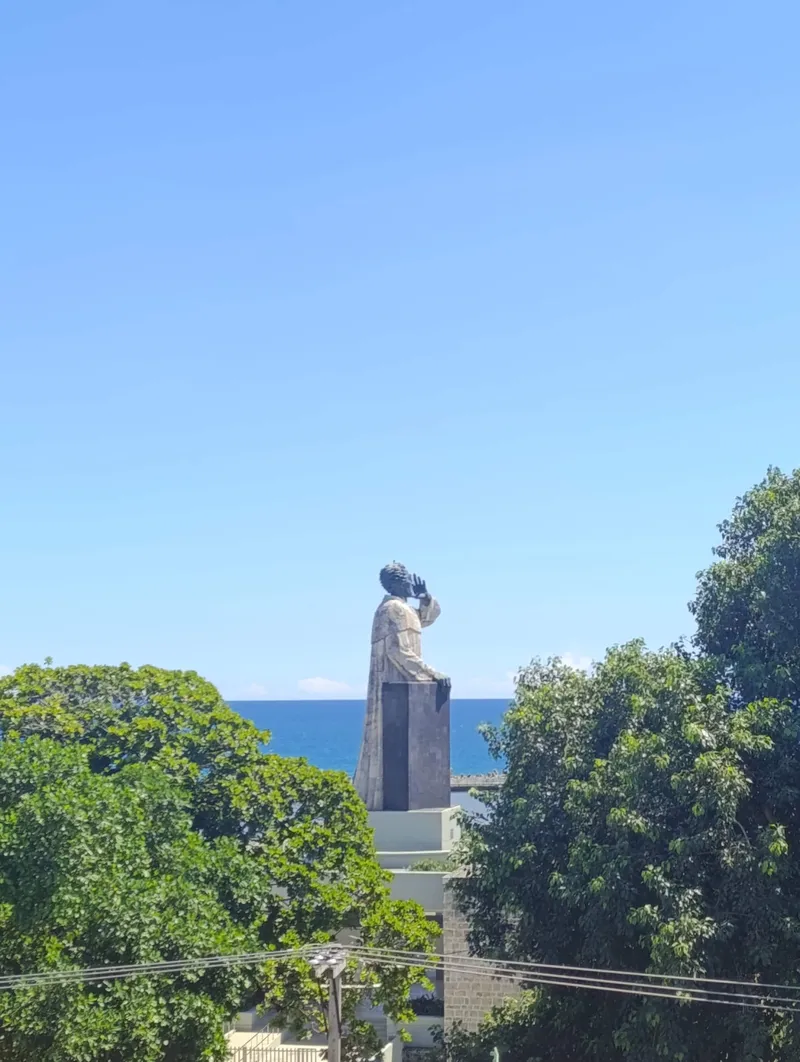
The sea front is the quietest edge of the district. The Avenida George Washington, the Malecón, runs along the water, and the Monumento a Fray Antón de Montesinos stands on the old city side of it. Playa Montesinos is the small beach just south of the house, about 150 meters away. The road is a busy one, with traffic and a pedestrian walkway, so cross at the marked points and keep an eye on the traffic.
In the evening, the walk along the water is cooler than the stone streets inside the grid, and people use it for strolling, jogging, and sitting. Food stands and small restaurants line parts of the avenue, and the Malecón is one of the main dining areas of the city. The Malecón guide covers what to see along it, and the history of the Río Ozama and the port tells the story of the river at the other end of the old city. For the other direction, the Montesinos article tells the story of the monument.
The Streets Inland
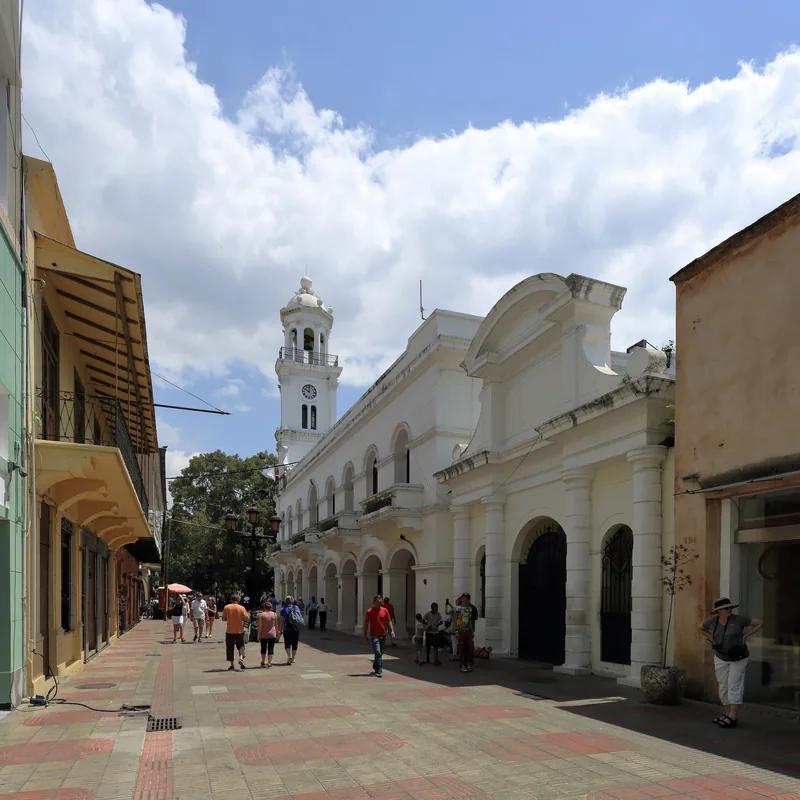
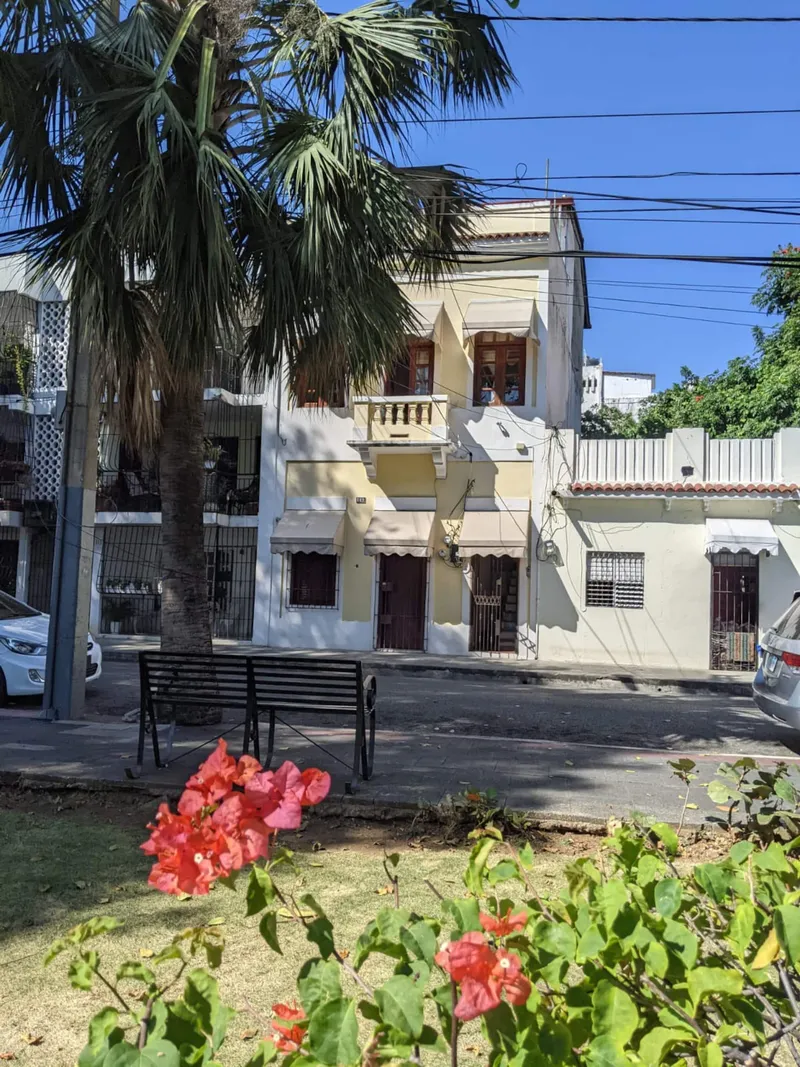
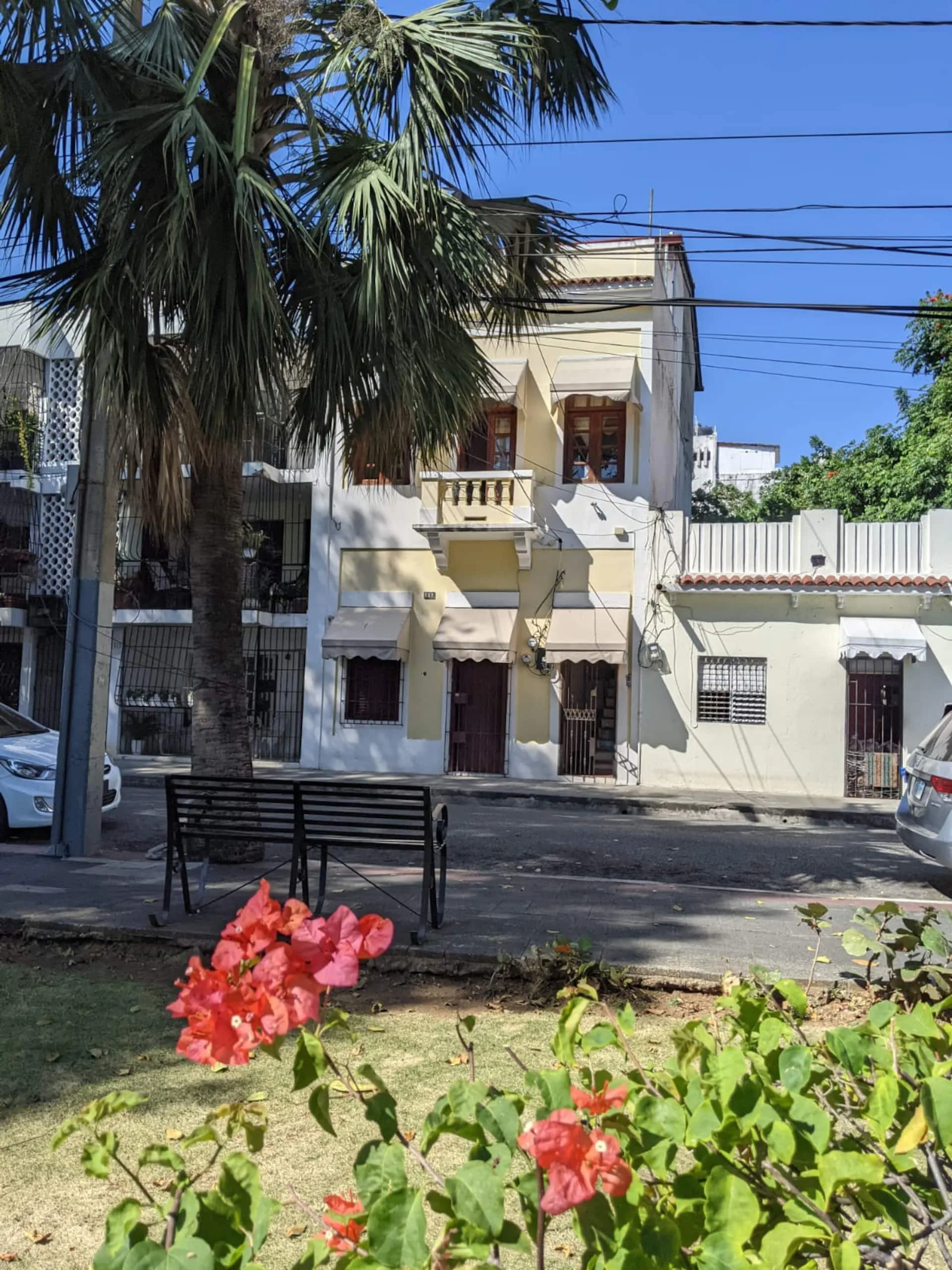
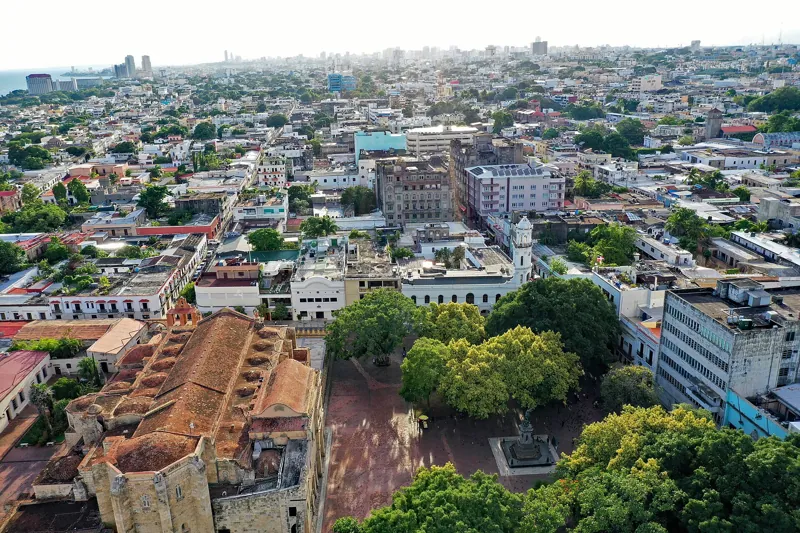
Away from the water, the grid of narrow streets is easy to walk and hard to get lost in for long. Parque Colón is the central square, with the cathedral on its side, and Calle El Conde is the pedestrian spine of shops and cafés that runs from it toward the Puerta del Conde. Calle Las Damas runs along the river side of the grid. Between the main streets, small blocks hold houses, shops, and corner stores. The best way to learn the neighborhood is to take a different street each time you go out.
How the Penthouse Fits
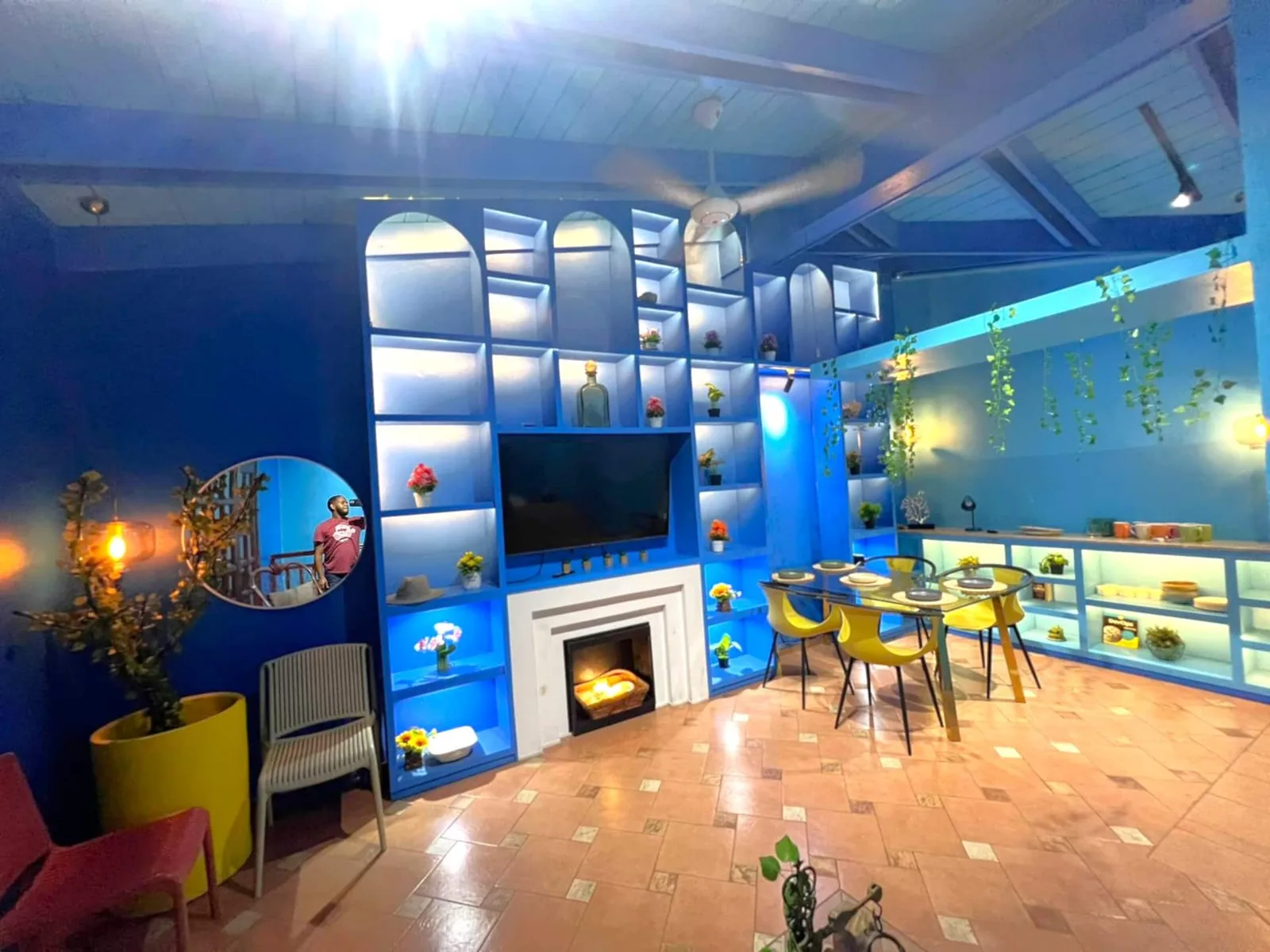
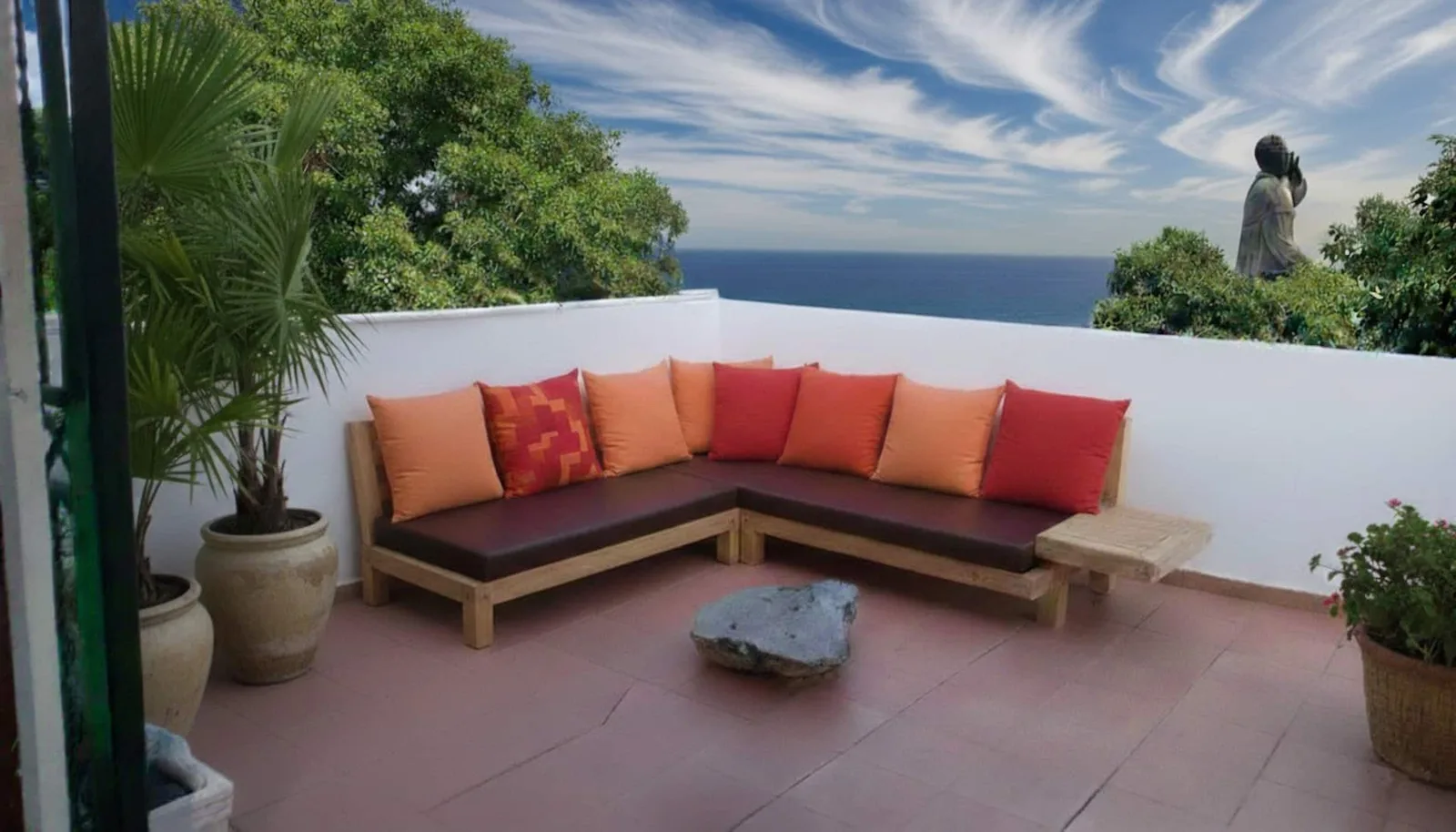
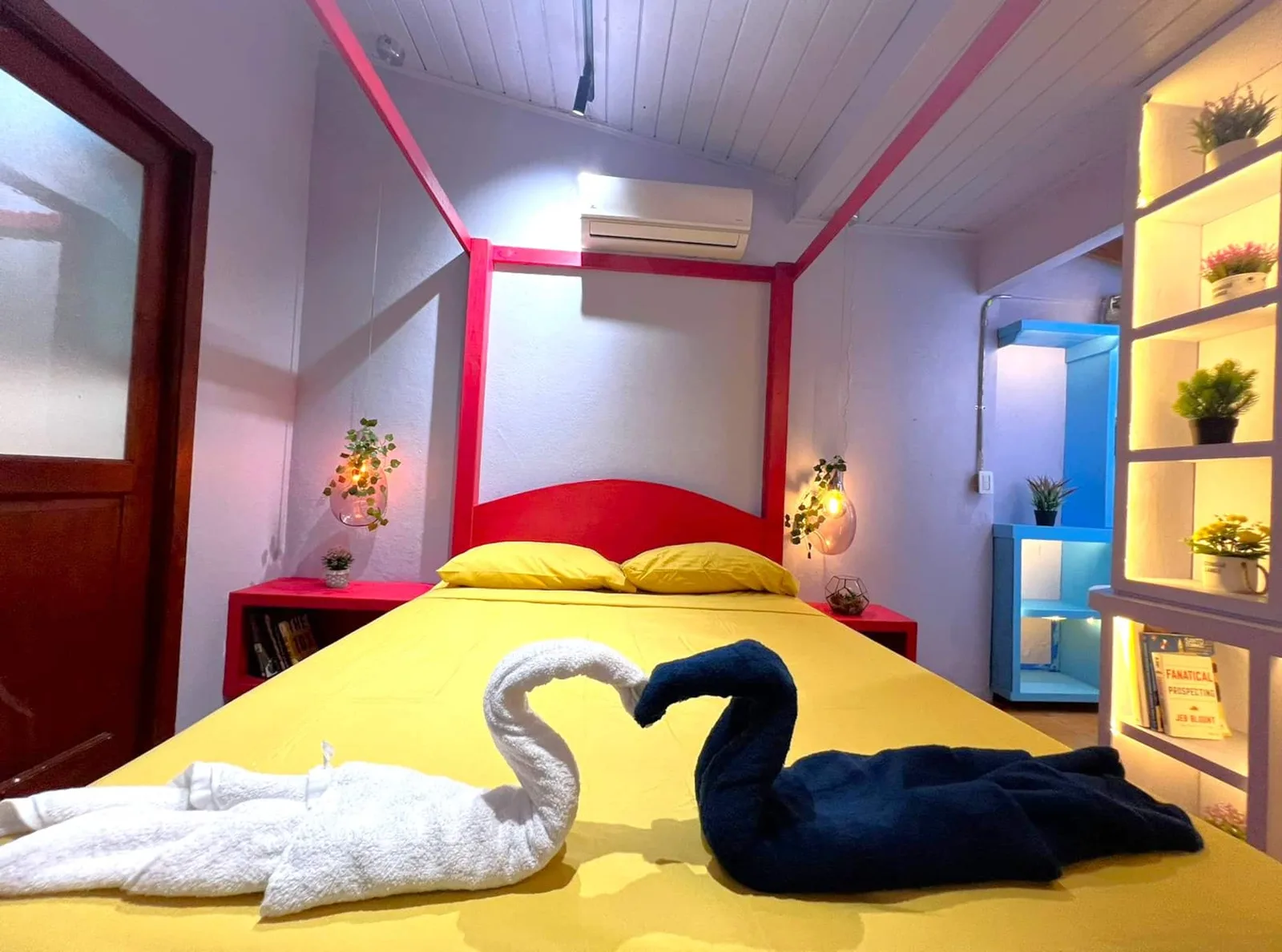
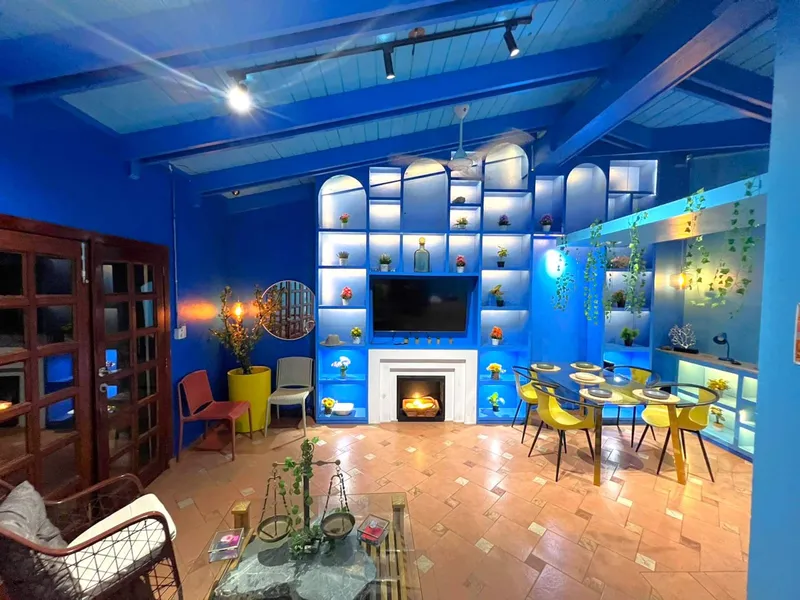
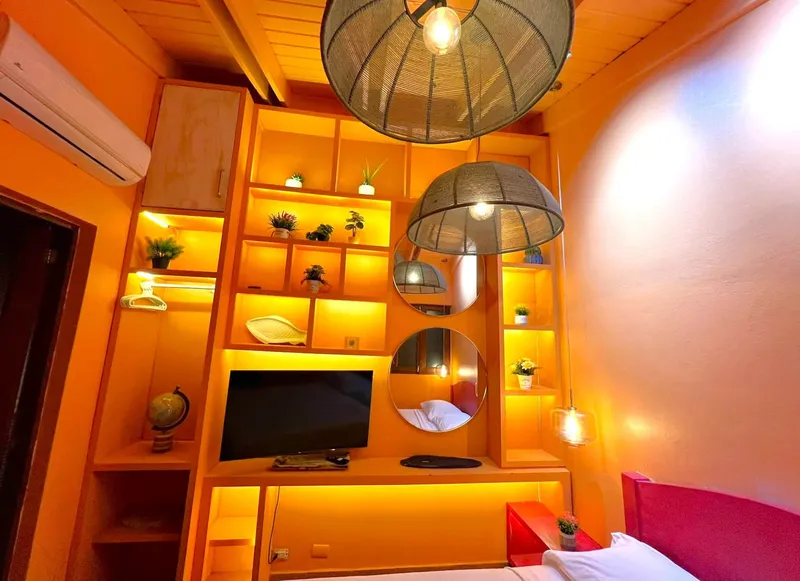
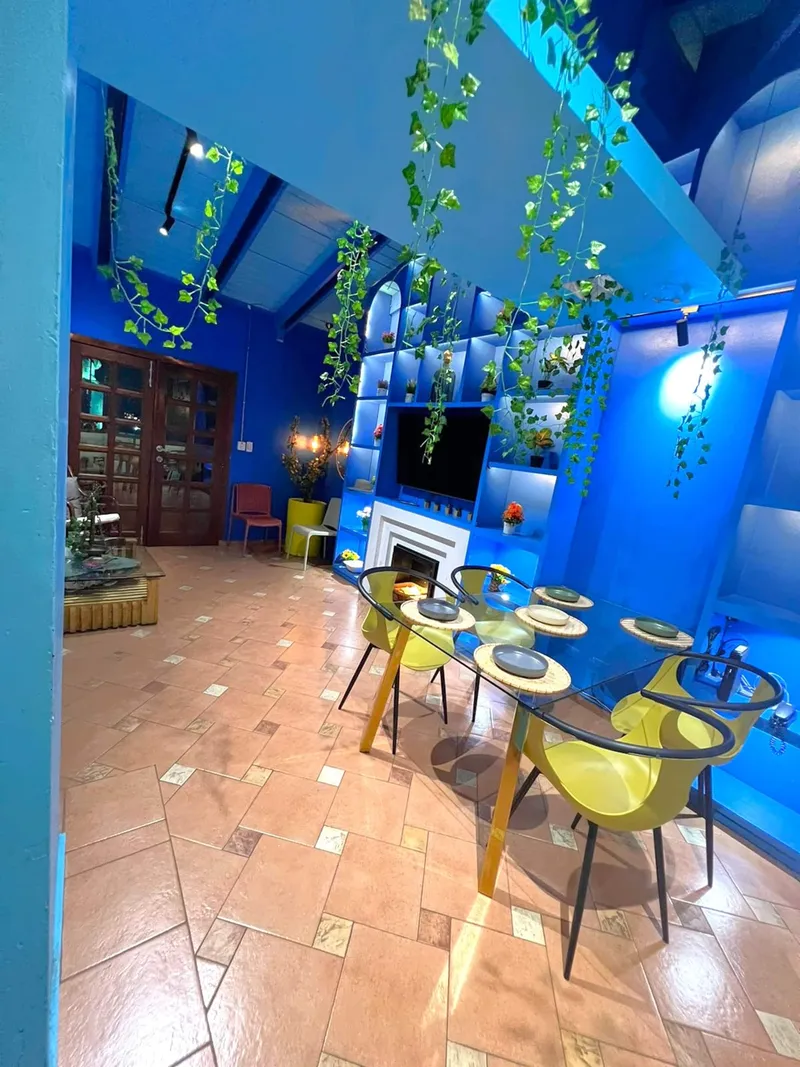
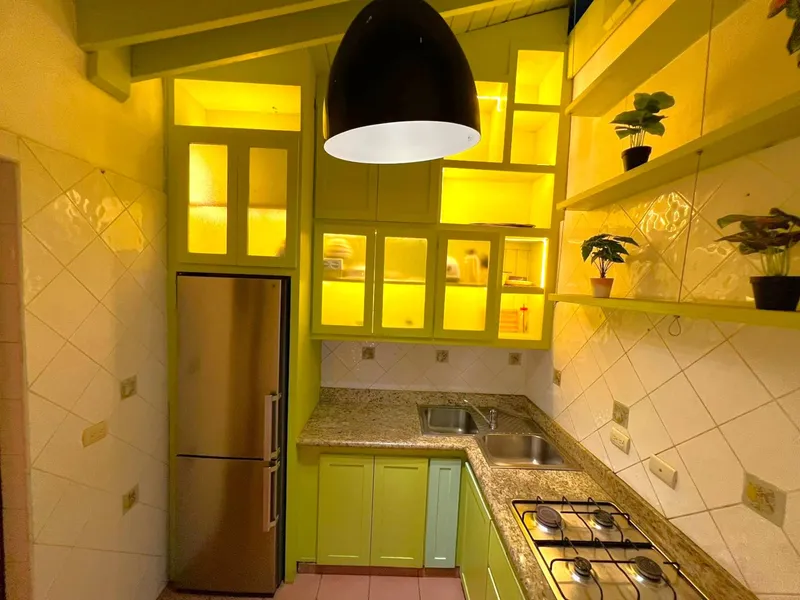
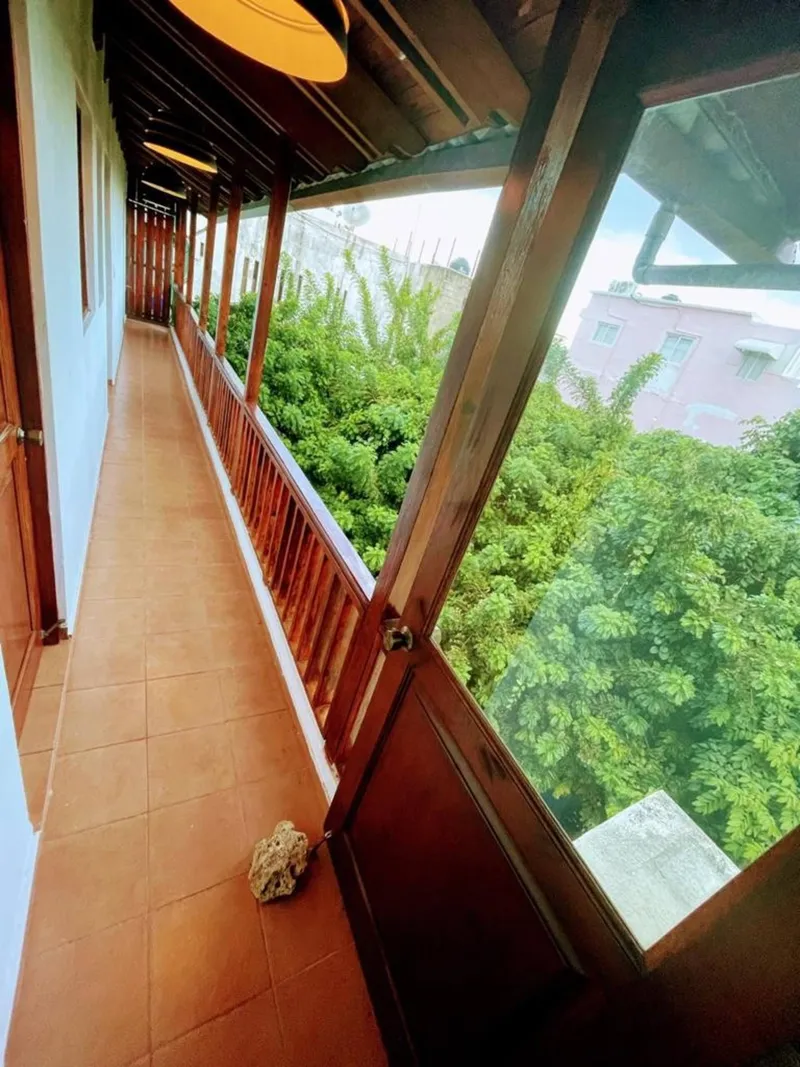
The penthouse is a third-floor walk-up with no elevator, so bring luggage you can carry up the stairs, and spread grocery runs over a few trips. Power cuts happen in the Zona Colonial, and the tourism board notes that surges and interruptions are more frequent outside the big resorts. Backup batteries in the house run the lights and phone charging for up to 8 hours, but not the air conditioning. Pets are allowed, and stays of 28 nights or more are allowed.
Frequently asked questions
Is the Zona Colonial safe to walk at night?
The old city has a dedicated tourist police presence, and many people walk it in the evening. The tourism board advises against walking alone at night, so stay on the busier streets, use a ride app or a trusted taxi for longer trips, and keep valuables out of sight.
Where do I get a SIM card?
Claro and Altice sell them, usually in malls and supermarkets, and you need an unlocked phone and your passport. The tourism board puts the price at under US$5.
Can I drink the tap water?
No. Buy bottled water for drinking and for brushing your teeth.
Are ATMs easy to find?
Yes. Use an indoor machine during the day and withdraw pesos. Banco Popular, Banco BHD León, Banco Progreso, and Scotiabank ATMs accept North American bank cards.
What number do I call in an emergency?
The tourist police, POLITUR, work in the old city, and CESTUR assists visitors and helps with crime reports.
Sources
- https://www.godominicanrepublic.com/travel/travel-tips
- https://www.godominicanrepublic.com/travel/faqs
- https://acento.com.do/opinion/el-colmado-tan-necesario-como-sociocultural-8146979.html
- https://www.policianacional.gob.do/seguridad-de-la-zona-colonial-es-reforzada-con-64-nuevos-agentes-y-unidades-vehiculares-de-la-policia-nacional/?print=pdf
- https://eldia.com.do/politur-celebra-50-anos-reforzando-la-seguridad-turistica-y-modernizando-sus-servicios/
- https://visitdominicanrepublic.com/food-drink/where-to-find-great-coffee
- https://www.palladiumhotelgroup.com/es/guia-turistica/republica-dominicana/santo-domingo/comida
- https://www.godominicanrepublic.com/travel/getting-around