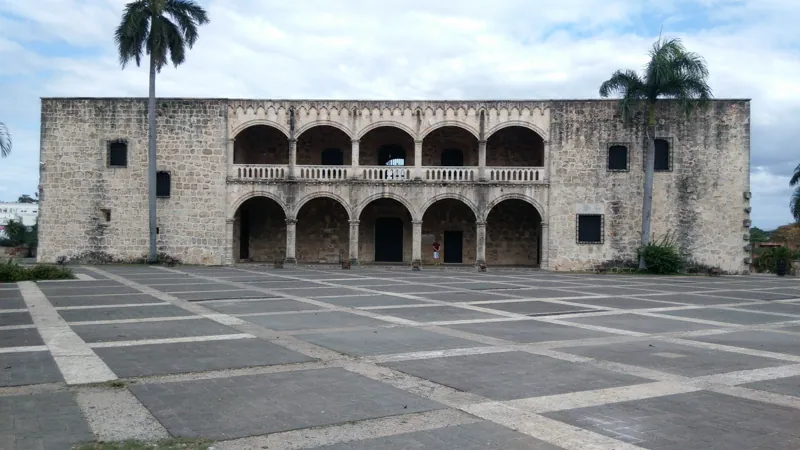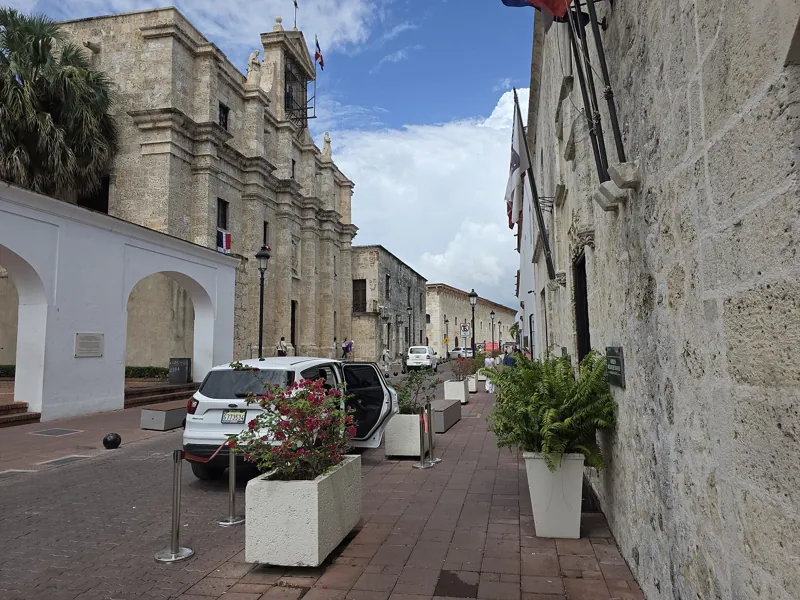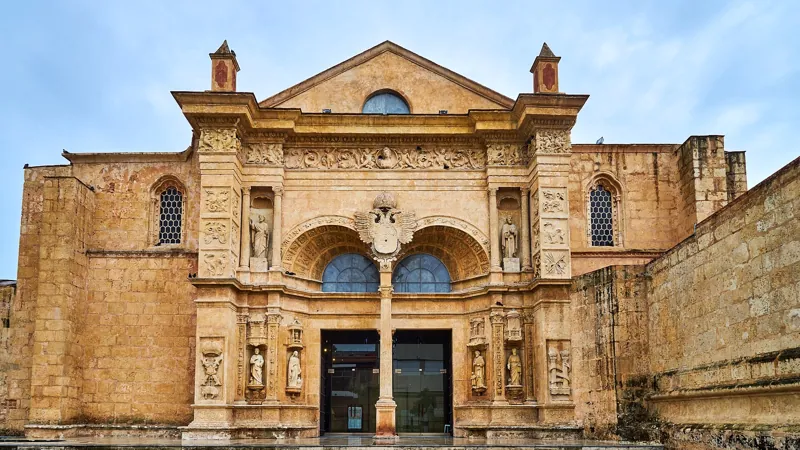
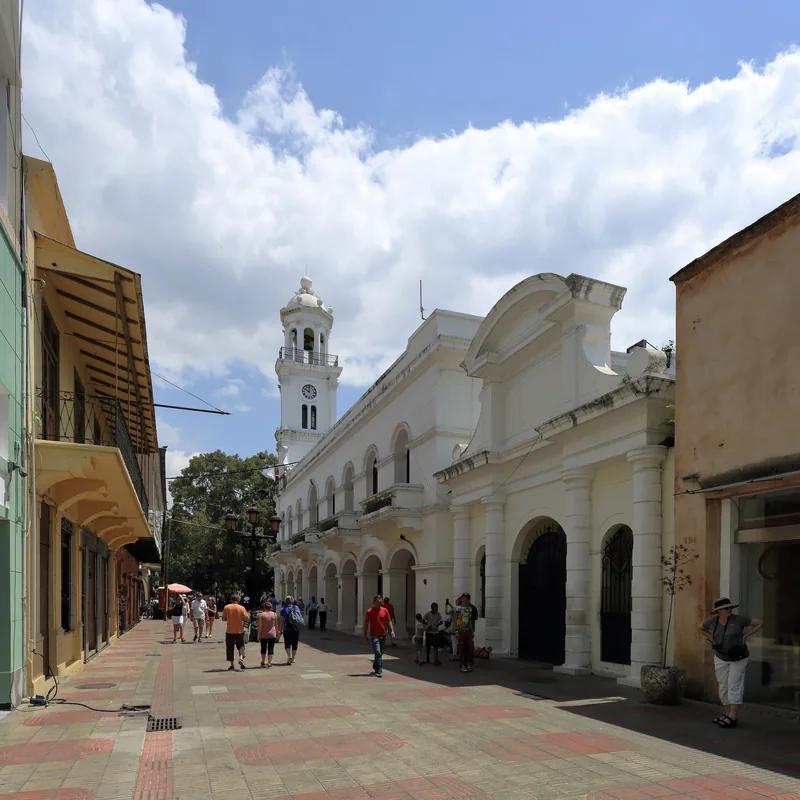
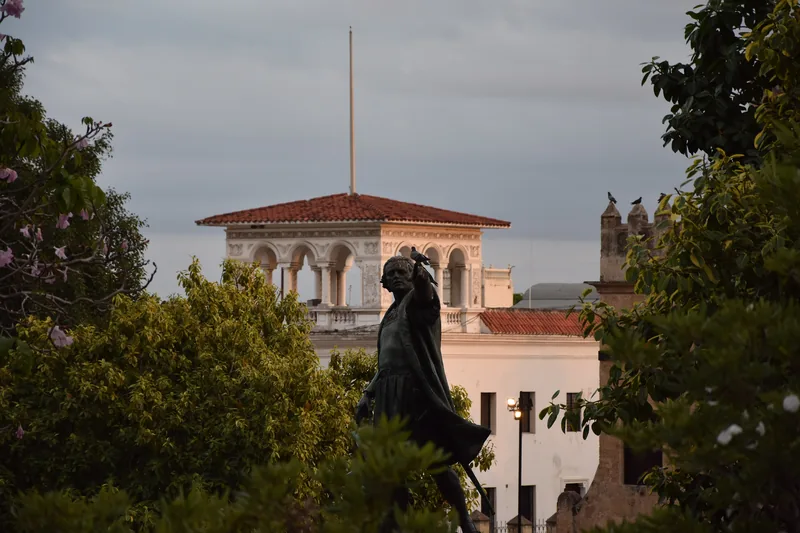
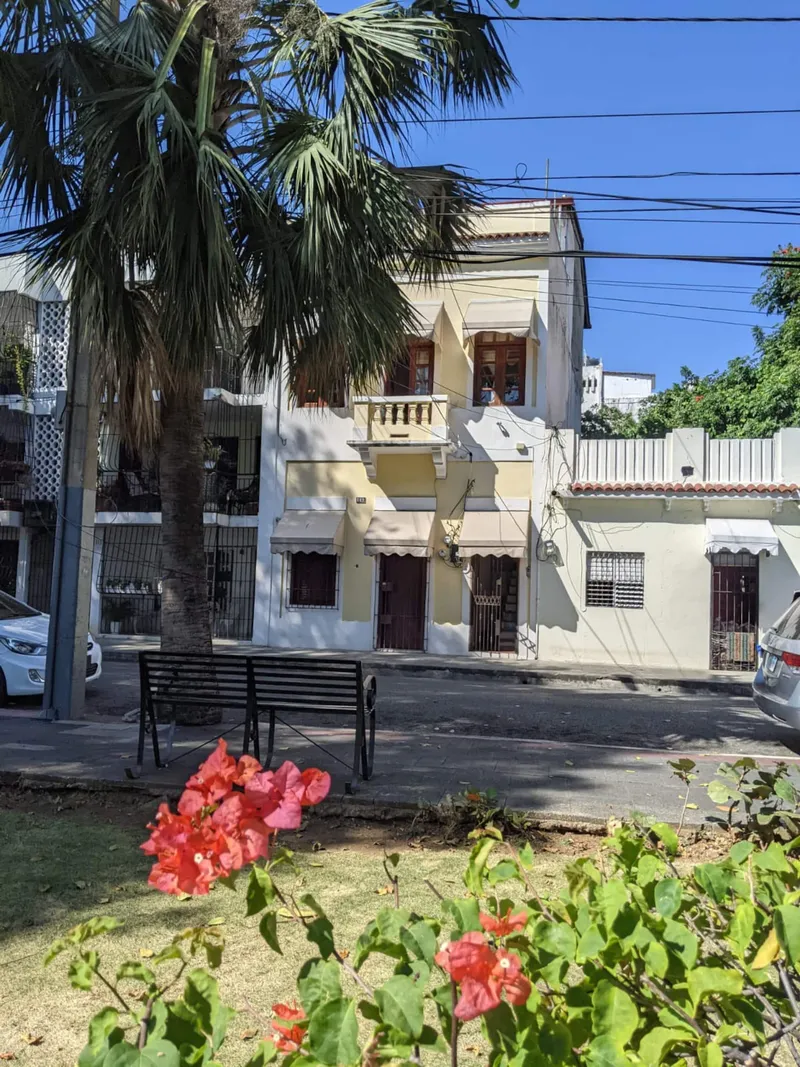
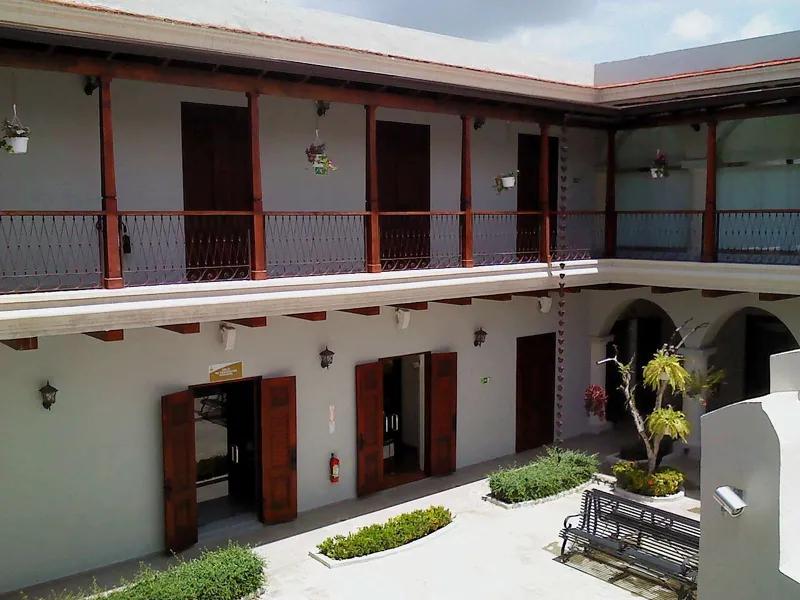
Most visitors to the Zona Colonial go straight to the big royal sites: the Alcázar, the Casas Reales, the fortress. They are worth the time, and each has its own page in this series. But the old city also has a second tier of museums, smaller and often newer, that tell stories the great monuments do not. One records how Dominicans resisted a 31-year dictatorship. One is a 16th-century house that shows how a family lived in the 1800s. Two others, run by the same company, explain amber and larimar, the two stones the Dominican Republic is known for.
This article covers those smaller museums: the Museo Memorial de la Resistencia Dominicana, the Museo de la Familia Dominicana in the Casa de Tostado, the amber museum on Calle Arzobispo Meriño, and the Larimar Museum on Calle Isabel la Católica, with a line each on two others. Hours and fees change, so hours are given only where an official page or a recent article lists them, and the page says where sources disagree. Check before you go. For the big royal museums, see Alcázar de Colón and Museo de las Casas Reales.
Museo Memorial de la Resistencia Dominicana
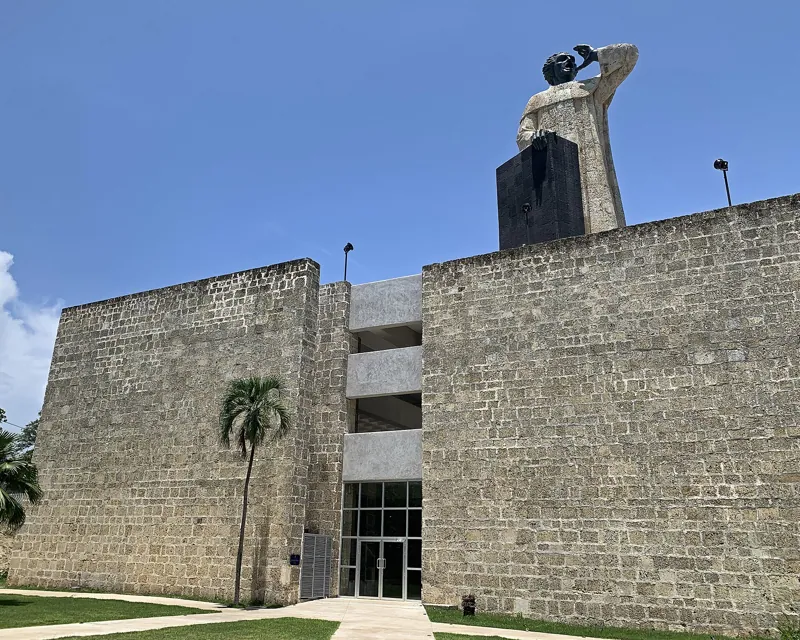
The Memorial Museum is at 210 Calle Arzobispo Nouel. The museum's own materials explain why it exists: the Dominican Republic had no museum dedicated to the victims of state terrorism, and this one aims to fill that gap. It sets out to rescue and preserve the historical memory of Dominicans as an educational tool. Its stated mission is to promote the struggles of several generations of Dominicans against the Trujillo dictatorship, including its antecedents and consequences. A travel guide dates the dictatorship to 1930 to 1961 and says the museum opened to the public in 2011, after a long period of documentation and planning.
The scale of the collection is large for a museum of this size. The museum says it holds about 350,000 registered items, including documents, photographs, audiovisual material, objects and digital testimonies, and that about 150,000 of them are designated UNESCO Memory of the World items. It also lists among its aims maintaining a national registry of victims, tortured and disappeared people, and an archive and documentation center for resistance. A timeline on the site, titled "Five decades of resistance," runs from 1916 to 1978 and covers the US occupation and guerrilla resistance, the Trujillo dictatorship, the June Expedition of 1959, the assassination of the Mirabal sisters in 1960, the April War of 1965 and the Twelve Balaguer Years.
What You See
A page from a human rights network that describes the museum says it includes dioramas and models of torture centers, and models and displays of particular episodes of the resistance. It also says the museum includes the restoration and extension of a site it names Jail Site 9. No official description of the building's earlier use is given beyond that. What matters for a visitor is the tone. This is not a gallery of objects with a pleasant soundtrack. It deals with torture, disappearance and political murder, and it was built to do so. Plan the visit for a time when you can give it attention, and think twice before bringing young children.
The museum also has a good record of programming. In May 2023 it joined the Noche Larga de los Museos for the first time, with a school rally, a film screening and children's workshops around International Museum Day. A 2025 report says it staged a theater piece in its auditorium honoring people who fought for democracy, and that admission was free during the event's three days. The museum's director-founder, according to the 2023 report, is Luisa De Peña Díaz. If you are in town around International Museum Day in May, check whether a free night is on.
More Than Exhibits
The museum lists areas beyond the galleries: virtual exhibitions, an archive that includes oral histories, publications, education programs with resources and school visits, and ways to support the work. A news item on the site announces a new permanent gallery documenting 20th-century Dominican resistance, though it gives no opening date, so ask what is open when you arrive. The same site names three stated themes for the whole project: memory, truth and justice. That framing is useful when you walk through. The museum is built as an archive and a teaching space first and a tourist stop second.
The Sala Memorial
The museum runs an extension, the Sala Memorial, at the Centro de los Héroes Metro stop. It honors the nearly 200 men who came to the Dominican Republic in 1959 to overthrow Trujillo, and Diario Libre reported that it reopened on June 14, 2022, the 63rd anniversary of the expeditions, after closing during the pandemic. About 198 men left Cuba, the report says, and the Constanza, Maimón and Estero Hondo expeditions arrived on June 14 and June 20, 1959. That report listed hours of Tuesday to Friday, 9:00 a.m. to 5:30 p.m., and free admission, but it is from 2022, so confirm those details. It says the room holds historical texts, permanent exhibits and pieces that belonged to members of the expeditions, and that visitors get talks on the expedition from its preparation in Cuba to its arrival. Students who show their ID can ride the Metro free at that stop, under an arrangement between the museum and the transit office. The Metro line makes it an easy add-on, but it is not in the old city, so it is a separate trip from the rest of this article.
Visiting
The museum's visit page lists these hours: closed Monday, open Tuesday to Sunday, 9:30 a.m. to 6:00 p.m. It does not list an admission price, so ask at the door. Guided tours for families, companies, tourism agencies and institutions can be requested through an online form, in Spanish, English or bilingual, and the museum says it confirms availability by email within 48 hours. There is elevator access to all three floors, an audio guide with subtitles, and Dominican Sign Language by appointment. The page says only service dogs are allowed. The travel guide gives the same Tuesday to Sunday hours, and a Revista Mercado article gives 10:00 a.m. as the opening time, so go with the official page and confirm.
Casa de Tostado and the Museo de la Familia Dominicana
At the corner of Calle Padre Billini and Calle Arzobispo Meriño, the Casa de Tostado is a museum inside a house, which makes it unlike the others in this article. The house was built in the 16th century for Francisco de Tostado, a notary. A travel guide says Tostado arrived on La Española in 1502, and a Diario Libre report describes the house as continuously occupied since the early 16th century. It holds the Museo de la Familia Dominicana del Siglo XIX. The museum shows how a well-off Dominican family lived in the 19th century, with period furniture, crockery, books and photographs, and the travel guide adds that it reflects the lives of the local bourgeoisie and sugar refinery owners. A Lonely Planet listing says an audio guide is included.
The House Itself
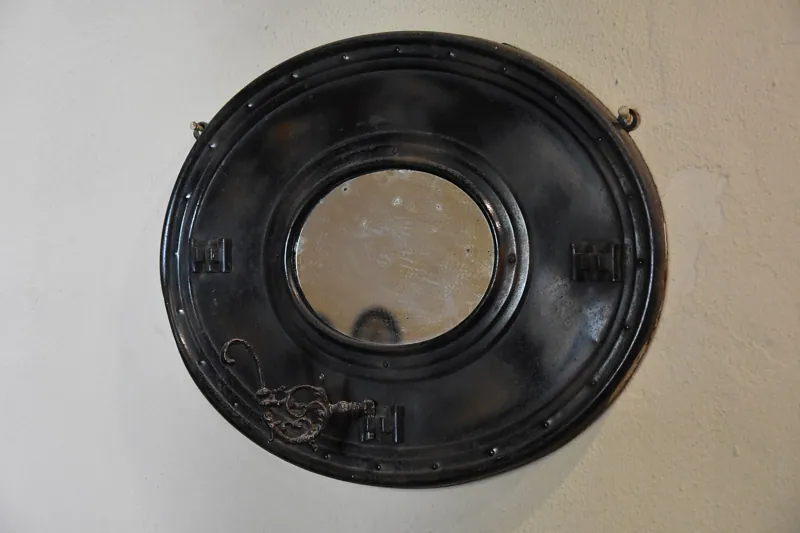
Many visitors come for the building. Diario Libre's 2026 report describes a gothic window at the main entrance, called unique in the Western Hemisphere, a wooden spiral staircase from the original palace, a kitchen that keeps its original pots, and a salon where natural light and lamps show how the rooms were once lit. A French-language travel listing calls the window a twinned Gothic window, the only one of its kind in the Americas. The house is also described in The Colonial Houses of Santo Domingo, which covers the restoration criteria that govern work like this.
The museum's recent history is a story of repairs. According to a 2021 report, the collections have been housed in the Casa de Tostado since August 15, 1973. In September 2021 a Spanish-style courtyard was opened and the facade lit, funded by Banco de Reservas with support from the Dirección de Patrimonio Monumental and the Ministry of Culture. The house had been in severe deterioration before that work, the report says, and it announced that the museum would reopen soon. The museum's director is the architect Mónica Gutiérrez Fiallo. In 2026 Diario Libre reported a further repair of the roof, walls, cornices and mirador under the architect and historian José Enrique Delmonte.
An El Día article on the first residences of the colony describes Tostado's palace, at that same corner of Billini and Meriño, as three stories tall, with gardens that once ran down to the sea, and adds that the land has since been lost. When you stand at the corner today, that gives you something to measure the present house against: what you see is a survivor of a much bigger property.
Hours
This is the museum where sources disagree most. Lonely Planet lists Tuesday to Sunday, 9:00 a.m. to 4:00 p.m. A travel page says Tuesday to Saturday, 9:00 a.m. to 5:00 p.m., and Sunday, 9:00 a.m. to 4:00 p.m., closed Mondays. Both agree it is closed Monday. Because the house has been through repair work, call or check with the museum before you walk over. The number in the Lonely Planet listing is 809-689-5000.
The Amber Museum on Calle Arzobispo Meriño
Dominican amber is the honey-colored stone with insects trapped inside, and the old city has at least two places that explain it. The one with a proper museum setup is the Amber World Museum, called Museo Mundo de Ámbar in Spanish, at 452 Calle Arzobispo Meriño. The museum lists these hours: Monday to Saturday, 9:00 a.m. to 6:00 p.m., and Sunday, 9:30 a.m. to 1:30 p.m. It does not list admission prices.
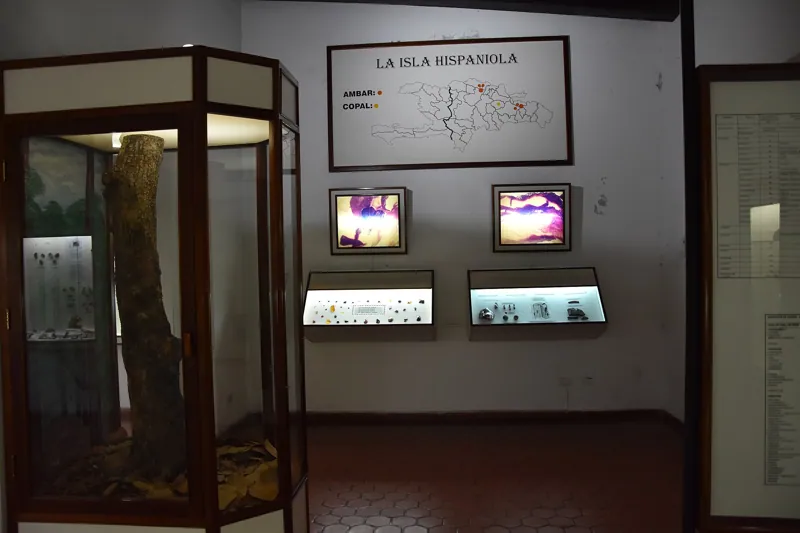
The museum says it occupies a restored colonial building and describes it as 18th century. A 1996 report from the time it opened called it a restored 17th-century building, so the date is not settled, and the museum's own account, which is the more recent, says the 18th century. The museum presents the plants of the amber-forming era, the animals fossilized in amber, and how amber forms and what its characteristics are. By its own count it has 40 display cases on specialized topics, two MAG-50 microscopes for looking at amber, three videos, experiments for children, murals and dioramas. A 1996 article on the opening described an international hall, an audiovisual hall and a Dominican hall. The museum's owner is Jorge Caridad, who also runs the jewelry company Ámbar Nacional, and the company's site says it has been producing and selling larimar and amber jewelry in the Dominican Republic since 1985. The larimar museum's site gives the museum's opening date as September 5, 1996.
A Note on Names
Names for amber attractions overlap. A travel article lists a separate small amber gallery above a gift shop on Calle El Conde, facing Parque Colón, and calls it the Museo de Ámbar, in addition to the Museo Mundo de Ámbar on Meriño. That one is not confirmed in a current official source. If you are looking for the museum with the microscopes and display cases, look for the address on Calle Arzobispo Meriño and the Amber World Museum name. Check the sign before you buy a ticket.
The Larimar Museum
Larimar is the blue stone that turns up in nearly every jewelry shop in the old city, and its museum is at 54 Calle Isabel la Católica, in the Zona Colonial. The museum describes it as the second educational unit created by Ámbar Nacional, after the amber museum. The company is led by Jorge Caridad and Arelis de Caridad, and it says it aims to become the largest private network of educational museums in the country. The museum lists no opening hours or admission prices. A travel article says the exhibit is upstairs and a shop selling larimar jewelry is on the ground floor, so expect a mix of museum and store.
What It Explains
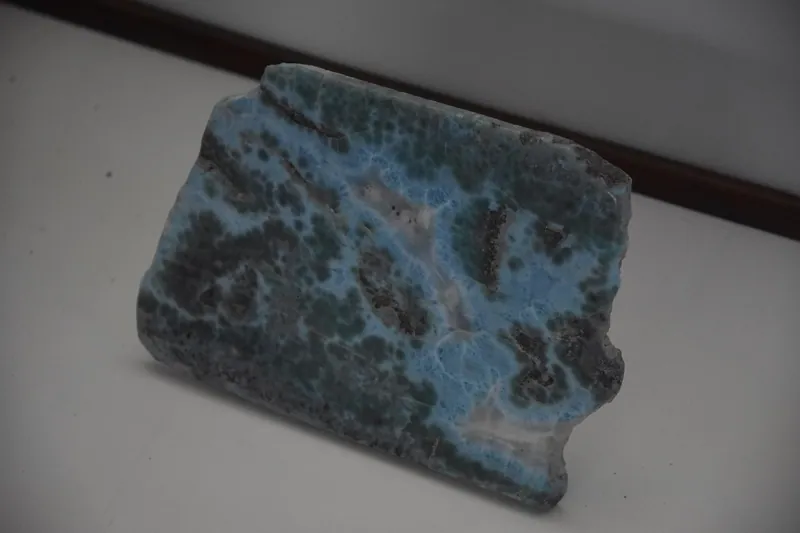
The museum gives the geology. Larimar is a blue variety of pectolite, a secondary mineral. Pectolite is a hydrated calcium and sodium silicate, named by the geologist Kobell in 1828, and it crystallizes in needle-like radiating forms inside gas cavities in cooling lava. Its geology section also describes how the island formed in stages from the sea, with the Cordillera Central made of volcanic rock and the Sierra de Bahoruco in the southwest beginning to emerge about 100 million years ago, built largely of volcanic rocks such as andesites and basalts. Visitors say the museum shows how the stones come out of the mines, along with jewelry.
A travel article on the two stones gives an outline of how larimar became known beyond the island. It says larimar was first brought to wider attention in the 1970s by a former American Peace Corps worker who traced it to a source in the interior. The article gives no year and no name, and no other source cited here gives more, so treat the story as the museum's and the travel press's version.
Two More Houses With Museums
Two other museums in the district deserve a line each. The Casa de Duarte, on Calle Isabel la Católica, is built around the house where the founding father Juan Pablo Duarte was born on January 26, 1813. An El Nuevo Diario report says it recreates rooms of the Duarte Díez family with original 19th-century furniture, though several structures are not original, and that it displays more than 13 dioramas and more than 100 wax figures on the independence process. His story has its own page in this series, Juan Pablo Duarte.
The other is the children's museum Trampolín, which a photo caption identifies as housed in the house of Rodrigo de Bastidas, and which a 2018 list of museums that stayed open late also names. If you are traveling with children and want something hands-on, ask about it, and check its current status.
Planning a Museum Day
A few practical points help across all of these.
- Most museums in the district close on Mondays. The official Memorial Museum page and the Barceló guide both say so for the museums they cover.
- Hours differ by source. In every case above where two sources disagree, I listed both. Trust the museum's own page, then call.
- Several small museums join free nights. In 2018 a list of museums that opened free until midnight included the Casa de Tostado, the Museo de la Familia, the Trampolín, the Casas Reales and the Alcázar. In May 2023 and again in May 2025 the Memorial Museum took part in programming for International Museum Day. These are occasional, so do not plan around them.
- Two stops in a morning is plenty. The Memorial Museum alone can fill a long morning. A short second stop at the Tostado house or the larimar and amber museums balances it.
- Bring a photo ID if you plan to use the Sala Memorial's student arrangement, and ask before you assume any discount applies to you.
For the bigger picture of how these pieces fit together, the Zona Colonial complete guide and the landmarks guide give routes, and the first city history walk is a short companion. If you want a place to eat afterward, the eat and drink guide covers the district.
Getting there from the penthouse
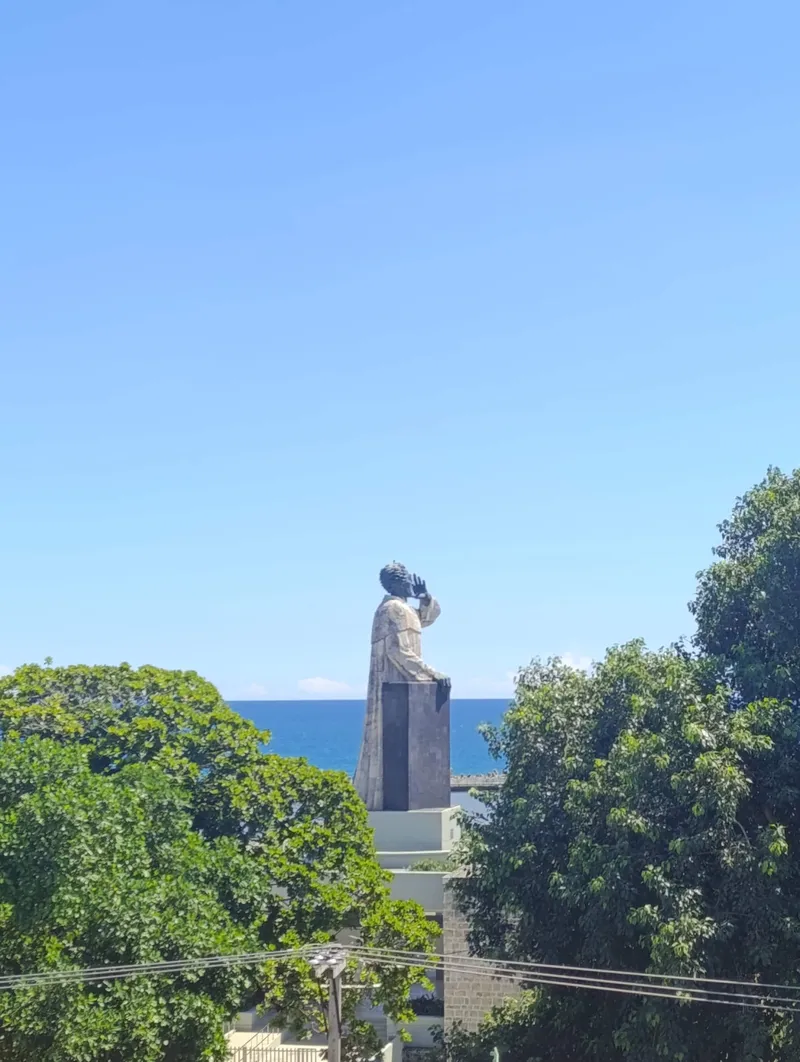
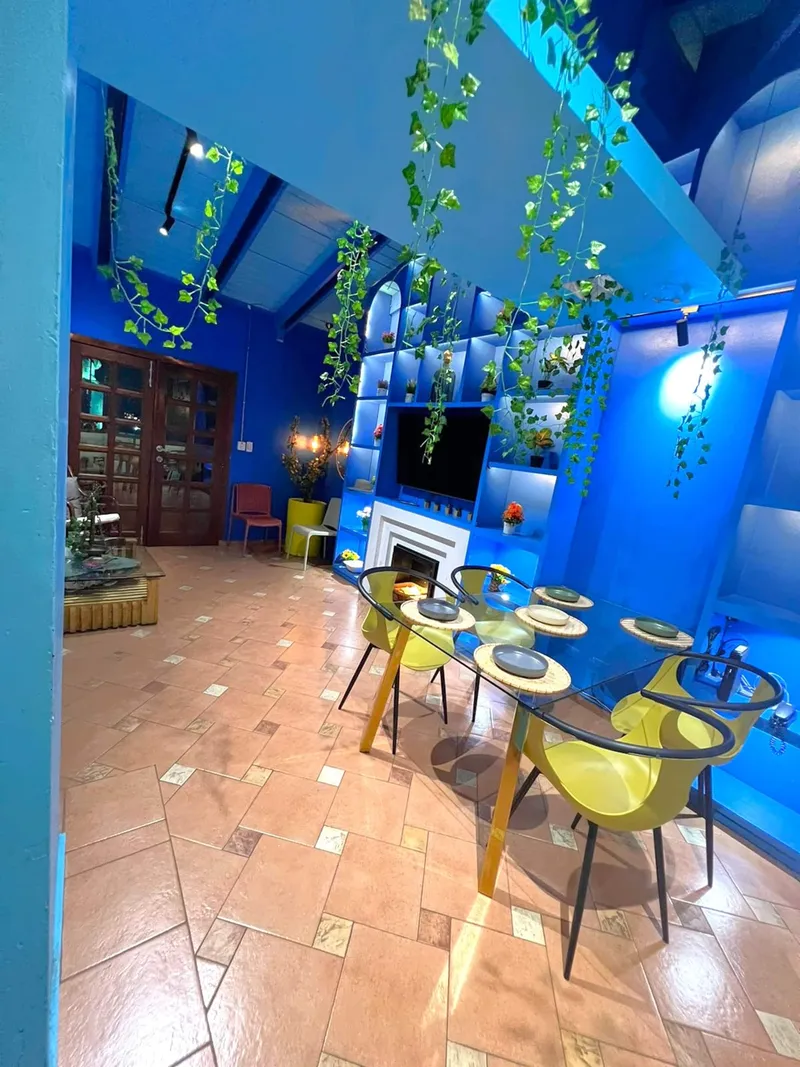
Penthouse Pallazzo is a townhouse built in the 1760s that sits about 150 meters north of Playa Montesinos, facing the Montesinos monument, at roughly 18.4697, -69.8851. Walking times below come from the straight-line distance between map coordinates on OpenStreetMap, multiplied by 1.3 for real streets, at 80 meters a minute, rounded up to the next five minutes.
- Casa de Tostado, at Calle Padre Billini: about 5 minutes on foot.
- Larimar Museum, on Calle Isabel la Católica: about 10 minutes on foot.
- Museo Memorial de la Resistencia Dominicana, on Calle Arzobispo Nouel: about 10 minutes on foot.
No time is given for the amber museum, because only its street is known, not its door. It is on Calle Arzobispo Meriño, in the same grid. A sensible order is Tostado first, then the larimar museum, then the Memorial Museum, which is the one you will want the most time for.
Frequently asked questions
Which museum in the Zona Colonial covers the Trujillo dictatorship?
The Museo Memorial de la Resistencia Dominicana at 210 Calle Arzobispo Nouel. The museum says it holds about 350,000 registered items, and it focuses on resistance to the Trujillo dictatorship and its consequences.
What are the Memorial Museum's opening hours?
The museum's visit page lists Monday closed and Tuesday to Sunday, 9:30 a.m. to 6:00 p.m. It does not list an admission price, so confirm that at the door.
Where can I see how a 19th-century Dominican family lived?
At the Museo de la Familia Dominicana del Siglo XIX in the Casa de Tostado, a 16th-century house on Calle Padre Billini. It shows period furniture, crockery, books and photographs. Hours differ between sources, so call ahead.
What is the difference between the amber museums?
The Amber World Museum, or Museo Mundo de Ámbar, is at 452 Calle Arzobispo Meriño and lists 40 display cases and two microscopes. A travel article also lists a small amber gallery on Calle El Conde. Confirm the address you are heading to.
What is larimar?
A blue variety of the mineral pectolite. The Larimar Museum says pectolite was named by Kobell in 1828 and forms inside gas cavities in cooling lava. Its geology section also describes the island's volcanic rock, including the Sierra de Bahoruco in the southwest.
Are the museums free?
Not in general, and no current price is listed on an official page. Some museums hold occasional free nights, such as around International Museum Day in May. Ask at the entrance.
Sources
- https://museodelaresistencia.com/en/el-museo
- https://museodelaresistencia.com/en/visita
- https://museodelaresistencia.com/en
- https://archive.sitesofconscience.org/?p=11434
- https://www.barcelo.com/guia-turismo/en/?p=599845
- https://www.revistamercado.do/actualidad/museos-historia-rd
- https://diariolibre.com/revista/cultura/2023/05/16/museo-memorial-entra-a-la-noche-larga-de-los-museos/2317064
- https://eldia.com.do/voces-de-la-libertad-en-noche-larga-de-los-museos/
- https://diariolibre.com/actualidad/nacional/2022/06/14/reabren-al-publico-sala-memorial-del-centro-de-los-heroes/1888938
- https://elnuevodiario.com.do/museo-de-la-familia-del-siglo-xix-casa-de-tostado-reinaugura-patio-e-iluminacion-de-fachada/
- https://diariolibre.com/actualidad/ciudad/2026/02/04/al-rescate-de-un-hogar-del-xvi-en-la-ciudad-colonial/3425240
- https://www.lonelyplanet.fr/poi/republique-dominicaine-saintdominguesantodomingorepubliquedominicainecg-museo-casa-de-tostado
- https://www.amberworldmuseum.com/
- https://www.larimarmuseum.com/
- https://dr1.com/news/?p=139670
- https://www.travelhoppers.com/articles/exploring-the-dominican-republics-amber-and-azure-stone-treasures/
- https://elnuevodiario.com.do/el-nuevo-diario-recorre-la-casa-museo-juan-pablo-duarte-en-el-natalicio-del-padre-de-la-patria/
- https://elnuevodiario.com.do/museos-de-la-ciudad-colonial-abren-sus-puertas-de-forma-gratuita/
- https://nominatim.openstreetmap.org/search?q=Museo+Memorial+de+la+Resistencia+Dominicana&format=json&limit=3
- https://nominatim.openstreetmap.org/search?q=Larimar+Museum+Santo+Domingo&format=json&limit=3
- https://nominatim.openstreetmap.org/search?q=Casa+de+Tostado+Zona+Colonial+Santo+Domingo&format=json&limit=3